Hanoi Travel Guide: Old Quarter Streets, Egg Coffee
Hanoi guide: bun cha and pho in the Old Quarter, Hoan Kiem Lake walks, ca phe trung (egg coffee), temple visits and getting around Vietnam's capital.
Guides for Hanoi
Hanoi is the kind of city that disorients you on arrival and hooks you by the second day. Motorbikes flow around pedestrians in patterns that look chaotic but follow an unspoken logic. Street vendors carry two baskets on a shoulder pole and navigate the Old Quarter’s narrow alleys better than any app. The city has been a capital for over 1,000 years - through Chinese dynasties, French colonists, American bombs, and communist reunification - and layers of all of it remain visible.
Quick facts
- Currency: Vietnamese Dong (₫). Approximately ₫25,000 = $1 USD. Notes range from ₫1,000 to ₫500,000. ATMs are everywhere in the Old Quarter.
- Language: Vietnamese. English is functional in tourist areas, hotels, and most restaurants near Hoan Kiem. Outside these zones, a translation app helps.
- SIM / data: Local SIM cards are sold at the airport and in the Old Quarter (Viettel, Vietnamobile). For a faster setup on arrival, an Airalo eSIM can be activated before the flight lands - no queue, no physical card.
- Best months: March–May (warm, not yet hot, some rain) and September–November (post-monsoon clarity, cooler evenings). Avoid January–February if you dislike cold and damp - temperatures can drop to 12–15°C.
- Time zone: GMT+7 (Indochina Time). No daylight saving.
The Old Quarter
The 36-street Old Quarter (Phố Cổ) is the historical and tourist core of Hanoi. Each street was historically dedicated to a single trade - Hang Bac (silversmiths), Hang Gai (silk), Hang Quat (lacquerware fans). That specialisation is partially maintained, though tourism has blurred it. The streets are narrow, crowded, and mostly traffic-calmed in the evenings.
For orientation: Hoan Kiem Lake is the anchor at the south edge. The Old Quarter fans north of the lake. Most budget and mid-range accommodation is here, as are the majority of restaurants and street food stalls targeting tourists.
Walking the Old Quarter is the main activity. It rewards slow movement - look up at the French-colonial shuttered facades, the layers of wiring, the tiny temples tucked between buildings. The most photographed street is Ta Hien (beer corner) but Hang Buom, Hang Ma, and Luong Ngoc Quyen have more texture if you want less tourist density.
Hoan Kiem Lake and the French Quarter
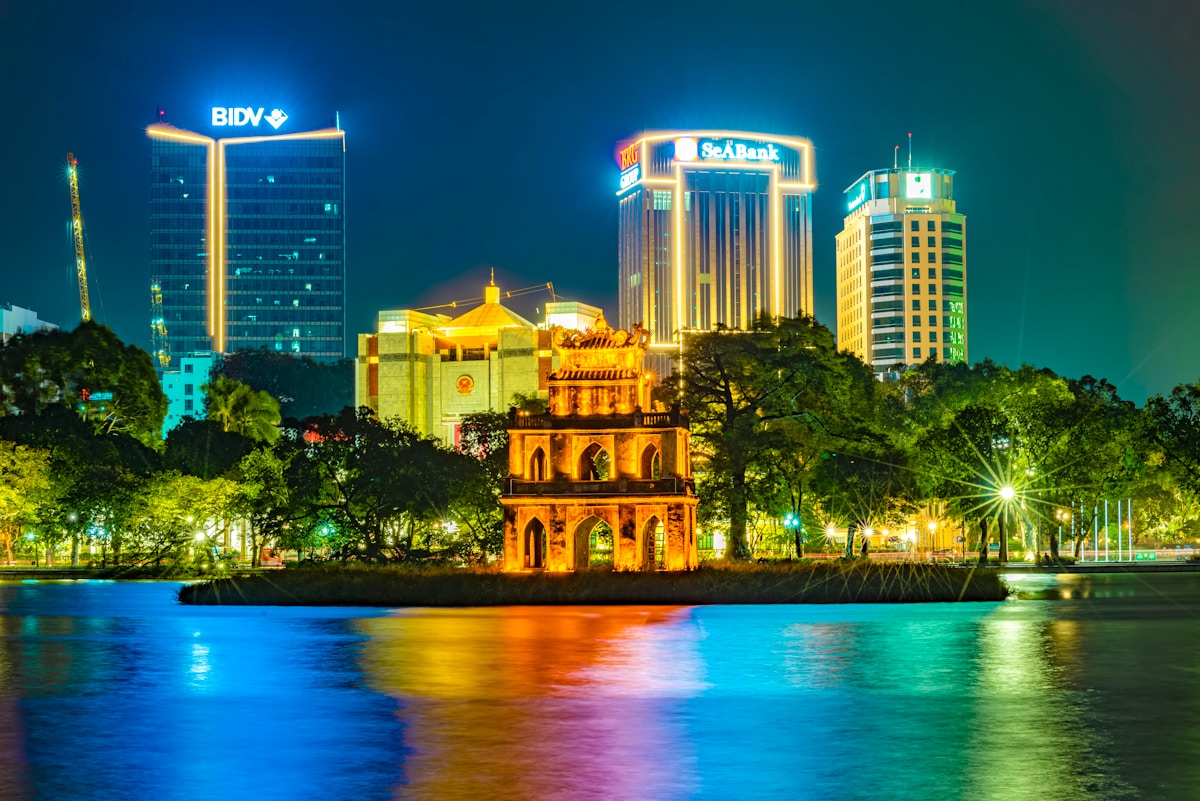
Hoan Kiem Lake is the physical and emotional centre of Hanoi. The Ngoc Son Temple on its small island, connected to the bank by the red Huc Bridge, is the most photographed sight. Entry ₫30,000. The lake is ringed by a promenade closed to traffic on weekends - good for an evening walk.
South of the lake, the French Quarter (Ba Dinh district) has the wide tree-lined boulevards, state ministry buildings, and the Opera House that mark Hanoi’s colonial period (1887–1954). The Metropole Hotel on Ngo Quyen is the best-preserved colonial building in the city and worth a look even if you’re not staying.
Ho Chi Minh complex
The Ho Chi Minh Mausoleum, Presidential Palace, Ho Chi Minh’s Stilt House, and the Ho Chi Minh Museum form a complex in Ba Dinh district, about 3km from the Old Quarter. The mausoleum is open Tuesday–Thursday and Saturday–Sunday, mornings only. Entry is free but has a strict dress code - shoulders and knees covered, no bags, no photography inside. Ho Chi Minh’s preserved body is displayed inside; the experience is unlike anything else in Vietnam. The stilt house and surrounding gardens are atmospheric even if the politics are complex.
West Lake (Tay Ho)
West Lake is the expat and long-stay residential quarter. It has a different character from the Old Quarter - larger roads, international restaurants, coffee shops with lake views, and significantly less motorbike noise. Tran Quoc Pagoda (Vietnam’s oldest Buddhist pagoda, 6th century AD) is on a small island connected to the western shore. The Xuan Dieu strip around the lake has some of Hanoi’s better coffee shops and international restaurants.
Street food
Hanoi’s street food is northern Vietnamese - cleaner broth, less sweet, more restrained with toppings than the south. The morning street food scene is the best in Vietnam. By 7am, vendors have been cooking since 4am and the food is at its peak.
Key streets and areas: Bat Dan for phở bắc (the northern version, lighter broth); Hang Dieu for bún chả charcoal smoke in the morning; Cha Ca La Vong Street (Hang Son) for the famous chả cá fish dish; any morning market for bánh cuốn (steamed rice rolls with minced pork and wood-ear mushroom). See our full Hanoi food guide for dishes, stalls, and where to find them. Evening food tours run daily and can usually be booked at short notice - check availability for tomorrow if you haven’t planned ahead.
Getting around Hanoi
See our Hanoi getting around guide for full transport options including airport transfers and day-trip logistics.
Grab (Vietnam’s Uber equivalent) is the most important app for any Hanoi visit. GrabBike (motorbike) is the fastest and cheapest option across the Old Quarter and central city - a 3km ride typically costs ₫25,000–40,000. GrabCar is available for longer trips or if you have luggage. Download it before arrival.
Walking is excellent within the Old Quarter but Hanoi spreads out - you will need Grab for anything beyond 1.5–2km. City buses exist and are cheap (₫9,000 per trip) but routes are confusing and stops unmarked - avoid unless you enjoy an adventure.
Noi Bai International Airport is 35km north of the city. The official taxi fare by meter is approximately ₫350,000–450,000 ($14–18). Grab from the airport to Old Quarter runs ₫200,000–280,000. For a fixed-price, pre-booked airport transfer into the city, Kiwitaxi is a reliable option - no meter, no haggling, driver waits at arrivals. Bus 86 runs from the airport to Hoan Kiem Lake for ₫45,000.
Costs
Hanoi is affordable. A realistic daily budget:
- Budget: ₫500,000–700,000 ($20–28): hostel dorm, street food, local café coffee, Grab rides
- Mid-range: ₫1,000,000–2,500,000 ($40–100): budget hotel with private room, restaurant meals, occasional taxi
- Comfortable: ₫3,000,000–6,000,000 ($120–240): boutique hotel, better restaurants, guided tours and day trips
See our guide to Best Hotels in Hanoi for neighbourhood breakdowns and hotel recommendations.
Street food meals: ₫35,000–80,000 ($1.40–3.20). Local café coffee: ₫20,000–45,000 ($0.80–1.80). Bia hơi (fresh draught beer): ₫10,000–15,000 ($0.40–0.60). Restaurant meal (non-tourist): ₫60,000–120,000 ($2.40–4.80).
Best time to visit
Hanoi has four distinct seasons, which is unusual for Vietnam’s south and centre.
- Spring (March–April): Warm 20–25°C, some drizzle, pleasant. This is one of the best periods.
- Summer (May–August): Hot and humid, 30–38°C, heavy rain. The city functions but it’s sweaty.
- Autumn (September–November): Generally considered the best time - clear skies, 22–28°C, lower humidity.
- Winter (December–February): Cold by Vietnamese standards - 12–18°C, persistent grey drizzle. Bring layers. Lunar New Year (Tết, usually late January or early February) sees the city empty dramatically and then fill with returning Vietnamese - beautiful but some services close.
For month-specific conditions, see Vietnam in September, Vietnam in October, and Vietnam in March.
Frequently Asked Questions
How many days do you need in Hanoi? Three days is enough to cover the Old Quarter, Hoan Kiem Lake, the Ho Chi Minh Mausoleum complex, the Temple of Literature, and a good selection of street food. Four or five days allows for a day trip to Ninh Binh or Ha Long Bay and a more relaxed pace.
Is Hanoi safe for solo travellers? Yes. Solo travel in Hanoi is safe for both men and women. The main risks are bag snatching in the Old Quarter and taxi scams at the airport - use Grab for all transport. The Old Quarter is busy until late at night and well-lit.
What is the best area to stay in Hanoi? The Old Quarter (Hoan Kiem District) puts you within walking distance of most major sights and has the highest density of restaurants, cafes, and budget accommodation. The French Quarter (around Ly Thuong Kiet) is quieter and slightly more upmarket.
How do you get from Hanoi to Ha Long Bay? Most visitors book a cruise departing from Tuan Chau Marina or Hon Gai, which includes transport from Hanoi. Transfer time is 2–2.5 hours by road. Independent travel to Ha Long Bay is possible but joining an organised cruise is standard - it handles accommodation, meals, and activities in one booking. Compare Ha Long Bay cruises and day trips.
What is the best time to visit Hanoi? September to November is widely considered the best period - clear skies, temperatures of 22–28°C, and lower humidity. March to April is the next best option. Avoid December to February unless you don’t mind cold, grey drizzle. Summer (May to August) is hot, humid, and rainy but the city still functions well.
More in Hanoi
- Things to Do in Hanoi
- Hanoi Food Guide - Best Dishes and Where to Eat
- Best Restaurants in Hanoi
- Hanoi Food Culture - Northern Vietnamese Cuisine and Where to Eat
- Vietnamese Coffee Culture - Ca Phe Sua Da, Egg Coffee and Where to Drink
- Hanoi Vegan Food Guide
- Best Coffee Shops in Hanoi
- Best Cafes to Work in Hanoi
- Best Hotels in Hanoi
- Best Hostels in Hanoi
- Getting Around Hanoi
- Day Trips from Hanoi
- Hanoi History
- Hanoi Nightlife
Tours and activities
Nearby destinations
Plan your trip
- Hanoi vs Ho Chi Minh City - Which Should You Visit?
- Vietnam vs Thailand - Which Southeast Asia Destination Is Right for You?
- Vietnam vs Cambodia - Which Southeast Asian Country Should You Visit?
- Vietnam vs Laos - Which Country Is Right for Your Southeast Asia Trip?
- 1 Week in North Vietnam - Hanoi, Ha Long Bay and Sapa
- 2 Weeks in Vietnam - The Classic North to South Itinerary
- 3 Weeks in Vietnam - Extended North to South Itinerary
- Vietnam on a Budget - How to Travel Vietnam for $25–35 a Day
- Vietnam Backpacker Route
Planning to visit? Browse hotels in Hanoi — free cancellation on most bookings.
Book an experience
Top experiences in Hanoi
Explore the best tours and activities in Hanoi , with instant confirmation and free cancellation on most bookings.