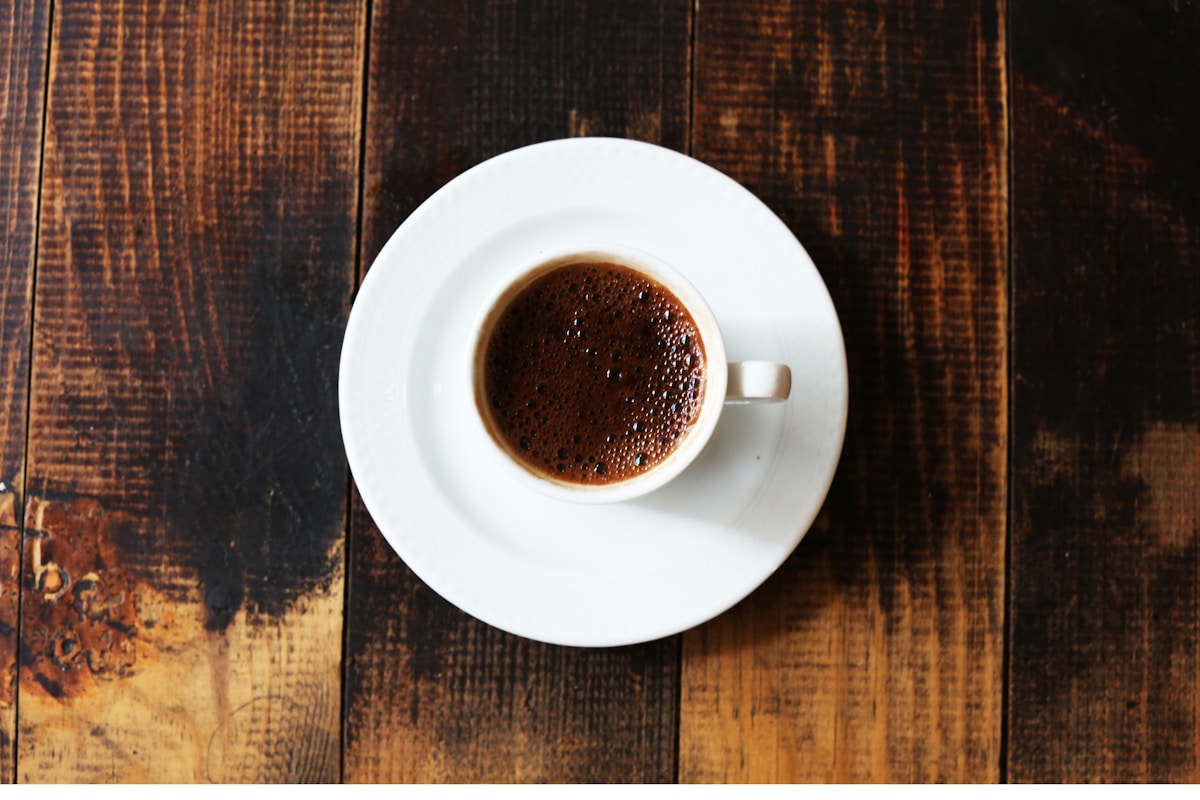
Coffee arrived in Vietnam with the French in the 1850s and the country adapted it completely. Vietnamese coffee culture is not French café culture with a Vietnamese label - it evolved into something distinct: slower, more communal, deeply embedded in daily rhythm.
Cà phê trứng - egg coffee
Hanoi’s most famous invention. In 1946, Nguyen Van Giang worked as a bartender at the Sofitel Metropole (then the Grand Hotel). During a wartime milk shortage, he replaced the milk in his coffee with whisked egg yolk and condensed milk. The drink stayed.
The preparation: strong robusta coffee brewed through a phin drip filter is poured into a cup, then topped with a thick, warm cream made from egg yolk whisked intensively with condensed milk and sometimes butter. The result sits between a dessert and a coffee - dense, sweet, intensely flavoured. The hot version is served with the cup inside a bowl of hot water to maintain temperature. The iced version has the cream poured over cold coffee and ice.
Where to get the genuine version:
Cafe Giang (39 Nguyen Huu Huan): The original. Nguyen Van Giang opened it after leaving the Metropole. The upstairs room is unchanged from decades ago. The egg coffee costs ₫30,000–45,000. The queue is part of the experience.
Cafe Dinh (13 Dinh Tien Hoang): Hidden behind an unmarked door on Hoan Kiem Lake. Equally authentic. Slightly more known to tourists now but still correct. Same price range.
Giảng Cafe (Hang Gai branch): The family opened a second location on Hang Gai for convenience. The coffee is the same recipe.
Cà phê phin - the drip method
The phin is a small metal filter that sits on top of a glass. Ground coffee goes in, hot water is added, and the coffee drips through over 4–6 minutes. The method produces a strong, concentrated brew.
Vietnamese robusta coffee - the dominant variety grown in the Central Highlands - is higher in caffeine and less acidic than arabica. It has a bold, slightly bitter, slightly chocolatey profile that makes sense with sweetened condensed milk.
The phin is how most Vietnamese people drink coffee at home and in local cafes. The ritual of watching the drip is part of it. Don’t rush it.
Cà phê sữa đá - iced coffee with condensed milk
The most consumed coffee drink in Vietnam. Strong phin-brewed coffee, served over ice, with sweetened condensed milk either stirred in or poured separately. In the south this is the default drink; in Hanoi it’s equally common.
The condensed milk (sữa ông Thọ - Ông Thọ is the Vietnamese brand, now owned by Nestlé) adds sweetness and creaminess that cuts the bitterness of the robusta. The result is cold, sweet, caffeinated, and cheap - ₫20,000–35,000 at a local cafe.
Cà phê đá - black iced coffee
The same phin coffee over ice without condensed milk. If you want to taste the coffee itself, this is the order. Still available everywhere, still cheap.
Ca phe trung - a note on quality
The egg coffee at tourist cafes in the Old Quarter that are not Cafe Giang or Cafe Dinh varies enormously. Some use real egg yolk, some use a packet mix. The visual result can look similar. The taste is not. If you want the genuine version, go to the originals.
Specialty coffee in Hanoi
Hanoi has a growing third-wave specialty coffee scene, concentrated in Tay Ho and the French Quarter. These cafes use arabica (often Vietnamese arabica from Son La province or Da Lat), offer manual brew methods (V60, Chemex, AeroPress), and charge accordingly - ₫55,000–90,000 per cup.
The Craftsman Coffee Roasters: Multiple locations, consistently good. Vietnamese arabica and single-origin options. The Tay Ho branch is the best.
Maison Marou: The high-end chocolate and coffee house. Marou chocolate is a genuinely excellent Vietnamese product; the café uses it well. Old Quarter location. A hot chocolate or coffee here is ₫70,000–120,000.
Coffee street culture
Hanoi’s street coffee - a low plastic stool, a phin drip on a metal tray, the sound of morning traffic - is different from any other city in the world. The coffee itself is often ₫10,000–20,000. The stool is 20cm off the ground. The view is the street.
This is not performance. It is the normal way most Hanoi residents start their day, and joining it for one morning is more representative of the city than most tourist activities.
Useful links:
More in Hanoi
- Best Cafes to Work From in Hanoi 2026: Wifi, Coffee and Space
- Best Hostels in Hanoi 2026: Old Quarter Budget Stays
- Best Hotels in Hanoi 2026: From Boutique to Luxury
- Best Restaurants in Hanoi 2026: Where Locals and Visitors Eat
- Day Trips from Hanoi 2026: Ninh Binh, Ha Long Bay and More
- Hanoi Food Guide 2026: What to Eat and Where to Find It
- Getting Around Hanoi 2026: Grab, Motorbikes and Public Transport
- Hanoi History Guide: 1,000 Years as Vietnam’s Capital
- Hanoi Nightlife 2026: Beer Streets, Rooftops and Jazz
- Things to Do in Hanoi 2026: Old Quarter, Lakes and Day Trips
- Vegan Food in Hanoi 2026: Buddhist Restaurants and Plant-Based Options
- Best Hotels in Hanoi 2026: Best Neighbourhoods