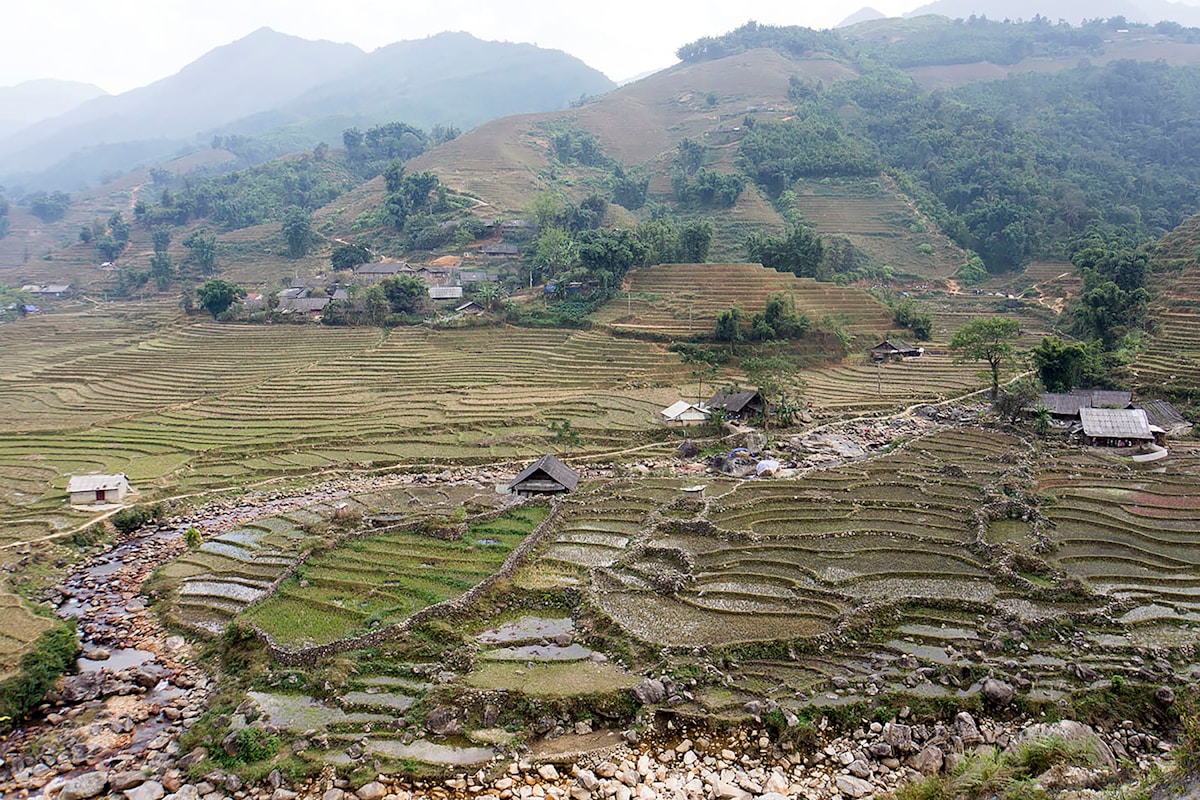
Sapa sits at 1,500m in the Hoang Lien Son mountains of northwest Vietnam, 340km from Hanoi. The surrounding valleys - Muong Hoa, Cat Cat, Ta Van - are carved into rice terraces that step down through mist toward village clusters of H’Mong, Dao, Giay, and Tay people. Trekking here is less about summiting peaks and more about walking through a working landscape where life moves at the pace of rice harvests.
Top Tours at a Glance
Here’s a quick comparison of top-rated tours on GetYourGuide:
| Tour | Duration | Price (from) | Group Size | Highlights |
|---|---|---|---|---|
| 1-Day Guided Trek: Lao Chai & Ta Van | 1 day | from $25/person | Up to 12 | H’Mong village, rice terraces, local lunch included |
| Half-Day Trek: Lao Chai & Ta Van | 4 hrs | from $15/person | Small group | Morning trek, village visit, flexible schedule |
| 2D/1N Homestay Trek from Sapa | 2 days / 1 night | from $55/person | Up to 10 | Valley trek, Black H’Mong homestay, all meals |
| 3-Day Sapa Trek from Hanoi | 3 days / 2 nights | from $90/person | Small group | Overnight train from Hanoi, guided trek, homestay |
| Fansipan Cable Car Tickets | Half-day | from $30/person | — | 15-min cable car ride, 600-step summit ascent |
Browse all Sapa tours → GetYourGuide
The Main Trekking Routes
Muong Hoa Valley (Cat Cat and Ta Van)
The most accessible route from Sapa town, this walk descends steeply into the Muong Hoa Valley past Cat Cat village and continues to Ta Van and Giang Ta Chai along the river. The full loop covers approximately 12km and takes 4–5 hours at a comfortable pace. Trail quality is generally good, with some sections of stone-paved path built by local communities.
Cat Cat village is now heavily touristic - the real draw is the valley below it and the less-visited villages further along. Ta Van and Giang Ta Chai remain quieter and offer the best opportunities to see traditional Giay and H’Mong homes up close.
Difficulty: Moderate. The descent from Sapa is steep and slippery after rain.
Lao Chai and Ta Van Overnight Trek
This 2-day route is the most popular homestay trek. Day one covers Lao Chai and Ta Van (approximately 8km), with an overnight in a Black H’Mong or Giay homestay. Day two extends through Thanh Kim or returns via a different ridge route. Most operators offer this as a packaged 2D/1N experience including meals and accommodation.
Homestay quality varies - basic wooden houses with sleeping mats on the floor are standard at the lower price point; better-equipped family homes with private rooms exist at slightly higher prices. Meals are typically home-cooked and included in the package price.
Difficulty: Moderate to strenuous. Some steep sections on day two.
Muong Bo and Sin Chai (Quieter Routes)
For travellers wanting fewer other tourists on the trail, Muong Bo and Sin Chai require a longer drive from Sapa town but reward with less-visited scenery. These routes work best as half-day extensions or add-ons to multi-day treks.
Climbing Fansipan - Vietnam’s Highest Peak
At 3,143m, Fansipan is the highest mountain in Vietnam and the wider Indochina region. Two ways up:
Trekking to the Summit
The classic route takes 2 days from Tram Ton Pass (the highest road pass in Vietnam), ascending through bamboo forest and alpine scrub before the final scramble to the summit platform. The trail is well-established but requires reasonable fitness - expect 6–7 hours of climbing on day one, with a basic camp overnight at around 2,800m, then 2–3 hours to the summit and descent on day two.
A second, steeper route from Cat Cat village covers the full 2,600m elevation gain but is rarely recommended for casual trekkers given the difficulty. Most guides will steer you toward Tram Ton.
Group size matters: Fansipan guides are required (it’s a national park and solo ascent is not permitted) and most operators run groups of 4–8. Private guides can be arranged but cost approximately $50–$100 more.
Cost: A 2-day Fansipan trek with guide, camping equipment, meals, and national park entry runs approximately $80–$150 per person. Park entry alone is approximately 150,000 VND (roughly $6 as of 2026).
Fansipan Cable Car (Sun World)
A cable car system built by Sun World opened in 2016 and now carries most Fansipan visitors to within 600m of the summit, with a staircase of 600 steps completing the final ascent. The ride takes 15 minutes and operates daily.
Cable car costs (as of 2026): Approximately 750,000 VND ($30) for adults return, approximately 550,000 VND for children. Tickets can be booked in advance at Sun World’s ticketing office in Sapa or through Klook for instant confirmation and no queuing at the counter.
The cable car is a legitimate option - the views from the cabin over the Muong Hoa Valley are excellent and the summit experience is real, even without the trek. Serious hikers can still trek up and take the cable car down.
Operators and Guides
Local H’Mong Guides
The most rewarding treks are often led by local H’Mong women who run their own small guide operations from Sapa market. Expect to pay approximately 300,000–500,000 VND ($12–$20) per day for a local guide. These guides speak good English, know every trail, and the money goes directly to their families.
How to find them: Walk through the central market area near Sapa church in the morning - guide women often approach travellers directly. Rates are negotiable for longer treks.
Tour Operators Based in Sapa
Sapa O’Chau: The most well-regarded community tourism operator in Sapa, founded by a local H’Mong woman. Guides are trained and paid fair wages. Treks run from half-day to 3-day routes with homestays. Day trek approximately $25/person; 2D/1N homestay approximately $55–$70/person.
Ethnic Travel: Hanoi-based operator with strong Sapa programme, particularly good for multi-day routes to less-visited villages. Slightly more expensive but reliable logistics. 2D/1N from approximately $70/person.
Topas Adventure: Danish-owned, long-running operator with an eco-lodge outside Sapa. Higher price point (from approximately $150/person for 2D/1N with lodge accommodation) but exceptional guide quality.
Hanoi-Based Operators
Most Hanoi guesthouses and hostels offer Sapa trekking packages that bundle the overnight train or sleeper bus, guided trek, and homestay into a single price. These packages range from approximately $80–$200 per person for 3 days/2 nights depending on the accommodation tier and whether you take the train (more comfortable) or bus (cheaper).
What to Expect on a Homestay Trek
Homestays in Sapa vary considerably. The standard experience is a basic room in a family home, a shared squat toilet, bucket shower or basic bathroom, and home-cooked meals (usually rice, vegetables, egg dishes, and sometimes pork or chicken). Meals are often the highlight - simple but genuinely local, eaten at the family’s table.
Higher-end homestays (from approximately $30–$50/person/night) have Western-style bathrooms and more comfortable beds. Some villages, particularly Ta Van, have invested in homestay infrastructure - expect cleaner facilities but slightly less authentic atmosphere.
Electricity and connectivity: Most homestays have electricity for basic lighting. Mobile signal is intermittent in the valleys. Treat the evening as a chance to disconnect - it’s one of the best things about the experience.
What to Pack
- Lightweight waterproof jacket - rain can arrive fast in the mountains at any season
- Trekking poles, particularly for steep descents
- Good grip trail shoes or hiking boots (not sandals)
- Layers - it can be cold in the morning even in summer, and temperatures drop fast after rain
- Water (guides usually carry extra; check before you depart)
- Small daypack for the trail; leave main luggage at your Sapa guesthouse or in Hanoi
Getting to Sapa
Overnight train from Hanoi: Hanoi to Lao Cai station, then 45-minute bus or taxi to Sapa. The train takes approximately 8 hours; sleeping cabins are comfortable. Tickets from approximately 350,000 VND ($14) for a soft sleeper cabin per person. Train is preferable to bus for overnight comfort.
Sleeper bus from Hanoi: Cheaper at approximately 150,000–250,000 VND ($6–$10), takes similar time but on a reclining seat rather than a proper bunk. Several operators (Hung Thanh, Queen Cafe) run this route nightly.
Most trekking operators offer combined transport + trek packages from Hanoi, which simplifies logistics. You can also browse Sapa trekking tours on GetYourGuide with verified operator reviews.
See Also
- Sapa travel guide - accommodation, what to do beyond trekking, and seasonal highlights
- Sapa rice terraces guide - the best vantage points and viewing seasons
- Sapa hill tribe villages guide - which villages to visit and how to do it respectfully
- 1-week north Vietnam itinerary - how Sapa fits into a northern circuit
- Sapa vs Ha Giang comparison - which highland destination suits your trip