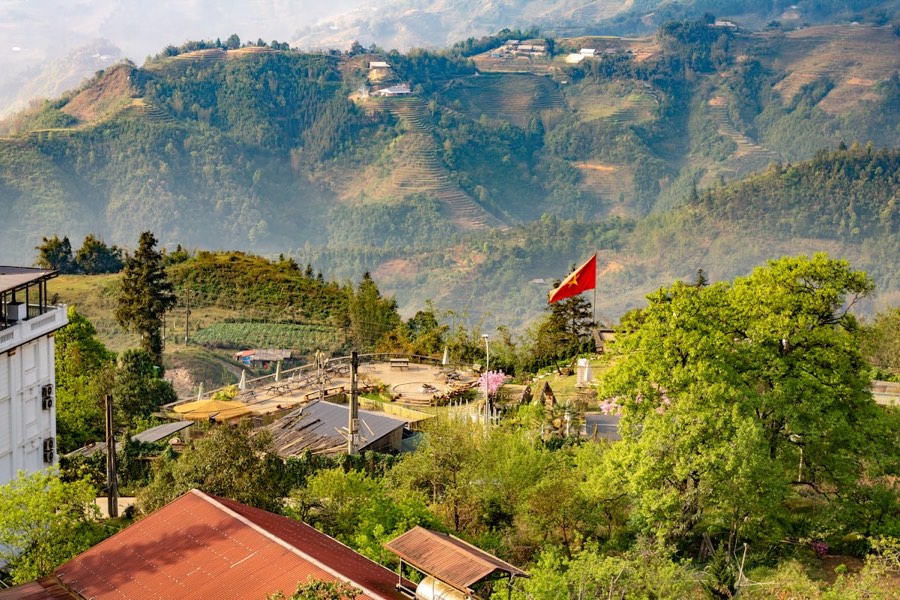
Sapa and Ha Giang are the two names that come up whenever northern Vietnam’s mountains are discussed - and they couldn’t be more different in character. Sapa is accessible, polished, and increasingly resort-oriented, with a cable car to Vietnam’s highest peak and luxury hotels with mountain-view infinity pools. Ha Giang is raw, demanding, and spectacular in a way that requires effort to earn.
Both involve rice terraces, ethnic minority villages, and mountain roads that switch back dramatically through cloud-covered peaks. The choice depends on what kind of traveller you are.
The Basics
Sapa sits in the Hoang Lien Son mountain range at 1,500 m elevation, 350 km northwest of Hanoi in Lao Cai Province. It was a French hill station from the 1920s and remained an obscure mountain town until tourist infrastructure accelerated rapidly after 2010. The surrounding valleys - Muong Hoa Valley, Cat Cat Village, and the Fansipan massif - are home to H’mong, Dao, Tay, and Giay communities.
Ha Giang Province is Vietnam’s northernmost province, sharing a border with China. Ha Giang town is the provincial capital and the starting point for the Ha Giang Loop - a 300–400 km circuit through the Dong Van Karst Plateau UNESCO Global Geopark that passes through Dong Van, Meo Vac, and Bao Lac. The limestone plateau landscape here is unlike anywhere else in Vietnam.
Scenery
Both destinations are genuinely stunning, but the landscapes are very different.
Sapa’s terraced rice fields cascade down the flanks of Muong Hoa Valley in layers that took centuries to carve. The valley below the town, viewed from hiking trails or the glass walkway near Cat Cat Village, produces the classic images that appear on Vietnam travel photography. Fansipan Peak (3,143 m) is Vietnam’s highest point; the cable car from Sa Pa town reaches the summit in 20 minutes (approximately USD 22 round trip as of 2026) or you can trek it in 2–3 days.
Ha Giang’s landscape is more austere and dramatic. The Dong Van Karst Plateau - a UNESCO-listed geopark - consists of bare limestone peaks, deep gorges, and switchback roads that feel like the edge of the world. The Ma Pi Leng Pass between Dong Van and Meo Vac is one of the most dramatic mountain roads in Southeast Asia, dropping 1,500 m into the Nho Que River gorge in a series of hairpin turns. The terraced fields here are buckwheat (purple in October), maize, and rice - a different palette to Sapa’s green and gold terraces.
Trekking
Sapa trekking is guided walks from the town through surrounding valleys to ethnic minority villages. The classic day trek goes Cat Cat → Y Linh Ho → Lao Chai → Ta Van (12 km, 4–6 hours, moderate difficulty with some steep sections). Longer routes extend to Nam Cang, Su Pan, or into the Muong Hoa Valley upper reaches. Tour operators in Sapa organise guided treks from USD 25–40 per person per day including lunch.
Ha Giang trekking exists - particularly around Hoang Su Phi for rice terrace walks, or day hikes around Dong Van and into surrounding Hmong villages - but the main experience is the motorbike loop. Most travellers cover the loop in three to four days on a 110cc semi-automatic motorbike (rental from USD 10–15 per day) or with an Easy Rider guide (USD 25–40 per day all-in). The roads include unpaved sections; the passes are steep. Rain makes sections treacherous.
Accommodation and Costs
Sapa has the widest range. Sapa town has everything from USD 12 dorm beds to the Topas Ecolodge (bamboo bungalows, USD 150+ per night, spectacular views) and the Silk Path Grand Resort Sapa. Village homestays in Ta Van or Ban Ho cost USD 10–18 per person including dinner and breakfast. Mid-range hotels in Sapa town run USD 30–60.
Ha Giang accommodation is basic by comparison. In Ha Giang town, guesthouses start at USD 10–15 per night. Along the loop, homestays in Dong Van and Meo Vac cost USD 8–15 per person, usually including a simple dinner. The infrastructure is improving but remains limited - don’t expect air conditioning or hot water at every stop.
Food costs are similar: local meals cost USD 2–5 at both destinations. Sapa has a broader range of tourist restaurants (some good, some mediocre) targeting the growing visitor numbers.
Overall budget: A three-day Sapa trip costs approximately USD 80–150 all-in (transport from Hanoi, accommodation, trekking guide, food) depending on comfort level. A four-day Ha Giang Loop costs USD 120–200 including transport, Easy Rider guide, homestays, and meals.
Ethnic Minority Communities
Both destinations are home to diverse ethnic minority groups, and community interaction is a core part of the experience in both places.
Sapa’s surrounding villages are predominantly Black H’mong and Red Dao. The communities around Cat Cat, Ta Van, and Lao Chai have adapted to large-scale tourism - women from H’mong villages often meet trekkers on the trail and accompany them to the destination, selling embroidered handicrafts. The income is meaningful; the dynamic can feel transactional.
Ha Giang is home to H’mong, Lo Lo, Pu Peo, and Giay communities, with less exposure to tourism. Villages along the loop - particularly around Dong Van’s Sunday market (held on Saturday evening through Sunday) - feel more genuinely off the tourist trail. The Sunday market at Meo Vac is one of the best-preserved in northern Vietnam.
Accessibility
Sapa is much more accessible. The overnight train from Hanoi is comfortable and affordable; tourist buses run daily. Most trekking routes are well-marked and manageable without technical experience. The cable car means even non-hikers can experience the mountain scenery.
Ha Giang requires more planning. A provincial permit is required (arranged at the border checkpoint or through a local operator). The motorbike loop demands either driving experience or trust in an Easy Rider guide. Weather on the plateau can change rapidly; roads can be cut off by landslides after heavy rain. That said, the loop is manageable for most travellers who take it seriously.
Best For
Choose Sapa if:
- This is your first mountain trek in Vietnam
- You want luxury accommodation options alongside trekking
- Fansipan Peak and cable car access is on your list
- You have limited time and want an easy access to mountain scenery
Choose Ha Giang if:
- You want the most dramatic and least-touristed mountain scenery in Vietnam
- The motorbike loop is something you’re genuinely keen to do
- You prefer homestay culture over resort hotels
- You’re happy to travel slowly and accept basic infrastructure
When to Visit
September–October is peak season for both, when the rice harvest turns the terraces gold. Expect more visitors at Sapa in this period; Ha Giang absorbs numbers better.
March–April around Ha Giang’s Dong Van Plateau brings buckwheat flower season - the plateau turns pink-purple and this is one of Vietnam’s most beautiful periods anywhere. Sapa in spring (March–May) is green and fresh with moderate crowds.
Avoid both destinations on Vietnamese public holidays (especially Tet, late January/early February) when domestic tourism volume is overwhelming.
The Verdict
If you’re choosing one for a first trip to northern Vietnam, Sapa is the pragmatic choice: easier to reach, more infrastructure, and stunning in its own right. But Ha Giang is the trip that travellers remember for years. The Ma Pi Leng Pass at dawn, the limestone plateau stretching to China, and a Sunday market in Meo Vac that hasn’t changed in decades - these are experiences that Sapa, for all its beauty, can’t replicate.
Both are better earlier in the week and earlier in the season. Both reward an early start on the trails.
See our full guides to Sapa and Ha Giang for trekking routes, operators, and practical transport details. You can also browse Sapa trekking tours and Ha Giang loop tours on GetYourGuide to compare organised options.
Plan Your Trip
✈️ Book your flights to Vietnam 🛡️ Get travel insurance 📱 Stay connected with an eSIM 🚗 Rent a car