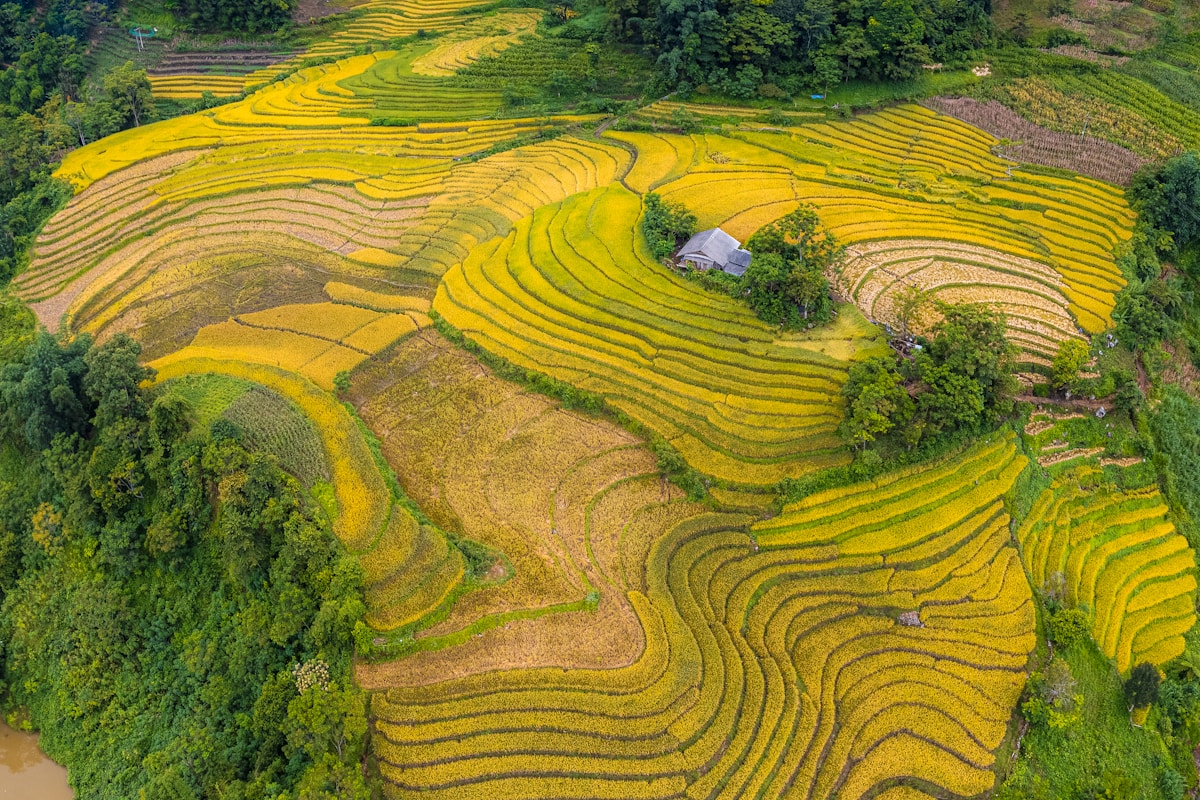
The rice terraces around Sapa are among the most photographed landscapes in Asia. They were built over centuries by Hmong and Dao farmers carving level platforms into the steep mountain slopes to retain water for rice cultivation. The visual result - cascading steps of flooded paddies or golden rice reflecting the mountain light - is one of those rare landscapes that matches its photographs.
The seasonal calendar
The terraces look different in each season. The choice of when to visit significantly affects what you see.
May–June (flooded and green): Just after transplanting, the terraces are flooded and the young rice plants are an intense green. The reflections of the sky in the flooded paddies are striking. Weather in this period can be misty - which creates its own atmospheric quality. This is the most photogenic period for reflection photography.
July–August (full growth, lush): The rice is tall and deep green. The mountains are covered with vegetation. Hot and rainy - the rain can be heavy and daily. Less recommended for trekking but the landscape is lush.
September–October (harvest, golden): The peak visual period. The rice ripens and the terraces turn gold - a warm yellow-orange that looks completely different from the green season. Harvest activity brings people into the terraces: farmers cutting rice, buffalo carrying loads. The combination of the golden colour, the harvest activity, and the clearer autumn weather makes this the best overall time. October is also the buckwheat flower season in Ha Giang (a different destination but relevant for those doing the northwest loop).
November–December (post-harvest): The terraces are largely bare and grey-brown after harvest. Less visually dramatic but some of the clearest weather of the year. A good time for Fansipan views.
January–February: Cold, fog, and occasional frost. The terraces are bare. Not recommended for the rice terrace experience specifically, but Sapa has its own cold-weather atmosphere during Tết.
March–April: Planting season begins. Weather improves toward April. Green again.
Where to see them
Muong Hoa Valley: The main terrace valley, 8km from Sapa town. The road to Lao Chai drops into the valley and provides progressively better views. The best viewpoints are from the ridge above the valley before the descent, and from elevated positions near Ta Van village.
Y Linh Ho village area: Further into the valley from Lao Chai. Less visited, still part of the standard trekking route.
Cat Cat village: The terraces visible from the Cat Cat valley walk are beautiful in the golden season. Close to town and easy to reach.
Mua Cave viewpoint (Ninh Binh comparison): Actually in Ninh Binh, but mentioned because the viewpoint from Mua Cave over the Tam Coc paddies is the image many people associate with Vietnamese rice terraces. The Sapa terraces are in a different landscape - mountain valley rather than flat plain - but both are worth visiting.
Photography tips
Light: Morning (6–8am) and late afternoon (4–6pm) give warm, low-angle light that suits the terrace landscape. Midday light is flat and harsh.
Position: The terraces are best photographed from above. The ridges and higher ground between villages offer the best overview perspectives.
People: Including a farmer working the terraces adds scale and context. Ask first (a gesture is usually enough). A payment for photographs is sometimes requested - ₫20,000–50,000 ($0.80–2) is the standard range.
Fog and mist: The morning mist that sometimes fills the valleys below Sapa creates extraordinary atmospheric conditions. It requires being in position before sunrise and accepting that the mist may or may not cooperate. The valley looking scene with floating clouds between the karst ridges is genuinely spectacular when it happens.
Mu Cang Chai comparison
Mu Cang Chai (5–6 hours from Hanoi) has rice terraces that rival Sapa’s - many photography specialists argue they’re superior during harvest season. See the Mu Cang Chai guide for comparison. The two are different enough to be worth considering as separate destinations rather than interchangeable alternatives. Browse Sapa trekking and terrace tours on GetYourGuide.
Book a Rice Terrace Tour
Here’s how the main terrace tour options compare:
| Tour | Duration | Price (from) | Group Size | Highlights |
|---|---|---|---|---|
| Sapa Muong Hoa Valley Rice Terrace Trek | Full day | from $30/person | Small group | Walk through Lao Chai and Ta Van terraces, Black Hmong guide, 14km |
| Sapa Terrace Photography Tour — Golden Hour | Half day | from $25/person | Small group | Curated viewpoints, best light timing, guide to hidden overlooks |
| Sapa to Mu Cang Chai Rice Terrace Day Trip | Full day | from $60/person | Small group | 3-hour drive, La Pan Tan and Che Cu Nha terraces — best in Sept–Oct |
| Sapa 2-Day Terrace Trek with Village Homestay | 2 days | from $110/person | Small group | Walking through working terraces, overnight in Black Hmong home |
| Sapa Harvest Season Tour — 3 Days | 3 days | from $175/person | Small group | September/October gold, photography focus, Sapa and Mu Cang Chai |
Browse all Sapa rice terrace tours → GetYourGuide
More in Sapa
- Best Hostels in Sapa 2026: Budget Stays in the Northwest Highlands
- Best Hotels in Sapa 2026: Mountain Lodges and Boutique Stays
- Best Restaurants in Sapa 2026: Local Food and Highland Specialties
- Day Trips from Sapa 2026: Bac Ha Market, Can Cau and Y Ty
- Hill Tribe Villages Near Sapa 2026: Hmong, Dao and Tay Communities
- Things to Do in Sapa 2026: Treks, Villages and Fansipan
- Trekking in Sapa 2026: Routes, Operators, and What to Know
- Best Hotels in Sapa 2026: Town Hotels vs Valley Homestays