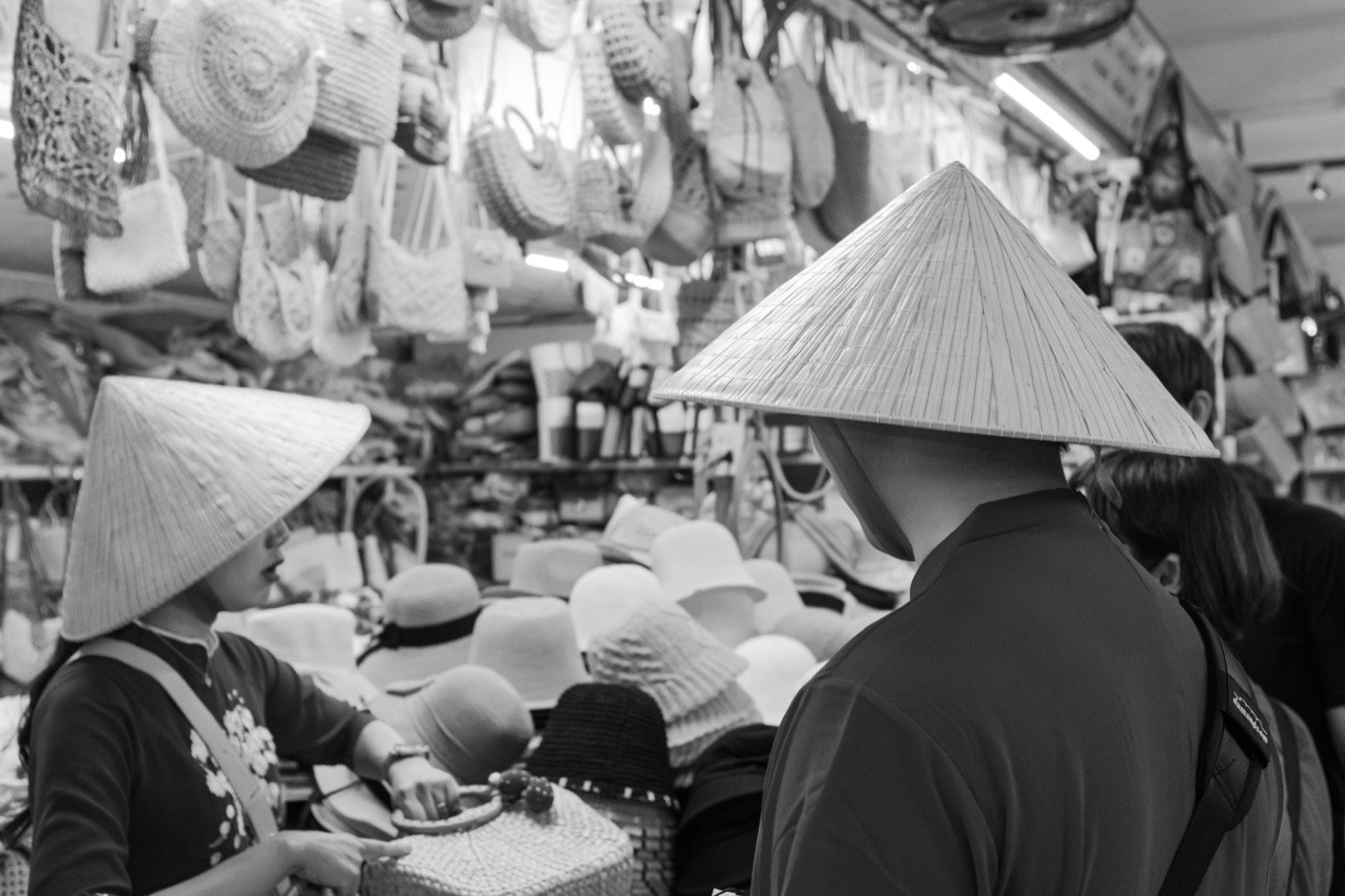
Vietnam is a good place to shop for handmade goods, and we find the best purchases are things made by the same communities that sell them. This page lists what to buy and where, with realistic prices as of 2026, so you can spend with confidence and skip the factory-made tat. Prices are approximate and vary by city and quality.
What to Buy and What It Costs
| Item | Typical price | Best place |
|---|---|---|
| Conical hat (non la) | 50,000 to 150,000 VND | Hue, Hoi An, Hanoi markets |
| Silk scarf | 200,000 to 600,000 VND | Hanoi Hang Gai, Hoi An |
| Lacquer coasters or boxes | 100,000 to 500,000 VND | Hanoi, Hue |
| Bat Trang ceramic cups | 50,000 to 200,000 VND | Bat Trang village near Hanoi |
| Silk lanterns | 50,000 to 200,000 VND | Hoi An |
| Coffee (500 g) | 120,000 to 300,000 VND | Hanoi, Da Lat, Buon Ma Thuot |
| Hmong embroidery or bags | 100,000 to 400,000 VND | Sapa, Bac Ha market |
| Tea (Thai Nguyen or lotus) | 100,000 to 400,000 VND | Hanoi |
Best Buys by City
Hanoi
The Old Quarter organises streets by trade. Hang Gai Street is known for silk and tailors, Hang Trong for folk paintings and Hang Ma for paper decorations and festival items. Dong Xuan Market sells wholesale goods at lower prices. See the Old Quarter guide for street names and a walking route. Lacquer sets and silk scarves are the easiest gifts. Our Hanoi things to do guide mentions craft stops too.
Bat Trang Ceramics
Bat Trang village, about 13 km from the centre, has made ceramics for centuries. Visit workshops, paint a cup, and buy bowls and tea sets for a fraction of city prices. Pack well, or ask the shop to ship.
Hoi An
Hoi An is the capital of tailor-made clothes and lanterns. Fabric shops make a shirt or dress in a day or two. Silk lanterns fold flat and are very packable. Hoi An also has leather shoemakers, and quality varies, so check stitching and ask for a fitting before paying. Our Hoi An things to do and the Hoi An lantern tour are good starting points. You can browse Hoi An tours that include craft villages and a lantern-making class.
Ho Chi Minh City
Ben Thanh Market is the tourist favourite and is also the most expensive for bargaining, so expect to push hard. Binh Tay Market in Cholon feels more local and cheaper. Dong Khoi Street has fixed-price boutiques with ceramics and lacquer. See Ho Chi Minh City things to do.
Hue
Hue is the home of the conical hat with poems or pictures hidden between the layers, and of imperial-style embroidery. Dong Ba Market is the main market and is a good place to compare.
Sapa and the Northern Hills
Hmong and Dao women sell embroidered bags, indigo cloth and silver jewellery. Buy directly from the maker where possible and be wary of cheap machine-made copies. Read our Sapa hill tribe villages guide for cultural context and how to buy respectfully.
Da Lat
Da Lat has coffee, dried fruit, artichoke tea and wool knitwear. The market in the centre is the best place to start.
Food and Drink Souvenirs
Coffee is the easiest win: robusta beans from the Central Highlands and a metal phin filter weigh little. Dried mango and coconut candy are cheap. Pepper from Phu Quoc and cashews are good gifts, while fish sauce is a favourite but heavy and best in checked luggage. If you want to learn more about local flavours, see our Vietnamese dishes guide.
Bargaining and Paying
At street stalls start at 40 to 50 percent of the quoted price and meet somewhere in the middle. Smile, stay friendly and do not accept the first number. Fixed-price shops and department stores do not bargain. Carry small notes, because change can be hard to find. See our Vietnam currency guide and tourist scams for fake-note and overcharging tricks.
Spotting Quality
- Silk: real silk feels cool and slightly uneven, and does not smell of plastic. Check the weave in daylight.
- Lacquer: layers should look deep and smooth. Cheap pieces are thin and chip easily.
- Ceramics: look for a clean glaze and a stable base.
- Hats: the weave should be tight and even.
Packing and Customs
Wrap breakables in clothes and carry fragile pieces in your cabin bag. Avoid antiques and anything that looks like a historical artefact, because export rules apply. Check your own country’s rules on food, wood and animal products. Entry and exit rules are summarised in our Vietnam visa guide, and for budget planning see Vietnam budget and costs.
A Short Shopping Plan
Three days in Hanoi with a Bat Trang half day, two in Hoi An for tailoring and lanterns, and a market morning in Saigon cover most shopping lists. For general information on regions and crafts see the Vietnam National Authority of Tourism.