Knowing the Vietnamese name for what you want — and roughly how to say it — makes ordering easier and earns instant goodwill from vendors. This guide covers the most important dishes by region, where to eat them, what to pay, and how to pronounce them when you order.
How Vietnamese food divides by region
Vietnamese cuisine varies significantly between north, central, and south Vietnam. The north is milder and less sweet; the centre is the spiciest region in the country; the south is sweeter and more herb-forward. What’s a staple in Hanoi may not appear on a menu in Saigon.
North Vietnam (Hanoi, Sapa, Ha Long Bay): Dishes are less sweet, more savoury. Pho here uses a clear, lightly seasoned broth with fewer garnishes than the southern version. Bun cha — grilled pork with vermicelli — is the quintessential Hanoi dish.
Central Vietnam (Hue, Hoi An, Da Nang): The spiciest region. Bun bo Hue uses a fiery lemongrass broth. Cao lau is unique to Hoi An — the noodles are made with water from a specific local well, and it genuinely tastes different there.
South Vietnam (Ho Chi Minh City, Mekong Delta): Sweeter sauces, more fresh herbs, heavier use of coconut. Com tam (broken rice) is the everyday working lunch of HCMC. Banh xeo crepes are crispier and larger than the central version.
North Vietnam dishes
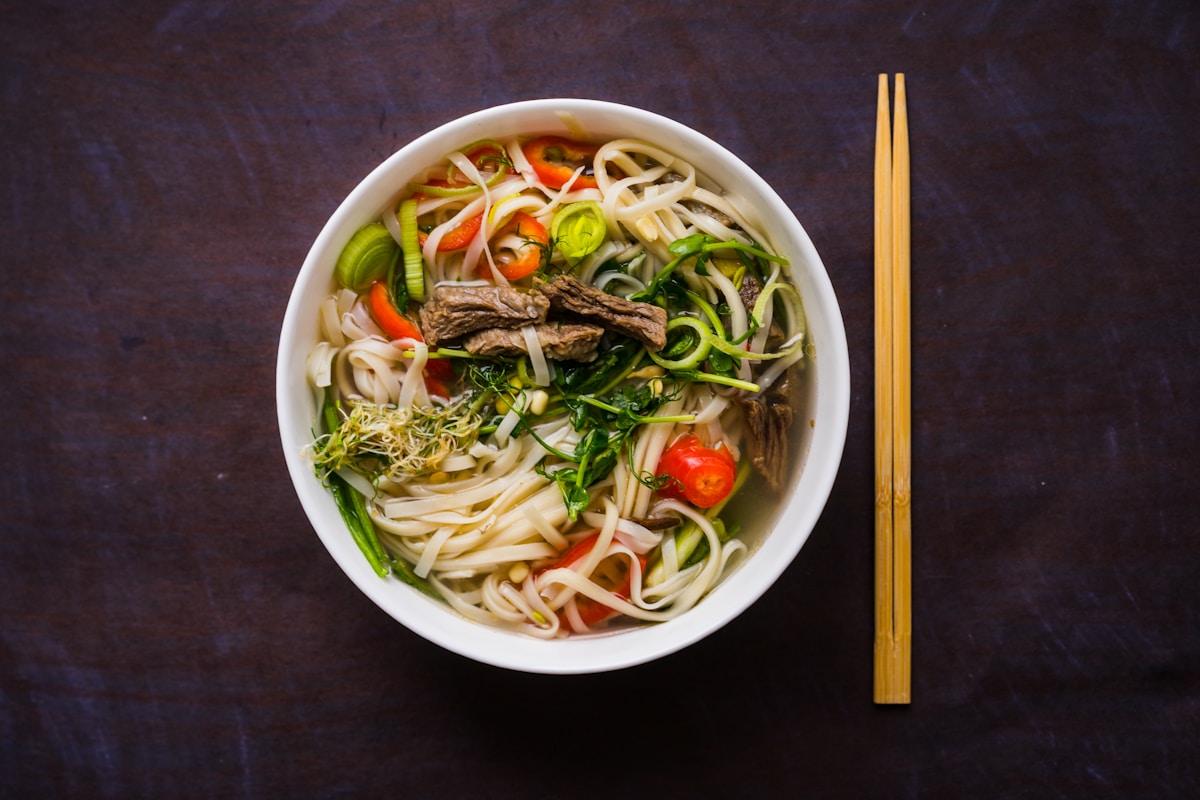
Phở bò / Phở gà — The most famous Vietnamese dish globally is a northern creation. In Hanoi, the broth is clearer and less sweet than southern pho, garnished with just spring onion and a few herbs. At a proper Hanoi pho shop (Pho Bat Dan, Pho Gia Truyen), expect to pay ₫60,000–100,000 ($2.40–4) per bowl. Order at 07:00–09:00 when the broth is at its best.
Bún chả — Charcoal-grilled pork patties and belly served in a bowl of sweet-savoury dipping broth alongside vermicelli and fresh herbs. A Hanoi lunchtime staple. Look for smoke coming out of small shopfronts around 11:30. ₫50,000–80,000 ($2–3.20).
Bánh cuốn — Silky steamed rice rolls filled with minced pork and mushroom, served with chả (Vietnamese pork sausage) and nuoc cham dipping sauce. Light and delicate. Good for breakfast. ₫40,000–70,000 ($1.60–2.80).
Chả cá — A Hanoi specialty: turmeric-marinated fish (traditionally snakehead or catfish) sizzled in a cast-iron pan with dill and spring onion at the table. Served with vermicelli, roasted peanuts, shrimp paste, and fresh herbs. A full meal at a dedicated chả cá restaurant costs ₫150,000–250,000 ($6–10) per person.
Central Vietnam dishes
Bún bò Huế — Hue’s signature dish is bolder and spicier than pho. The broth uses lemongrass and shrimp paste, and the bowl contains thick round noodles, sliced beef, and pork knuckle. Fiery red chilli oil sits on top. ₫50,000–90,000 ($2–3.60) at Hue street stalls.
Cao lầu — One of Vietnam’s most locally specific dishes. Thick, slightly chewy noodles served with char siu pork, bean sprouts, and crispy croutons in a minimal sauce. Only available in Hoi An — the noodles are made with local well water and wood ash lye. Authentic versions in the Hoi An covered market: ₫40,000–70,000 ($1.60–2.80).
Bánh xèo — A crispy turmeric-yellow crepe filled with pork, shrimp, and bean sprouts, cooked in a sizzling pan and eaten by wrapping pieces in rice paper with fresh herbs. The central version (especially from Da Nang) is crispy and large. ₫50,000–100,000 ($2–4).
Mì Quảng — Turmeric noodles with pork, shrimp, and quail egg in a small amount of rich broth, topped with peanuts, toasted sesame rice crackers, and fresh herbs. A Da Nang and Quang Nam staple. ₫40,000–70,000 ($1.60–2.80).
South Vietnam dishes
Cơm tấm — Broken rice (the fractured grains separated during processing) topped with grilled pork chop (sườn nướng), a shredded pork skin and rice paper mixture (bì), a steamed egg and pork cake (chả), and fish sauce. The everyday HCMC meal. Available at any com tam stall from 06:00 onwards. ₫50,000–90,000 ($2–3.60).
Hủ tiếu — A southern noodle soup with pork, shrimp, and offal in a clear, slightly sweet pork broth. Less famous than pho but widely eaten in HCMC and the Mekong Delta. Can be eaten as a soup (húng) or dry with the broth separate (khô). ₫45,000–80,000 ($1.80–3.20).
Bánh mì — The Vietnamese baguette sandwich evolved from French colonialism. A crusty baguette filled with pâté, butter, grilled pork, pickled daikon and carrot, cucumber, coriander, and chilli. ₫25,000–50,000 ($1–2) from street carts. Banh Mi 25 in Hanoi and Banh Mi Phuong in Hoi An are frequently cited as the best versions.
Vegetarian options
Vietnam’s Buddhist temple tradition means vegetarian food (ăn chay) is widely available, though not always labelled in tourist menus.
What to look for: Restaurants near Buddhist temples typically serve full vegetarian menus on the 1st and 15th of the lunar month — these days are marked by locals eating vegetarian for merit. The food is excellent and cheap: ₫40,000–70,000 ($1.60–2.80) per person for a full meal.
Common vegetarian dishes: Tofu in tomato sauce, morning glory stir-fried with garlic, mushroom rice paper rolls, vegetarian pho (pho chay), jackfruit dishes that mimic the texture of meat.
Key phrase: Tôi ăn chay (“toy an chai”) — “I eat vegetarian.” This is understood throughout Vietnam.
What to order as a first-timer
If you’re overwhelmed by choice, start here:
- Morning: Pho bo (beef noodle soup) or banh cuon (steamed rice rolls)
- Lunch: Bun cha (Hanoi) or com tam (HCMC/south)
- Snack: Banh mi from a street cart
- Dinner: Cao lau if in Hoi An; goi cuon (fresh spring rolls) as a starter anywhere
Street food vs restaurants
Street stalls and local eateries with plastic stools serve better and cheaper food than tourist restaurants in most cases. Look for stalls with Vietnamese customers, a visible cooking process, and laminated photos or a handwritten menu on a whiteboard. The absence of an English menu is generally a good sign.
Price guide: Street stall breakfast ₫30,000–60,000 ($1.20–2.40). Local lunch ₫50,000–100,000 ($2–4). Mid-range restaurant dinner ₫100,000–250,000 ($4–10) per person. Tourist restaurant dinner ₫200,000–500,000+ ($8–20+) per person.
Dish names and pronunciation
| Dish | Vietnamese | Say it like |
|---|---|---|
| Beef noodle soup | Phở bò | ”fuh baw” |
| Chicken noodle soup | Phở gà | ”fuh gah” |
| Pork and vermicelli | Bún chả | ”boon chah” |
| Baguette sandwich | Bánh mì | ”ban mee” |
| Rice paper rolls (fresh) | Gỏi cuốn | ”goy koon” |
| Fried spring rolls | Chả giò | ”chah yaw” (south) / “chah zaw” (north) |
| Broken rice plate | Cơm tấm | ”gum tum” |
| Hue beef noodle soup | Bún bò Huế | ”boon baw hway” |
| Hoi An noodles | Cao lầu | ”cow loh” |
| Turmeric crepe | Bánh xèo | ”ban say-oh” |
| Steamed rice rolls | Bánh cuốn | ”ban koon” |
| Turmeric fish with dill | Chả cá | ”chah kah” |
| Egg coffee | Cà phê trứng | ”kah fay choong” |
| Iced milk coffee | Cà phê sữa đá | ”kah fay soo-ah dah” |
Ordering phrases
- One portion, please - Cho tôi một phần (“cho toy moht fun”)
- How much? - Bao nhiêu? (“bow nyew”)
- No chilli - Không cay (“khong kai”)
- Extra herbs - Thêm rau (“tem rao”)
- The bill, please - Tính tiền (“ting tyen”)
- I eat vegetarian - Tôi ăn chay (“toy an chai”)
Tones in Vietnamese are everything — the same syllable in a different tone is a completely different word. Vendors are used to foreign accents, so gesture at menu boards or photos if pronunciation fails. Most street stalls display prices; if not, Bao nhiêu? always works.