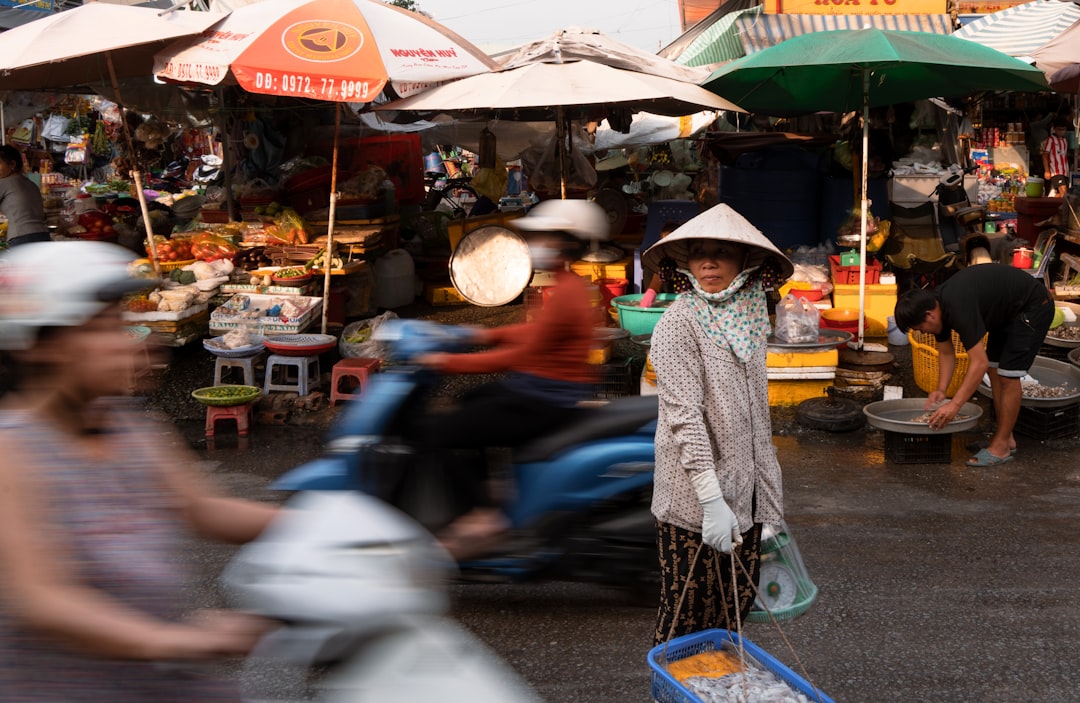
Vietnam is a genuinely enjoyable and safe country to travel. Violent crime against foreign visitors is rare. What you will encounter - especially in HCMC (Ho Chi Minh City) and Hanoi - are opportunistic scams that target distracted or freshly arrived tourists. None are dangerous, but they can sour a day and cost real money. Knowing what to expect is the best protection.
This guide covers the scams we see most consistently reported across Vietnam’s main tourist areas, how to avoid them, and what to do if one catches you anyway.
Taxi Scams
Taxi fraud is the most widespread scam affecting visitors to Vietnam and comes in several forms.
Rigged meters
Some unlicensed taxis operate meters that tick over far faster than they should. A trip from Tan Son Nhat Airport (SGN) to District 1 in HCMC should cost approximately 180,000–250,000 VND (around USD 7–10) by legitimate meter. A rigged meter on the same route has charged tourists 600,000–1,000,000 VND.
How to avoid: Use Grab (the dominant ride-hailing app across Vietnam) for all urban trips. The price is fixed before you get in and matches consistently with what you pay. If you prefer a metered taxi, use Mai Linh (green, tel: 1055) or Vinasun (white with red roof stripe, tel: 1088) - both operate calibrated, regulated meters. Avoid taxis that approach you at airports or tourist sites.
Airport touts
At Tan Son Nhat in HCMC and Noi Bai in Hanoi, unofficial taxi touts operate inside and outside the terminal. They offer “fixed price” fares that are typically double the genuine rate and, once in the car, apply pressure for additional fees.
How to avoid: Exit the arrivals hall and walk to the official taxi rank, or open Grab before you clear customs and request a car from the app. Grab has dedicated pickup zones at both major airports with clear signage. The cleanest option is to pre-book a private airport transfer before you fly - a named, English-speaking driver meets you at arrivals with a sign, price agreed in advance, no negotiation required.
”Same same, but different” taxi company names
Companies with names designed to resemble Mai Linh or Vinasun - different colours, similar fonts - operate in HCMC and Hanoi. At a glance on a busy street, the confusion is deliberate.
How to avoid: Check the company name on the door panel before getting in. Both Mai Linh and Vinasun drivers must wear uniforms and carry ID cards visible in the car. If the driver can’t show ID, walk away.
Cyclo and Xe Om Overcharging (Hanoi)
The cycle rickshaw (cyclo) is a classic Hanoi tourist attraction and one of the most reliably misused against visitors. Drivers near Hoan Kiem Lake and the Old Quarter quote seemingly reasonable fares - 50,000 VND for a loop - and present a bill for 500,000 VND at the end, claiming the quote was per minute or per person.
Xe om (motorbike taxis) run a milder version of the same scheme: a verbal fare agreed on the street is contested at drop-off.
How to avoid:
- Agree the total fare in writing - take a photo of the quote written on a piece of paper if language is a barrier.
- Confirm “for all of us” and “to [destination], total” before setting off.
- For xe om, Grab Bike is a direct replacement with a fixed app price - use it instead.
If it happens: Pay the original agreed amount only. Keep calm. Shouting draws a crowd, which cyclo drivers use as leverage. Walking to the nearest shop and asking staff to mediate usually resolves it quickly.
Fake and Low-Quality Tour Operators
The Old Quarter in Hanoi is dense with travel agencies, many of which resell tours booked with legitimate operators - at a premium and without any recourse if things go wrong. The most common complaint involves Ha Long Bay day trips: tourists book a “cruise” that turns out to be a day boat with 60 passengers, no overnight cabin as implied, and meals not included.
HCMC’s Pham Ngu Lao backpacker district has similar issues around Mekong Delta tours and Cu Chi Tunnels day trips.
How to avoid:
- Book Ha Long Bay cruises through operators who have a physical office with reviews verifiable on TripAdvisor or Google (Bhaya, Paradise, Au Co are established operators - expect to pay approximately USD 100–200+ per person for a legitimate overnight cruise).
- For Cu Chi Tunnels and Mekong Delta trips from HCMC, check that the agency has a fixed storefront with displayed licence numbers, not just a street table.
- Pay by card where possible - it gives you a chargeback route if the service is misrepresented.
- Avoid booking tours from someone who approaches you on the street.
The Shoe Shine Trick (HCMC)
A young man - sometimes a child - approaches in District 1 or near Ben Thanh Market and begins polishing your shoe without asking. Once finished, he demands 200,000–500,000 VND (approximately USD 8–20). Refusal triggers a scene, sometimes involving family members or associates.
How to avoid: If someone touches your shoe, stop them immediately before they begin. “No, thank you” while moving is the clearest signal. Once the shine is done, the price is harder to contest.
If it happens: 50,000 VND (approximately USD 2) is a reasonable upper limit for a shoe shine in Vietnam. Pay that, state it clearly, and walk. Don’t let yourself be walked to an ATM.
Motorbike Bag Snatching
This is the most physically dangerous situation on the list, though still rare in absolute terms. A motorbike comes close alongside a pedestrian - often near Ben Thanh Market, Bui Vien Street, or in the backstreets of District 1 - and the pillion rider snatches a bag or phone from the person’s hand or shoulder.
How to avoid:
- Keep phones in pockets rather than in hand on the street, especially when walking near kerbs.
- Carry bags on the shoulder away from the road (inner shoulder).
- Sitting inside a cafe is safer than at a pavement table when using a phone.
- Use crossbody bags that can’t be yanked - not tote bags with a single shoulder strap.
If it happens: Do not chase on foot. Report immediately to police (dial 113) for the insurance documentation. The chances of recovery are low, so the priority is your physical safety and the paperwork.
Currency Confusion
The Vietnamese dong (VND) uses large denominations - 500,000 VND notes are common, and 100,000 VND looks similar to 10,000 VND to an unfamiliar eye. Some vendors exploit this at busy markets, including Dong Ba Market in Hue and the tourist stalls around Hoi An’s Ancient Town.
The trick is simple: you hand over a 500,000 VND note, the vendor pockets it and claims you gave 50,000 VND. Or change is returned for a smaller denomination than you handed over.
How to avoid:
- Separate your notes by denomination before entering markets. Keep large notes in a separate pocket.
- Count your change immediately and before leaving the stall. It is entirely acceptable to do this - locals do.
- Say the denomination aloud when handing money over: “năm trăm nghìn” (500,000) so the vendor acknowledges it.
- Withdraw smaller denominations (50,000 and 100,000 notes) from ATMs where possible.
Restaurant Overcharging and Menu Switching
Two patterns appear repeatedly in tourist areas:
The altered menu: A restaurant near tourist sites - particularly around Hoan Kiem Lake in Hanoi and Hoi An’s riverside - shows a laminated English menu with low prices. The bill arrives with different (higher) prices, or with items listed at “tourist price” rather than the displayed rate.
The unlisted item: A dish arrives unbidden - bread, peanuts, a plate of pickles - and appears on the bill. In some cases, a street seafood vendor in coastal areas quotes a price “per 100g” for shellfish, which turns into an enormous bill once the heaped basket is weighed.
How to avoid:
- Ask for the Vietnamese-language menu alongside the English one. Prices should match.
- Decline any item you didn’t order and confirm before the dish is placed whether it is complimentary.
- For seafood at markets (particularly in Da Nang, Nha Trang, and Phu Quoc), always ask the total price for your selection before it’s cooked, not after.
- Compare the itemised bill against what you ordered before paying.
The “Friendly Guide” Scheme (Hanoi Old Quarter)
A pleasant, well-spoken local - often a university student - strikes up a conversation near Hoan Kiem Lake or St. Joseph’s Cathedral. After twenty minutes of genuine-seeming conversation, they suggest you see “a local market” or “visit my cousin’s art gallery.” The destination is a shop with no price tags where you’re expected to buy.
This is not dangerous and the people running it are usually just making a living, but it consumes an afternoon and involves real social pressure to purchase.
How to avoid: Enjoy the conversation. Politely decline any invitation to visit a specific shop, gallery, or “local place” you hadn’t planned to see. “I have a meeting later” closes it cleanly. There is no need to be rude - simply redirect.
What To Do If You’ve Been Scammed
Immediately: If a bag was snatched or money taken by force, call 113 (police). Dial 1800 599 920 for the Vietnam National Tourism Hotline, which operates in English and can connect you with tourist police.
Tourist police: Dedicated tourist assistance police operate in Hanoi (near Hoan Kiem Lake) and HCMC (near Ben Thanh Market). They handle complaints in English and can provide documentation for insurance claims.
Bank: If your card or details were compromised, freeze the card via your bank’s app immediately - don’t wait.
Travel insurance: File a report even if you don’t expect police to recover anything. Most insurers require a police report for theft claims over a minimum value.
Perspective: The vast majority of visitors to Vietnam never experience anything more than an inflated price at a market stall. Being alert - particularly in the first 48 hours when jet lag and unfamiliarity make you a softer target - makes most of this avoidable.
The Safest Habits
- Use Grab for all taxis and motorbike rides in HCMC and Hanoi.
- Agree prices before boarding any cyclo or xe om, or eating at any street stall without a fixed menu.
- Carry phones in pockets on busy streets, not in hand near the kerb.
- Count change before leaving any transaction.
- Book tours through operators with fixed offices, not street touts.
For a broader look at safety across the country - including traffic, health, and regional considerations - see our Vietnam safety guide. For transport options across the country, including how to use Grab and which buses are reliable, see getting around Vietnam.
Plan Your Trip
✈️ Book your flights to Vietnam 🛡️ Get travel insurance 📱 Stay connected with an eSIM 🚗 Rent a car