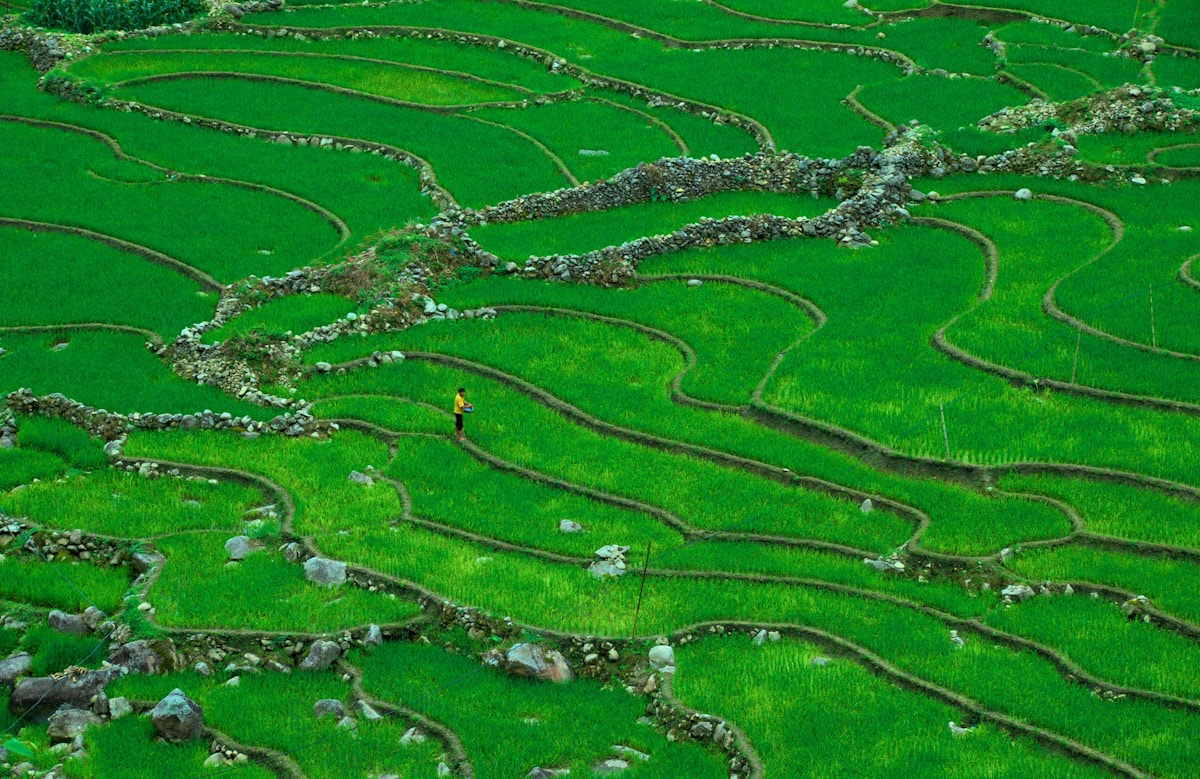
This itinerary covers two nights and two full days in Pu Luong Nature Reserve - enough time to walk the main ridge trail, visit Ban Hieu waterfall, sleep in a village homestay, and return to Hanoi the same evening you leave. It works as a self-guided trip or as a structure to discuss with a tour operator.
Before You Go: Logistics
Getting there: Most visitors take a private transfer from Hanoi’s Old Quarter (approximately 3.5 hours, 1,800,000–2,500,000 VND / $72–100 total for the vehicle). Leave by 07:00 to arrive at Pu Luong village before midday and make use of the afternoon light. If travelling as a pair, a private transfer per person costs roughly the same as a tour package seat.
Booking ahead: During September–October (harvest season), homestays fill up fast. Book at least 5–7 days in advance. In May–June or November–April, same-week booking is usually fine. Your Hanoi guesthouse can often call ahead to confirm a bed - local homestay owners rarely use online booking platforms.
Cash: The nearest ATM is in Quan Hoa town, roughly 20km from the reserve. Bring enough VND for 2 nights of accommodation, 4–5 meals, and any guide fees. Budget travellers should bring at minimum 600,000–800,000 VND ($24–32) per person for accommodation/food alone.
Day 1: Arrival, Ridge Walk, Village Exploration
Morning: Transfer from Hanoi
Depart Hanoi by 07:00–07:30. The drive follows National Highway 6 southwest through Hoa Binh province - the road improves after the Hoa Binh dam and the final stretch into Thanh Hoa province cuts through scenic valleys. With clear roads, you’ll arrive at Pu Luong village around 10:30–11:00.
If you’re doing this independently, ask your driver to drop you at the Pu Luong village car park area rather than driving further into the reserve - the car park puts you at the base of the main ridge trail.
Late Morning: Ridge Walk Above Pu Luong Village
The trail begins behind the main cluster of stilt houses in Pu Luong village. The ascent to the ridge takes 45–60 minutes on a path that climbs through bamboo and secondary forest before opening onto a narrow limestone ridge. The views from the top look west across the full Pu Luong valley - the paddies below, the river glinting through the valley floor, and the forested ridgelines of the reserve on the far side.
The descent on the far side leads toward the valley between Pu Luong village and the Ban Son area. This loop takes approximately 2.5–3 hours total from the village and returns you to the valley floor.
Note: The trail becomes slippery after rain. Trekking poles are useful on the descent if you have them.
Lunchtime: Village Lunch
Return to Pu Luong village or the nearby hamlet of Ban Son for lunch. Most homestays will prepare lunch for around 80,000–120,000 VND ($3–5) per person for non-staying guests - sticky rice with river fish, stir-fried morning glory, and a clear soup. If no food is available at your first stop, continue 2km east to where the road passes through a small market cluster with basic food stalls.
Afternoon: Settle into Homestay, Explore the Valley
After lunch, check into your homestay. The afternoon is best spent wandering the valley paths between the stilt houses, watching the water buffalo return from the fields, and exploring the water mill area downstream - a cluster of traditional stone mills driven by a diverted stream, still in use for grinding rice.
The walk from Pu Luong village to the water mills takes about 20–25 minutes on a flat path along the stream. The mills are most active in October–November during and after harvest.
What to expect at a village homestay:
- Room: mattress or raised wooden bed (budget) or a private room with fan (mid-range)
- Bathroom: shared, usually cold water, occasionally solar-heated
- Electricity: reliable in most homestays near the road; inconsistent deeper in the valley
- Signal: limited - WeChat and WhatsApp calls fail in many spots; save your offline maps
Budget homestays to look for: Any of the stilt houses displaying handwritten guesthouse signs around Pu Luong village. Expect 200,000–300,000 VND ($8–12) per person including dinner and breakfast. Hosts generally don’t speak much English; pointing and basic Vietnamese phrases help.
Mid-range option: Pu Luong Eco Garden and Pu Luong Retreat both have ridgeline positions with terrace views. Rates run approximately 1,100,000–1,500,000 VND ($44–60) per room including breakfast as of 2026. Book direct via the eco-lodges’ Facebook pages or through Hanoi tour operators - they rarely appear on major OTAs.
Evening: Dinner and Homestay Life
Dinner at a village homestay is communal and usually served around 18:30–19:00. The standard spread: sticky rice steamed in bamboo, grilled river fish, sautéed greens from the garden, and occasionally wild vegetables foraged from the reserve edges. If your host has rice wine (ruou can - a lightly fermented brew drunk through a shared bamboo straw), it’s polite to try a small amount. Declining is also fine.
The valley gets dark early. Stars are outstanding in clear weather - no light pollution reaches the inner reserve. Bedtime is early in Pu Luong; most households are quiet by 21:00.
Day 2: Ban Hieu Waterfall, Trekking the Valley, Return to Hanoi
Early Morning: Sunrise from the Valley
Wake before 06:00 if you can. The light hits the rice terraces early and the village is quiet - water buffalo being led out to pasture, smoke rising from cooking fires, the sound of the stream. This hour is the best of the trip for photography and unhurried walking.
Breakfast at your homestay (usually included): sticky rice, fried egg or omelette, strong Vietnamese drip coffee or green tea.
Morning: Trek to Ban Hieu Waterfall
Ban Hieu is 8km southeast of Pu Luong village. You can walk the road (flat, 1.5–2 hours), take a motorbike taxi (50,000–80,000 VND / $2–3), or arrange your homestay host to ride you there for a negotiated fee.
The Ban Hieu waterfall is a three-tiered cascade that drops into a clear pool deep enough for swimming. The water temperature ranges from cool to cold depending on season - refreshing in hot weather, bracingly cold in winter. Locals swim here regularly; the pool is safe in normal water conditions but avoid it after heavy rain when the volume increases significantly.
The village at Ban Hieu has its own cluster of homestays and a small food stall near the waterfall car park that sells cold drinks, instant noodles, and banh mi throughout the day.
Budget breakdown for the Ban Hieu section:
- Motorbike taxi from Pu Luong: approximately 60,000–80,000 VND ($2.50–3)
- Cold drinks at waterfall: approximately 20,000–30,000 VND ($0.80–1.20) each
- Lunch at Ban Hieu food stall: approximately 50,000–80,000 VND ($2–3) per person
Midday: The Road Between Villages
The road connecting Pu Luong village to Ban Hieu passes through several smaller hamlets and offers continuous views of the valley. If you walked to Ban Hieu, this is the stretch where you’ll see the most everyday village life - women returning from the fields, children walking home for lunch, goats grazing the roadside.
A rough side path from the road (approximately 4km from Pu Luong village) leads down to the river and a series of small natural swimming pools. Ask your homestay host or any local to point it out - it’s not signposted but is well-known among villagers.
Afternoon: Return to Hanoi
Most Hanoi-based private transfers can pick up from either Pu Luong village or Ban Hieu - confirm the pickup point when you book. Departure at 13:00–14:00 gets you back to Hanoi by 17:00–17:30 in normal traffic. Add an hour for Friday evenings or public holidays.
If travelling by public bus, arrange a motorbike taxi to the Quan Hoa road junction and flag the Thanh Hoa–Hanoi bus there. The bus runs every 1–2 hours through the afternoon but seats can be limited on weekends.
Budget Summary (Per Person, 2 Days)
| Item | Budget | Mid-range |
|---|---|---|
| Private transfer (2-person split) | 900,000 VND ($36) | 1,250,000 VND ($50) |
| Night 1 homestay (dinner + breakfast included) | 260,000 VND ($10) | 1,300,000 VND ($52) |
| Night 2 homestay or eco-lodge | 260,000 VND ($10) | 1,300,000 VND ($52) |
| Lunches × 2 | 200,000 VND ($8) | 350,000 VND ($14) |
| Guide (optional, per day × 1 day) | 400,000 VND ($16) | 500,000 VND ($20) |
| Local motorbike taxis | 130,000 VND ($5) | 130,000 VND ($5) |
| Drinks, snacks, incidentals | 100,000 VND ($4) | 200,000 VND ($8) |
| Total |
All prices as of 2026. Prices vary by season; September–October harvest season runs approximately 15–20% higher for accommodation.
How This Trip Connects to a Wider North Vietnam Loop
Pu Luong pairs naturally with Mai Chau - the two reserves are 40km apart and connected by a single road. A combined loop from Hanoi might look like: Day 1 drive to Mai Chau → Day 2 cycle the valley → Day 3 motorbike to Pu Luong → Day 4 trek and return to Hanoi. This avoids doubling back and gives you two distinct landscapes in four days.
Alternatively, Pu Luong is a logical detour on the way to or from the Ha Giang Loop - though it requires a longer transit via Thanh Hoa rather than the more direct northwest highway.
- Pu Luong Nature Reserve Guide: Villages, Homestays and Trekking
- Mai Chau Travel Guide: White Thai Villages and Rice Valley Cycling
- 1 Week in North Vietnam Itinerary: Hanoi, Ha Giang and the Highlands
- 2 Weeks in Vietnam: A Complete North to South Itinerary
Where to book hotels: Most visitors base themselves in Hanoi the night before and after the Pu Luong trip. Search Booking.com for Hanoi accommodation — the Old Quarter is the most convenient base for the early morning departure.
Book Your Trip
Flights — search and compare on Aviasales eSIM — stay connected with Airalo Travel insurance — get covered with EKTA Airport transfers — book with Kiwitaxi Car rental — compare with GetRentaCar Hotels — compare and book on Booking.com Tours and activities — browse GetYourGuide