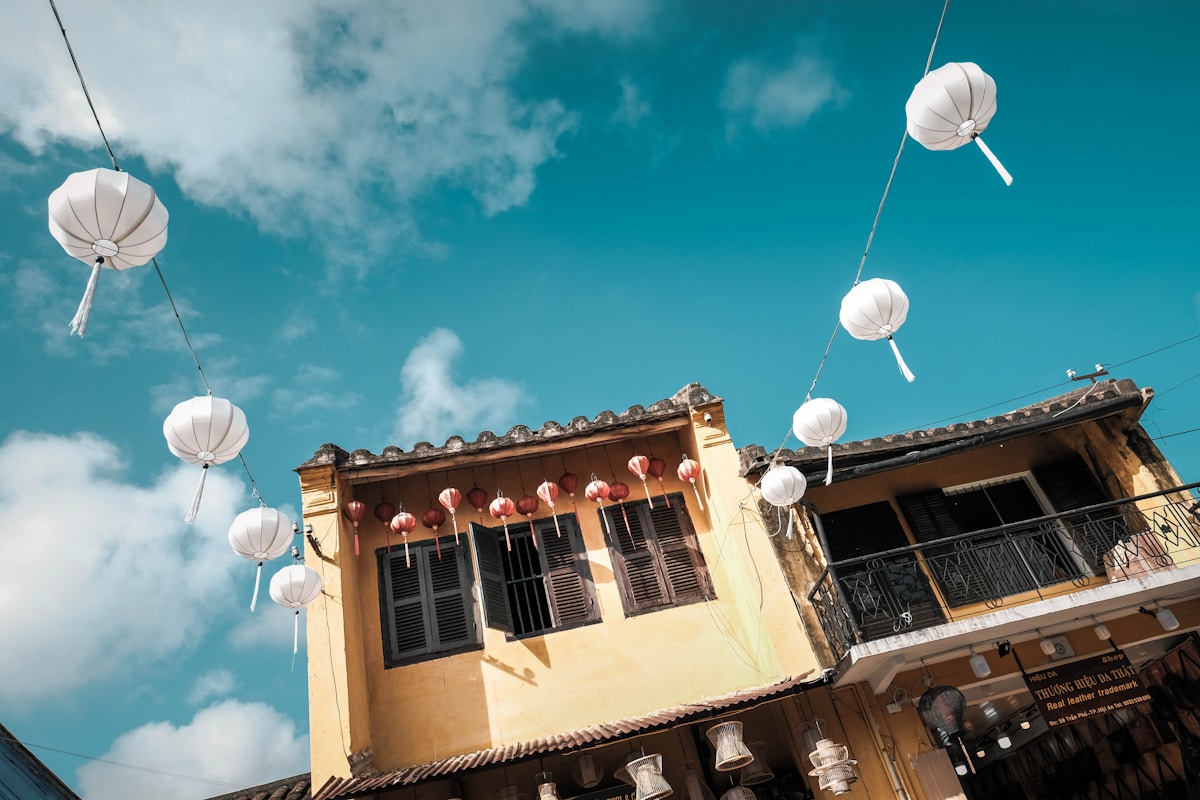
Two weeks is enough to travel the length of Vietnam with meaningful time at four or five key stops. The classic route runs north to south (or south to north), taking the Reunification Express train for the central sections. Flying between the bookend cities saves a full day of travel each way. Before departure, it is worth sorting two practical items: an VisitorsCoverage policy that covers the full trip duration, and an Airalo eSIM activated before landing so you have data from the moment you clear immigration.
Overview
Total distance: Hanoi to HCMC, approximately 1,700km. Main stops: Hanoi, Ha Long Bay, Hue, Da Nang/Hoi An, Ho Chi Minh City. Transport: Flights for Hanoi–HCMC approach (or the reverse); train for Hue–Da Nang–Hoi An section; overnight bus or sleeper train for some legs.
For a full breakdown of all transport options (sleeper train, open bus, or mixed routes), see our Hanoi to Ho Chi Minh City overland guide.
Day 1–3: Hanoi
Arrive Hanoi. A fixed-price airport transfer from Noi Bai into the Old Quarter takes about 45 minutes - easier than negotiating with street taxis after a long flight. Use the first day for the Old Quarter orientation - the 36 guild streets, Hoan Kiem Lake, and Ngoc Son Temple. Day 2: Ho Chi Minh Mausoleum, Temple of Literature, and the French Quarter. Day 3: day trip options - Perfume Pagoda (60km south) or a motorbike tour of the countryside.
Stay: Old Quarter for atmosphere (Hang Be area is central). 3 nights.
Day 4–5: Ha Long Bay
Day 4: depart Hanoi by bus or transfer (3.5 hours to Ha Long). Board a 2-day/1-night cruise. Day 5: morning on the bay, return to Hanoi by late afternoon. Alternatively, continue directly south from Ha Long to save retracing.
Alternative: Cat Ba Island 2-night stay as a base for Ha Long and Lan Ha Bay, bypassing the standard cruise.
Day 6: Travel Hanoi to Hue
Overnight sleeper train from Hanoi to Hue (12–13 hours, departs approximately 19:00, arrives 08:00). A comfortable option - the SE3 and SE5 trains have 4-berth soft sleeper compartments. ₫350,000–500,000 ($14–20) per berth.
Day 7–8: Hue
Two full days in Hue. Day 7: Imperial Citadel and the Forbidden Purple City (half day), afternoon boat trip on the Perfume River to Thien Mu Pagoda. Day 8: royal tombs (Khai Dinh for the mosaic interior, Tu Duc for the garden setting), bun bo Hue lunch, evening com hen on Con Hen Island.
Stay: South bank near Pham Ngu Lao or Dong Ba for central position. 2 nights.
Day 9: Hue to Hoi An via the Hai Van Pass
Hire a motorbike or take the tourist bus/car transfer via the Hai Van Pass (496m summit, views of Da Nang Bay). Stop at the summit for 30 minutes. Continue to Da Nang, stop at the Marble Mountains, and arrive Hoi An by late afternoon. The drive is 130km and takes 3–4 hours with stops.
Day 10–11: Hoi An
Two full days. Day 10: Ancient Town morning (₫120,000 combined ticket - Japanese Covered Bridge, Fujian Assembly Hall, merchant houses), afternoon at An Bang Beach. Day 11: cooking class (Morning Glory or Red Bridge) in the morning, evening lantern-making and the Thu Bon River boat trip.
Stay: Ancient Town area for proximity. 2 nights.
Day 12: Da Nang (optional)
If time allows, spend a day in Da Nang rather than rushing straight to HCMC. My Khe Beach morning, Museum of Cham Sculpture, and the Dragon Bridge fire show (Saturday/Sunday evenings). Fly to HCMC in the evening.
Day 13–14: Ho Chi Minh City
Two days in HCMC. Day 13: War Remnants Museum, Reunification Palace, Ben Thanh Market, and a Cho Lon afternoon (District 5 Chinese quarter). Day 14: Cu Chi Tunnels day trip (organised tour, 40km northwest, half day), afternoon at Jade Emperor Pagoda, evening on the Bui Vien waterfront or a rooftop bar.
Fly home from Tan Son Nhat on Day 14 or early Day 15.
Practical notes
Internal flights: Booking the Hanoi arrival and HCMC departure as a one-way combination saves retracing. VietJet and Bamboo Airways have competitive Da Nang → HCMC fares (₫300,000–800,000 / $12–32 booked in advance). For comparing international fares and the open-jaw approach, search with Aviasales to find the best combination across low-cost and full-service carriers, or read our flights to Vietnam guide.
Train booking: The SE3 Hanoi–Hue train should be booked 2–3 weeks in advance for soft sleeper berths, particularly in peak season.
Weather: The central region (Hue, Da Nang, Hoi An) receives heavy rain October–December. If travelling in this period, HCMC first and north second avoids the worst flooding risk in Hoi An. Detailed conditions by month: Vietnam in October, Vietnam in November, Vietnam in December.
For Ha Long Bay cruises, Hoi An cooking classes, Cu Chi Tunnels tours, and Phu Quoc boat excursions along this route - browse Vietnam tours and activities with instant confirmation and free cancellation on most bookings. If you prefer to keep the schedule loose and book on the ground, our last-minute tours page shows what’s departing in the next few days.
Where to book hotels: Search Booking.com for accommodation across this itinerary — it covers the full range from budget guesthouses in Hanoi’s Old Quarter to boutique hotels in Hoi An and beach resorts on Phu Quoc.
Useful guides for this itinerary
- Ha Long Bay cruises guide - how to choose a cruise and what to pay
- Hoi An cooking classes guide - schools and booking tips
- Cu Chi Tunnels tours guide - operators, prices, Ben Dinh vs Ben Duoc
- Getting around Vietnam - trains, flights, and open-bus tickets
- Vietnam visa guide - e-visa and requirements
Frequently Asked Questions
Is 2 weeks enough for Vietnam? Two weeks covers the main highlights - either north to south or focusing on two regions in depth. The classic 2-week route runs Hanoi → Ha Long Bay → Da Nang/Hoi An → Ho Chi Minh City, with domestic flights between sections.
What is the best 2-week Vietnam itinerary? Hanoi (2 days), Ha Long Bay cruise (2 days), fly to Da Nang, Hoi An (3 days), Hue (1 day), fly to HCMC (2 days), Mekong Delta day trip, fly to Phu Quoc (3 days). This covers north, centre, and south in a realistic 14 days.
How much does a 2-week Vietnam trip cost? Budget: around USD 700–1,000 total excluding international flights. Mid-range with private rooms and restaurant meals: USD 1,500–2,500. Boutique hotels, private tours, and premium Ha Long Bay cruises push costs higher.
Should I travel Vietnam north to south or south to north in 2 weeks? Either works. North to south is slightly more common as you end near the best beach destination (Phu Quoc). South to north allows you to end in Hanoi for onward flights to Europe or East Asia. An open-jaw flight avoids retracing.
Do I need domestic flights for a 2-week Vietnam itinerary? Yes, for a north-to-south trip in 2 weeks. Flying Hanoi to Da Nang (1 hour, from approximately ₫300,000) and Da Nang to HCMC (1 hour) saves 2+ days versus bus or train for the same legs. Book 2–4 weeks ahead for the best fares on VietJet or Bamboo Airways.
If you arrive without tours booked, our last-minute tours page is a good starting point for finding same-day availability in Hanoi, Hoi An, and Ho Chi Minh City.
Book Your Trip
Flights — search and compare on Aviasales eSIM — stay connected with Airalo Travel insurance — get covered with EKTA Airport transfers — book with Kiwitaxi Car rental — compare with GetRentaCar Hotels — compare and book on Booking.com Tours and activities — browse GetYourGuide