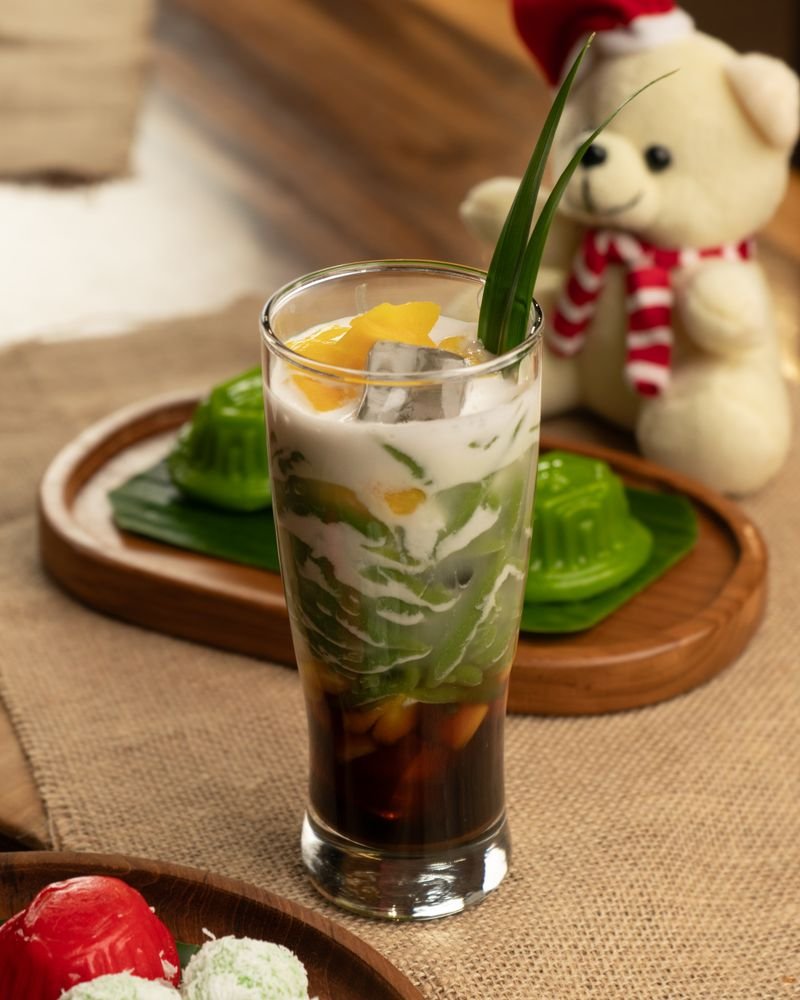
Vietnamese desserts are less about cake and more about cold, textured, coconut-sweet bowls and glasses. Walk through any market after lunch and you will see carts of beans, jellies and syrups waiting to be spooned into a cup over ice. This guide explains the main types, where to try them in Vietnam and how to order a good one. For the rest of the savoury picture, see our must-try Vietnamese dishes guide.
Che: the big category
Che (chè) is not one dessert but a family. A cup is assembled from components:
- Beans and seeds: red beans, mung beans, black-eyed peas, lotus seeds.
- Jellies and chewy bits: grass jelly, agar jelly, tapioca pearls, water chestnut.
- Fruit: jackfruit, longan, mango, banana.
- Liquids and toppings: coconut milk, palm sugar syrup, crushed ice, roasted peanuts.
It can be cold (che ba mau, che thai) or hot (che chuoi, banana in coconut milk with tapioca). Prices at street carts are usually VND 15,000 to 40,000 per cup as of 2026.
Other desserts worth trying
- Banh flan: a Vietnamese creme caramel, often served with coffee and ice in the south. A common cheap dessert.
- Kem chuoi and kem dua: frozen banana and coconut ice cream, found in coastal towns.
- Xoi: sticky rice with sweet toppings such as mung bean, coconut or mango, sold as a breakfast or dessert.
- Sua chua nep cam: yoghurt with purple sticky rice, popular in Hanoi.
- Banh pia and banh bo: small cakes and steamed rice cakes sold as snacks.
Where to try them
Hue
Hue is the best city for che. As the former imperial capital it developed dozens of fine variations, and the shops here are specialists, sometimes selling little else. Expect a multi-layered cup for roughly VND 15,000 to 30,000. Ask for a mixed selection if you are unsure. See our Hue food guide and the Hue food-to-try list.
Ho Chi Minh City
Che ba mau, with red bean, green jelly and yellow mung bean, is the classic. Cart sellers and dessert shops across the city centre and around Ben Thanh Market serve it, usually VND 20,000 to 40,000. Our Ho Chi Minh City food guide lists neighbourhoods worth wandering.
Hanoi
Hanoi is known for yoghurt with sticky rice, sweet soups in small bowls and a street-food scene where dessert often follows an evening of grilled meat. See the Hanoi food-to-try list.
Hoi An
Dessert carts and small shops in the Ancient Town sell che by the cup. See the Hoi An food guide for restaurants and street stalls.
How to order
- Point to the components you like, or ask for “che thap cam” (mixed che).
- Choose hot (nong) or cold (da).
- Add sugar syrup carefully, because the cup is often already sweet.
- Sit down: che is eaten on the spot, from a glass or bowl with a spoon.
Tips
- Hygiene: choose busy carts with covered ingredients, and prefer places that use packaged ice.
- Timing: afternoons and evenings, when it is hot, are peak che hours.
- Vegans: most che is plant-based; avoid condensed milk and flan.
A simple dessert route
If you only have an afternoon, start with a cold cup of che ba mau at a cart or small shop, move on to a cup of banh flan with iced coffee, and finish with a bowl of warm banana che if the evening is cool. Keep each stop small, because many shops sell by the cup and the sugar adds up quickly. Dessert shops also serve fruit shakes and smoothies, which are worth trying if you are not sure about beans in a sweet soup. Locals eat these snacks between meals rather than after dinner, so afternoons and early evenings are the busiest times, and you can sample three or four kinds without ordering a full meal.
Make a dessert crawl
A Hue food tour can include dessert stops alongside the imperial dishes, and a Hanoi street food tour often finishes with sweet soups and yoghurt. Our street food guide shows where desserts fit in a day of eating. For general travel information, see vietnam.travel.