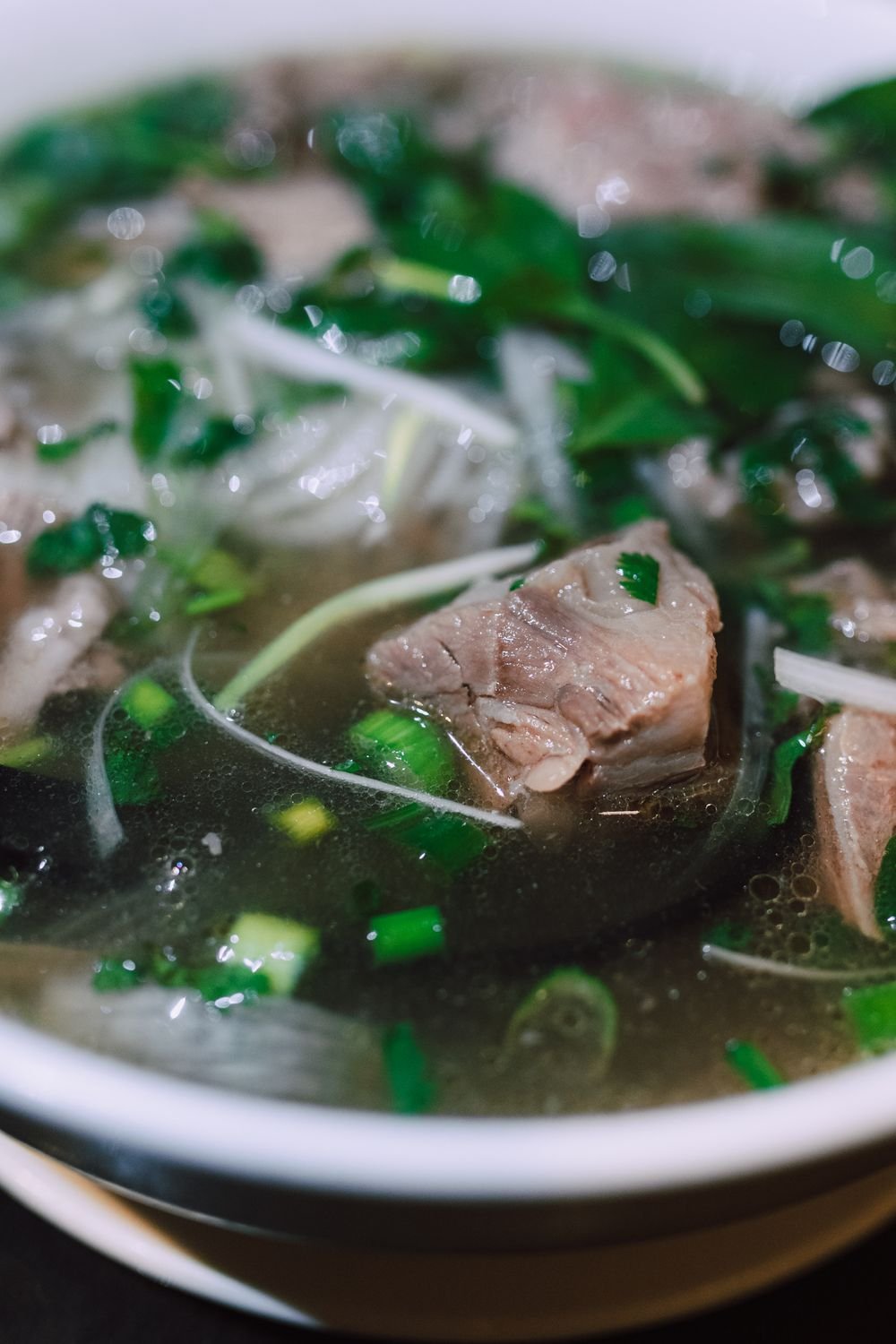
Bun bo Hue is the dish people in central Vietnam will defend against pho. It is a rust-red, lemongrass-scented beef and pork noodle soup with real chilli heat, and it is one of the most searched Vietnamese dishes for good reason: once you have had a good bowl, ordinary noodle soup tastes timid. This guide is about where to eat it, what to expect on the table and how to order. For the wider regional picture, see our must-try Vietnamese dishes guide.
What is in a bowl of bun bo Hue
You do not need the recipe to order well, but knowing the parts helps you read a menu:
- Broth: beef and pork bones simmered for hours with lemongrass, then finished with fermented shrimp paste (mam ruoc) and a chilli-annatto oil that gives the soup its red colour.
- Noodles: thick, round rice noodles, closer to spaghetti than the flat ribbons used in pho.
- Meat: sliced beef shank, often a piece of pork knuckle, and sometimes cubes of congealed pork blood (tiet) and slices of Vietnamese pork sausage (cha).
- On the side: a plate of raw banana blossom, shredded cabbage, bean sprouts, herbs and lime, plus extra chilli.
Say “khong tiet” if you would rather skip the blood, or “khong gio heo” to leave out the pork knuckle.
Where to eat bun bo Hue
In Hue (the best place)
The dish belongs to Hue, and the bowls here are the benchmark. Most specialist shops are morning-only, run by one family, and serve little else.
- Quan Bun Bo Ba Tuyet on Ly Thuong Kiet Street is the shop most often recommended for a consistent, deeply flavoured broth. It opens early and regularly sells out before mid-morning, so go before 8am. See our Hue restaurant guide for more addresses.
- Nguyen Chi Dieu Street, near the Citadel, is known locally as a bun bo block, with several shops within a short walk. Compare two bowls and pick your favourite.
- Dong Ba Market and the lanes behind it have stalls serving a quick, cheap bowl if you are already exploring the north bank.
Expect to pay roughly VND 40,000 to 60,000 for a standard bowl in Hue as of 2026, a little more for a special bowl with extra meat. For the complete picture of what else to order, read our Hue food guide and the Hue food-to-try list.
In Hanoi and Ho Chi Minh City
Bun bo Hue is sold nationwide, but expect a different balance outside the centre. Hanoi versions tend to be milder and cleaner; Saigon versions are often sweeter and richer, with more toppings. Look for signs reading “Bun Bo Hue” with the name of a family, usually a small shop that sells nothing else, rather than a tourist restaurant menu. Prices are typically VND 50,000 to 80,000 in the big cities. It is perfectly good, but if you are choosing between cities, eat it in Hue.
How to order and eat it
- Point to the shop sign, say “mot to bun bo” (one bowl of bun bo) and the staff will bring a standard bowl.
- Squeeze in the lime and add herbs from the plate. Tear the banana blossom and cabbage into the soup so they soften.
- Add chilli oil and shrimp paste to taste. The broth is already hot, so taste first.
- Eat it hot, and early. By late morning the best shops have often closed.
Common mistakes
- Arriving after 10am in Hue and finding the shop sold out.
- Treating it as pho. Do not add hoisin or sriracha at the table; the broth is complete.
- Assuming it is vegetarian. It never is unless the menu says chay.
Eat it with a guide
If you would rather have the context and a few other Hue specialities in one morning, a Hue food tour covers bun bo Hue alongside banh khoai and the city’s royal-cuisine dishes. The Vietnam Tourism Administration’s official site at vietnam.travel has general advice on food and travel in the country. Bun bo Hue also appears on our street food guide for the full national picture.