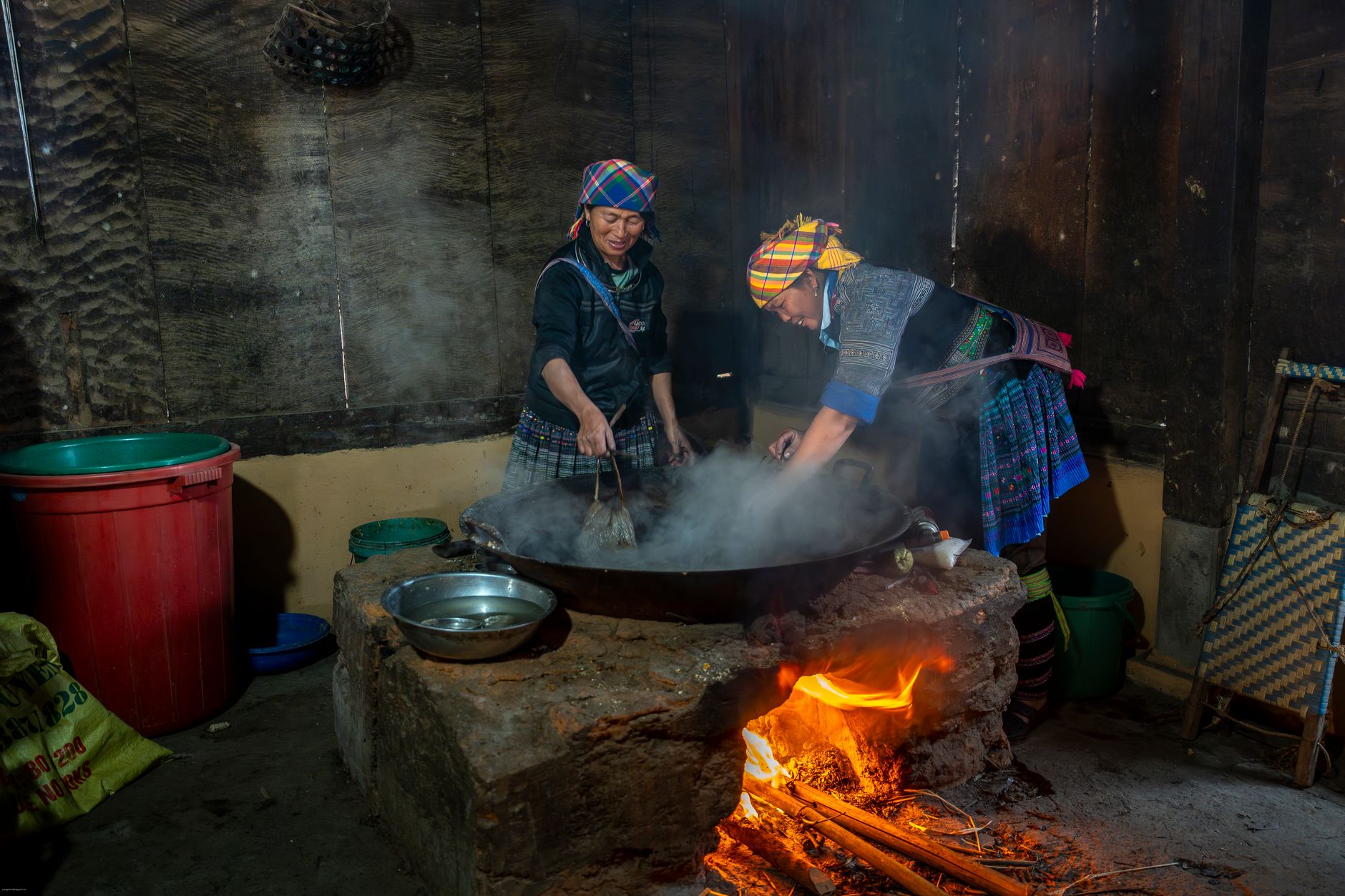
Sapa’s food is shaped by its altitude (1,600m), its climate (cool year-round, cold and sometimes snowy in winter), and the food traditions of the ethnic minority communities who farm the surrounding valleys - primarily the Black Hmong and Red Dao. The cuisine is more meat-heavy than lowland Vietnam, uses mountain herbs and vegetables rarely seen elsewhere in the country, and centres on communal eating at weekend markets that remain genuinely functional gathering places for surrounding villages.
Thang Co (horse meat stew)
The dish most associated with the Sapa region and the Black Hmong community. A slow-cooked stew of horse meat and offal (intestines, liver, lung, and stomach) with a blend of spices including star anise, cardamom, lemongrass, and local mountain herbs. The pot cooks for hours at market stalls, with vendors adding water as it reduces.
The flavour is intense and gamey from the offal, warmly spiced from the aromatics, and genuinely unlike anything else in Vietnamese cooking. It is challenging to the uninitiated but widely considered worth trying at least once for the cultural experience.
Where to eat it: Thang co is a market food - the most authentic versions are found at Bac Ha market (Sunday), Can Cau market (Saturday), and Muong Hum market. In Sapa town itself, some restaurants on the main drag serve thang co, but the flavour is toned down for tourist palates. 40,000-80,000 VND ($1.60-3.20) per bowl.
A practical note: Thang co is cooked in large shared pots at markets. The hygiene standards at traditional markets differ from restaurant kitchens. If you have a sensitive stomach, the restaurant version in Sapa town is the safer starting point.
Sapa Salmon (Ca Hoi Sapa)
Salmon farming in the Sapa region is a relatively recent industry (commercial scale since the mid-2000s) using the cold mountain river water flowing from the Fansipan massif. The salmon raised here - primarily Atlantic salmon species adapted to the conditions - have become one of Sapa’s unexpected food specialties.
Sapa salmon is served in several ways across the town’s restaurants:
- Sashimi: Sliced raw over ice with soy sauce and wasabi. The cold mountain water produces clean-tasting fish. 120,000-200,000 VND ($4.80-8) for a starter portion.
- Grilled with salt and herbs: Whole or fillets grilled over charcoal. Simple and lets the fish quality speak. 100,000-180,000 VND ($4-7.20).
- Salmon hotpot (lau ca hoi): A popular cold-weather preparation with sliced salmon, mushrooms, tofu, and mountain vegetables in a lemongrass-tomato broth cooked at the table. 250,000-400,000 VND ($10-16) for a pot serving two people.
Tip: Not all “Sapa salmon” served in town is genuinely local. Some restaurants substitute farmed salmon from other regions. The local product is fresher and firmer - ask whether the salmon is local (ca hoi dia phuong) and look for restaurants near the market that show a higher turnover of fresh fish.
Com Lam (bamboo rice)
Glutinous rice mixed with coconut milk and a pinch of salt is packed into a fresh green bamboo section and sealed with a banana leaf. The bamboo is placed over an open fire and cooked until the outer surface chars and the rice inside steams in the coconut milk and bamboo juices.
The bamboo is split at the table. The rice comes out in a cylindrical log with a thin bamboo membrane on the outside - this membrane is eaten with the rice and carries the bamboo fragrance.
Com lam is sold by Hmong women at roadside points throughout the Sapa valley (particularly on the road down to Cat Cat village and the road toward Ta Phin), at the central market in Sapa town, and at the hilltribe markets. 15,000-25,000 VND ($0.60-1) per tube. It is excellent with black chicken or grilled pork.
Ga Den (black chicken)
Black-boned chicken (xuong den, referred to as “black chicken” at most Sapa restaurants) is a highland breed with dark skin, dark flesh, and black bones. The breed has a stronger flavour than standard chicken and significantly less fat.
The most common Sapa preparation is steamed with ginger and medicinal herbs, or slow-simmered in a broth. Some restaurants offer ga den hotpot (lau ga den), with the chicken cooked at the table in a medicinal herb broth.
Price: Ga den is more expensive than standard chicken due to the breed’s slower growth rate. A half-chicken or full chicken prepared dish costs 150,000-280,000 VND ($6-11.20). Hotpot with ga den runs 250,000-400,000 VND ($10-16) for two people.
Where to eat it: Look for restaurants in Sapa town with explicit signage for ga den. The restaurants on the road toward Ham Rong Mountain and the back streets away from the main market square tend to have better quality and lower prices than the tourist-strip restaurants.
Lon Ban (wild boar / mountain pig)
More accurately, lon ban refers to small indigenous mountain pigs raised free-range in the village areas around Sapa. They are significantly smaller than commercial pigs, leaner, and with a stronger flavour. The meat is typically grilled over charcoal or slow-cooked in a clay pot.
Lon ban sold at Bac Ha and other hill tribe markets is the most authentic source. In Sapa town restaurants it is available but the provenance (genuinely free-range mountain pig versus commercial pork sold as lon ban) is not always clear. 80,000-150,000 VND ($3.20-6) per portion.
Market food: what to look for at Bac Ha
Bac Ha market (Sundays, 40km from Sapa - 1.5 hour drive) is the best single food experience in the Sapa region and one of the most genuine market experiences in northern Vietnam. The market is primarily a functional trading event for Flower Hmong communities from surrounding villages.
Food to seek out at Bac Ha:
- Thang co (from the central cooking stalls - large shared pots)
- Com lam (usually sold by women near the produce section)
- Fresh mountain vegetables: rau cai meo (highland cabbage), sa seng (a local herb), wild fiddlehead ferns
- Local corn wine (ruou ngo) at 10,000-15,000 VND ($0.40-0.60) per glass
- Banh day (sticky rice cakes pounded in a mortar, often with sesame or peanut filling)
- Fresh fruit: in season, Bac Ha grows plums (man Bac Ha), peaches, and pears at altitude
Getting there: Most Sapa guesthouses run Sunday day trips to Bac Ha for 200,000-350,000 VND ($8-14) per person including transport. Alternatively, rent a motorbike in Sapa town and ride the 40km mountain road (check conditions in winter months).
Rau Cai Meo (highland vegetables)
The cool climate and high altitude around Sapa produce vegetables with different flavours from lowland Vietnam. Rau cai meo (literally “cat vegetable” - a variety of highland mustard greens) is the most distinctive, with a slight bitterness and firm texture. It is stir-fried with garlic and appears as a side dish at virtually every restaurant in town.
Other highland produce worth trying: young bamboo shoots in season (spring), wild mushrooms from the forest, and the small highland chillies (ot rung) used in dipping sauces.
Useful links:
More in Sapa
- Best Hostels in Sapa 2026: Budget Stays Near the Valley
- Best Hotels in Sapa 2026: Valley View Hotels and Eco Lodges
- Best Restaurants in Sapa 2026: Salmon, Hill Tribe Food and Highland Cafes
- Day Trips from Sapa 2026: Bac Ha Market, Ta Phin Village and Fansipan
- Hill Tribe Villages Near Sapa 2026: Cat Cat, Ta Van and Lao Chai
- Sapa Rice Terraces 2026: Best Viewpoints and When to Visit
- Things to Do in Sapa 2026: Trekking, Markets and Cable Car
- Trekking in Sapa 2026: Routes, Guides and What to Expect