Quy Nhon: Cham Tower Ruins, Eo Gio Cliffs & Market Seafood
Quy Nhon travel guide: underrated beaches, Cham tower ruins, seafood at market prices, Eo Gio cliffs, and central Vietnam's most authentic coast.
Guides for Quy Nhon
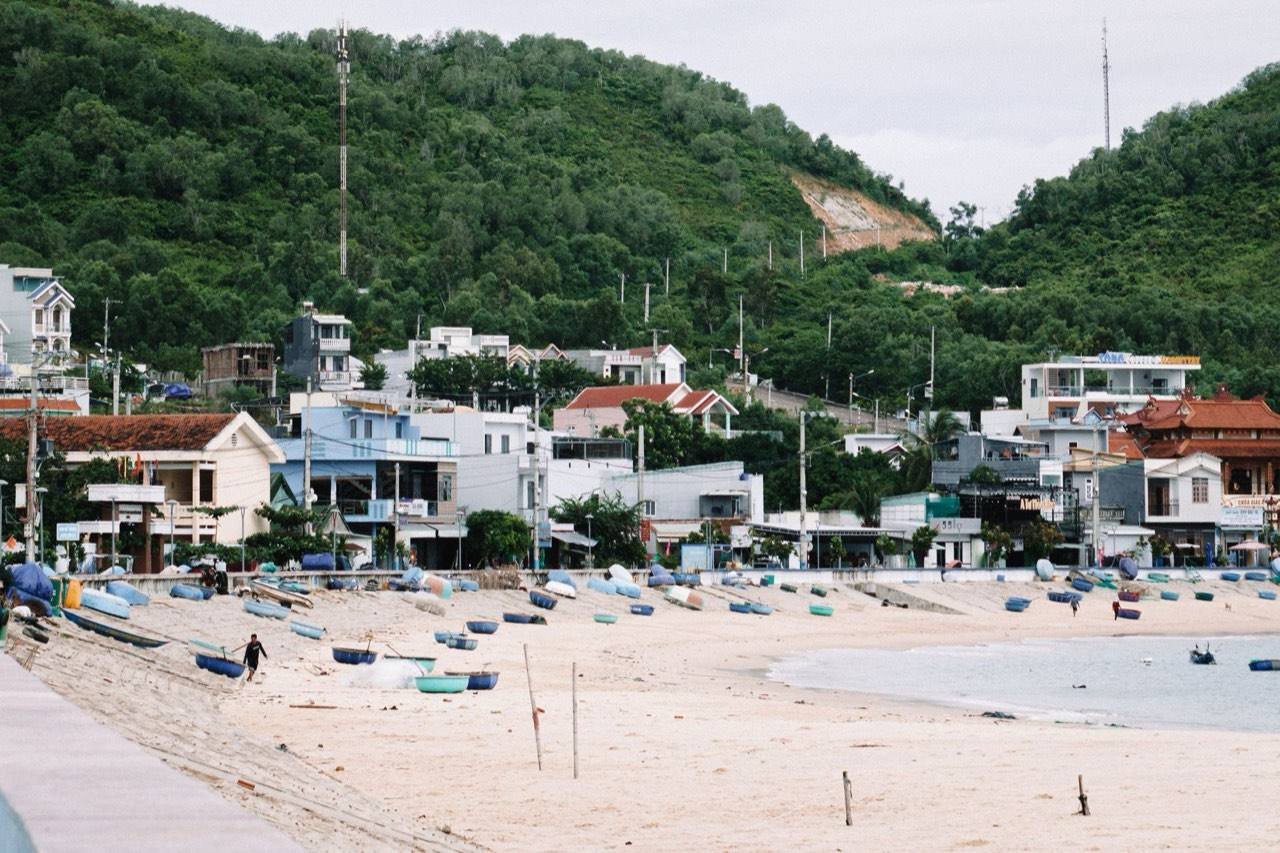
Quy Nhon is the capital of Binh Dinh province in south-central Vietnam, 300km south of Da Nang. It is a working port city with a genuine beach, excellent seafood, Cham tower ruins, and almost none of the tourist infrastructure that dominates Da Nang or Hoi An. For travellers who find those cities over-developed, Quy Nhon is the alternative. Quy Nhon is one of the 5 underrated places in Vietnam we recommend.
Why Quy Nhon
The city has a curved bay beach (Quy Nhon Beach) in the town centre, a string of less-visited beaches south and north on the peninsula, fresh seafood at market prices, and a Cham cultural heritage in the surrounding region. It has been on travellers’ radar for the “undiscovered Vietnam” appeal since around 2018, though it remains significantly quieter than the central Vietnam tourist centres.
Banh xeo and com ga: Quy Nhon’s local banh xeo (sizzling pancake) and com ga (chicken rice) are considered among the best versions in Vietnam by regional food standards. Food travellers specifically visit for these dishes.
Eo Gio: A coastal rock formation 15km from the city - wind-carved cliffs above a bay, accessible by motorbike. One of the most photographed landscapes in Binh Dinh province.
Cham towers: Two well-preserved Cham tower clusters in the Binh Dinh region - Banh It towers and Twin Towers (Thap Doi) - are within day trip distance.
If you want the full eating list, our Quy Nhon food to try guide covers the dishes and where to find them.
The beach
Quy Nhon Beach is a 2km crescent directly in the city centre. The beach is clean, swimmable April–October, and not overcrowded by Vietnamese resort standards. Several hotels face the beach without the resort-strip pricing of Da Nang.
Reef snorkelling and island trips from the Quy Nhon coast can be booked as guided Quy Nhon island and coast tours.
Who comes here
Vietnamese domestic tourists (primarily from HCMC and Hanoi) who want a beach destination without the Nha Trang mass tourism. Independent international travellers on the coastal route. Travellers interested in Cham history beyond My Son.
Seasons
Similar to Da Nang: dry and beach-appropriate March–August. Wet October–December with potential typhoon influence. January–February is cool and mostly dry.
Costs
Quy Nhon is cheaper than Da Nang. Beach hotels: ₫500,000–1,500,000 ($20–60) as of 2026. Street food: ₫25,000–60,000 ($1–2.40). Budget daily cost: ₫350,000–600,000 ($14–24). Browse Quy Nhon tours and activities including Cham tower guided visits and local boat trips.
Getting to Quy Nhon
By air: Phu Cat Airport is 35km north of the city. Vietnam Airlines and VietJet operate flights from Hanoi (1.5 hours) and HCMC (1 hour). Airport taxi to the city: approximately ₫200,000–350,000 ($8–14) as of 2026.
By train: Dieu Tri Station (10km from the city) is on the Reunification Express line. Da Nang: 4–5 hours. Nha Trang: 3–4 hours. HCMC: 11–12 hours overnight. Taxi from station to city: approximately ₫80,000–150,000 ($3.20–6) as of 2026.
By bus: Express buses from Da Nang (4–5 hours, ₫150,000–250,000 / $6–10) and Nha Trang (4–5 hours, ₫150,000–250,000 / $6–10) as of 2026.
Phu Cat is 35km from the city, so it can be easier to pre-book a private airport or intercity transfer rather than negotiate with airport taxis.
Where to stay in Quy Nhon
The main Quy Nhon beachfront is the city’s standout feature - beachfront accommodation costs 30–50% more than streets behind, but direct beach access justifies it if sand is the priority.
Upscale (₫1,000,000–4,000,000 / $40–160): Avani Quy Nhon Resort is the standout property, directly on the beach with pool and restaurant - the most polished mid-luxury option in south-central Vietnam at ₫1,500,000–4,000,000 ($60–160). FLC Quy Nhon Beach & Golf Resort is a large resort complex south of the city with multiple pools, golf, and private beach sections at ₫1,000,000–3,000,000 ($40–120).
Mid-range (₫400,000–1,200,000 / $16–48): Seagull Hotel (Hai Au) is the reliable long-established option on the main beach road - pool, good location, ₫500,000–1,200,000 ($20–48). Anh Viet Hotel is solid city-centre mid-range within easy reach of the beach at ₫400,000–900,000 ($16–36).
Budget (₫200,000–450,000 / $8–18): Guesthouses on Nguyen Hue Street, 2–3 blocks from the beach. Basic private rooms with air-con. Walk-in is the standard approach - most don’t have online booking.
Bai Xep (10km south): Small fishing village guesthouses from ₫200,000–400,000 ($8–16) in a quiet bay setting, for travellers who want a local coastal experience over city convenience.
Search hotels in Quy Nhon on Booking.com →
For the full breakdown and specific property picks, see our Best Hotels in Quy Nhon guide.
Beachfront hotels face the 2km crescent, so compare Quy Nhon beach hotels for your dates.
Where to eat
Quy Nhon has a strong street food identity and most of the best eating is at local stalls rather than sit-down restaurants.
Banh xeo Nam Dong: Consistently recommended for Quy Nhon’s version of the sizzling pancake - thinner and crispier than the Mekong Delta style, served with fresh herbs and dipping sauce. Approximately ₫25,000–45,000 ($1–1.80) per pancake as of 2026. Located in the market area near the city centre.
Com ga (chicken rice): Several small com ga restaurants cluster on Tran Hung Dao Street near the central market. A bowl of aromatic rice with poached chicken, topped with turmeric and coriander: ₫40,000–70,000 ($1.60–2.80) as of 2026.
Bai Xep village (14km from the city): The small fishing village of Bai Xep has beachside seafood restaurants serving the morning catch. Fresh grilled fish, crab, and squid at ₫150,000–350,000 ($6–14) per person. Take a motorbike - no public transport.
Night seafood market: At the north end of Quy Nhon Beach, open from 18:00. Grilled mantis shrimp, oysters, and fresh squid at ₫80,000–200,000 ($3.20–8) per person as of 2026.
Getting around
Motorbike hire (₫150,000–200,000 / $6–8 per day as of 2026) is essential for visiting Eo Gio, Bai Xep, and the Cham towers. Grab is available in the city. The city centre is flat and cyclable - several guesthouses provide free bicycles.
How many days
Two to three days covers the main sights: the city beach, Eo Gio, Bai Xep, a Cham tower visit, and thorough sampling of the banh xeo and seafood. Travellers who add Ky Co Beach by boat or the Banh It towers in the countryside can comfortably spend four days.
More in Quy Nhon
- Things to Do in Quy Nhon
- Quy Nhon Beaches Guide
- Best Restaurants in Quy Nhon
- Best Hotels in Quy Nhon
- Best Hostels in Quy Nhon
- Getting to Quy Nhon
- Day Trips from Quy Nhon
Nearby destinations
Plan your trip
Planning bookings for Quy Nhon? Our where to stay in Quy Nhon guide covers areas and budgets, and our best Quy Nhon tours roundup compares guided options.
Planning to visit? Browse hotels in Quy Nhon , free cancellation on most bookings.
Book an experience
Top experiences in Quy Nhon
Explore the best tours and activities in Quy Nhon , with instant confirmation and free cancellation on most bookings.
Frequently Asked Questions
- Why should I visit Quy Nhon instead of Da Nang?
- Quy Nhon has a genuine beach, excellent seafood at market prices, Cham tower ruins, and almost none of the tourist infrastructure that dominates Da Nang or Hoi An. Hotels and street food are significantly cheaper.
- What food is Quy Nhon known for?
- Quy Nhon's banh xeo (sizzling pancake) and com ga (chicken rice) are considered among the best versions in Vietnam. Food travellers specifically visit for these dishes.
- What is Eo Gio near Quy Nhon?
- A coastal rock formation 15km from the city - wind-carved cliffs above a bay, accessible by motorbike. It is one of the most photographed landscapes in Binh Dinh province. Entry is 30,000 VND ($1.20).
- When is the best time to visit Quy Nhon?
- March to August for dry, beach-appropriate weather. October to December can be wet with potential typhoon influence. January to February is cool and mostly dry.
Upcoming Events in Quy Nhon
Tet 2027: What Closes, Flower Markets, Transport
Tet 2027 starts 6 February. What closes, flower markets in Hanoi and Saigon, where to be and how to beat the transport crunch.