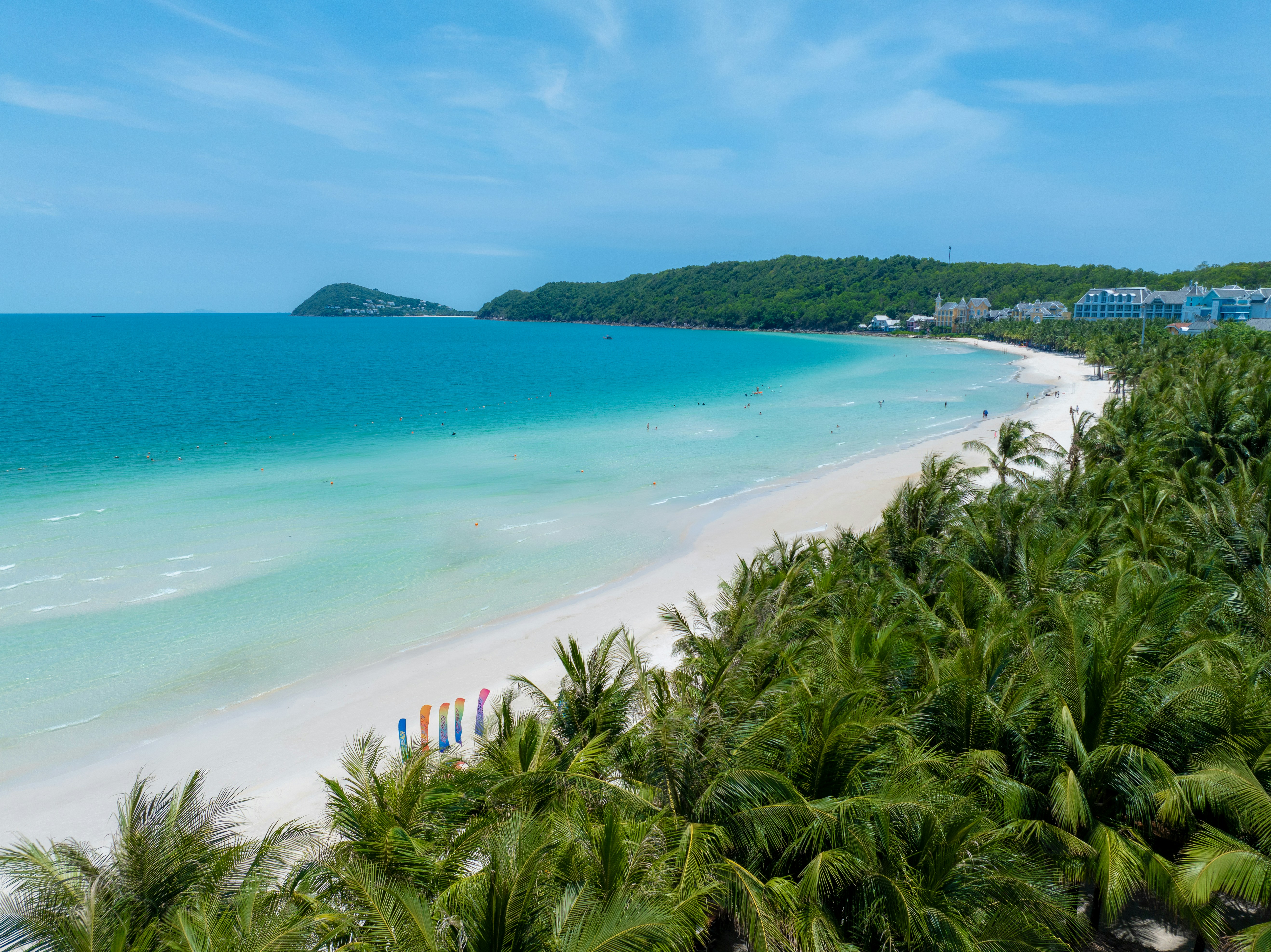
Phu Quoc: Vietnam's Largest Island - Beaches, Diving
Phu Quoc travel guide: Vietnam's largest island - white-sand beaches, coral diving, luxury resorts, island-hopping, and the 30-day visa-free policy.
Guides for Phu Quoc
Phu Quoc is Vietnam’s largest island - 574 sq km, roughly the size of Singapore - sitting in the Gulf of Thailand, 45km off the Cambodian coast and 15km from mainland Vietnam’s Ha Tien port. Despite its proximity to Cambodia, it has been Vietnamese territory since the 18th century and operates as part of Kien Giang Province. The island has a unique visa-free entry policy: visitors of all nationalities can stay up to 30 days without a Vietnamese visa, provided they arrive directly on Phu Quoc and do not travel to mainland Vietnam. This has made it one of the most accessible beach destinations in Southeast Asia.
Data connectivity on the island is good in the main resort areas - an Airalo eSIM activated before arrival is the easiest way to have data the moment you land, without queuing for a local SIM at the airport.
Where is Phu Quoc?
Phu Quoc sits in the Gulf of Thailand (not the South China Sea, where most of Vietnam’s coastline faces). It is closer to Sihanoukville, Cambodia than to any major Vietnamese city. The nearest Vietnamese mainland point is Ha Tien, reachable by ferry. Ho Chi Minh City is the primary air connection point - a 1-hour direct flight. Hanoi also has direct flights, taking approximately 2 hours 15 minutes.
The island runs roughly north–south, approximately 50km long and 25km wide at its widest point. A mountain spine runs through the northern half, covered in dense forest. The west coast is where the beach tourism concentrates; the east coast is wilder and less developed.
Key areas of the island
Duong Dong: The main town on the west coast and the island’s commercial centre. The Dinh Cau Night Market operates here every evening from approximately 5pm - the primary food market and the best place for affordable seafood. Duong Dong is where most mid-range accommodation sits and where the local population concentrates.
Long Beach (Bai Truong): A 20km stretch of sand running south from Duong Dong along the southwest coast. This is where the majority of international resorts are located. Calm water, good sunset views, and easy access to restaurants and bars. The northern section near town is more developed; the southern section near An Thoi is quieter.
Ong Lang: A quieter beach area northwest of Duong Dong. More residential and less resort-heavy than Long Beach, with a mix of boutique hotels and family-run guesthouses. Better for travellers wanting a peaceful base without full resort infrastructure.
An Thoi (south): The southern tip of the island, home to the cable car to Hon Thom island (the world’s longest non-stop three-rope cable car at 7.9km - approximately VND 150,000–300,000 / $6–12 per ticket as of 2026), the Sun World amusement complex, and the An Thoi archipelago used for snorkelling and diving trips. Sao Beach (Bai Sao), consistently rated among Vietnam’s finest white-sand beaches, is on the southeast coast near here.
The north: Wilder terrain with Phu Quoc National Park (a UNESCO Biosphere Reserve covering approximately 31,422 hectares), pepper plantations, and traditional fishing villages. Ganh Dau village on the northwest tip looks across to Cambodia. Bai Dai (Long Beach North) has several large Vinpearl resort properties.
Things to do
Beaches: Long Beach for convenience and sunsets, Sao Beach for the whitest sand, Ong Lang for quiet days, and Bai Dai in the north for large resort beach clubs. Free access to all public beaches; resort beaches may restrict access to guests.
Phu Quoc National Park: The interior forest covers most of the northern half of the island. Trekking trails exist but are limited and not well-marked - a local guide is recommended. The Suoi Tranh waterfall (approximately VND 20,000 / $0.80 entry) is the most accessible nature stop, a 20-minute walk from the car park through forest.
Dinh Cau Night Market: The island’s main evening attraction in Duong Dong town. Open nightly from around 5pm. Grilled seafood, spring rolls, and coconut ice cream from dozens of stalls. A full seafood dinner (grilled prawns, squid, fish, and rice) costs approximately VND 200,000–400,000 ($8–16 as of 2026) depending on what you order and the stall.
Snorkelling and diving: The An Thoi archipelago in the south is the main diving area - not world-class, but with reasonable coral coverage and visibility of 5–15m depending on season. A two-dive trip costs approximately VND 1,500,000–2,500,000 ($60–100) including equipment. Snorkelling day trips to the southern islands cost approximately VND 300,000–600,000 ($12–24). Trips can be booked in advance through your guesthouse or directly with dive operators. See our diving and snorkelling guide for details.
Fish sauce factories: Phu Quoc nuoc mam (fish sauce) has a protected geographical designation - similar to Champagne. The Hung Thanh and Phung Hung factories near Duong Dong offer free tours showing the barrel-aging process. The smell is intense.
Pepper farms: Phu Quoc pepper is highly regarded. Several farms in the island’s interior offer tours - Khu Tuong pepper farm is one of the most visited. Free entry; you can buy pepper directly.
Island hopping: Boat trips to the An Thoi islands (Hon Thom, Hon Mong Tay, Hon Dam Ngang) run daily in the dry season. Full-day island-hopping tours with snorkelling stops cost approximately VND 400,000–800,000 ($16–32). See our island hopping guide for routes and operators.
Getting there
By air: Phu Quoc International Airport (PQC) opened in 2012 and handles domestic and international flights. Vietnam Airlines, VietJet Air, and Bamboo Airways operate multiple daily flights from Ho Chi Minh City (1 hour, from approximately VND 500,000 / $20 one way if booked early) and Hanoi (2 hours 15 minutes). International flights connect from Bangkok, Seoul, and several Chinese cities.
From the airport to your hotel: The airport is in the centre-south of the island. Grab is available but coverage can be inconsistent. Most hotels offer airport pickup - confirm this when booking. A taxi to Duong Dong costs approximately VND 100,000–150,000 ($4–6); to Long Beach resorts approximately VND 80,000–200,000 ($3–8) depending on distance.
By ferry: Ferries run from Ha Tien on the mainland to Phu Quoc (Bai Vong port on the east coast), taking approximately 1 hour 15 minutes. Superdong is the main operator. Tickets cost approximately VND 230,000–350,000 ($9–14) one way as of 2026.
Where to stay
Budget (from approximately VND 250,000–600,000 / $10–24 per night as of 2026):
- 9 Station Hostel (Duong Dong) - well-reviewed backpacker hostel with pool, close to the night market
- Phu House Hostel (Long Beach) - dorms and private rooms, walking distance to the beach
Mid-range (from approximately VND 1,000,000–3,000,000 / $40–120 per night):
- Camia Resort (Ong Lang) - boutique property with pool villas and direct beach access in the quieter Ong Lang area
- Eden Resort (Long Beach) - established mid-range resort on the main beach strip
Luxury (from approximately VND 5,000,000–25,000,000 / $200–1,000 per night):
- JW Marriott Phu Quoc Emerald Bay (An Thoi) - the island’s flagship luxury resort, designed by Bill Bensley, on a private beach in the south
- InterContinental Phu Quoc Long Beach Resort - large international resort on Long Beach with multiple pools and restaurants
See our best hotels guide for area-by-area recommendations.
Food
Seafood dominates. The Dinh Cau Night Market in Duong Dong is the most popular eating spot - choose your seafood from ice displays and it is grilled to order. Beyond the night market:
- Bun quay (Phu Quoc fish noodle soup): A local specialty - hand-pulled noodles in a clear broth with fresh fish. Available from stalls in Duong Dong for approximately VND 30,000–50,000 ($1.20–2).
- Grilled sea urchin: Seasonal (best November–March), served with spring onion oil and peanuts. Available from beach vendors and market stalls for approximately VND 15,000–25,000 ($0.60–1) per urchin.
- Ken (Phu Quoc mixed dessert): A local sweet soup dessert with coconut milk, beans, and jelly. Found at dessert stalls in Duong Dong.
Restaurant meals outside the night market cost approximately VND 100,000–300,000 ($4–12) for a main course. Resort restaurants charge 2–3x these prices.
Development and what to expect
Phu Quoc has changed substantially since 2015. Vinpearl and Vingroup built a large resort and entertainment complex (VinWonders theme park, Vinpearl Safari) on the north coast. The Grand World complex near Duong Dong caters primarily to domestic and Chinese tourism. The southern coast has the highest concentration of international luxury resorts.
The island retains its original character in the north and interior - pepper farms, fish sauce factories, and fishing villages - but the coastal areas have heavy construction and ongoing development. New visitors should research which part of the island suits their preference before booking. The north and Ong Lang are quieter; Long Beach south and An Thoi are more developed.
Frequently Asked Questions
Do I need a visa to visit Phu Quoc? Phu Quoc offers visa-free entry for up to 30 days regardless of nationality. This is the only part of Vietnam with this blanket policy, making it accessible for international travellers without a standard Vietnamese visa.
What is the best time to visit Phu Quoc? The dry season from November to April is the main travel window with calm seas, clear water, and good beach conditions. May to October brings the southwest monsoon with rough seas, periodic heavy rain, and reduced diving visibility.
How much does a day in Phu Quoc cost on a budget? Budget daily spending is around ₫400,000–700,000 ($16–28). Mid-range costs run ₫800,000–2,500,000 ($32–100). Beer at a beach bar costs ₫30,000–60,000 ($1.20–2.40). Seafood meals average higher than mainland Vietnam.
How big is Phu Quoc and where is it located? Phu Quoc is a 574 sq km island in the Gulf of Thailand, 45km off the Cambodian coast and 15km from mainland Vietnam’s Ha Tien. It is Vietnam’s largest island and sits closer to Cambodia than to the Vietnamese mainland.
How do I get to Phu Quoc from Ho Chi Minh City? Fly from Tan Son Nhat Airport (SGN) to Phu Quoc International Airport (PQC) - the flight takes approximately 1 hour and fares start from around ₫500,000 ($20) if booked early. Ferries from Ha Tien on the mainland take approximately 1 hour 15 minutes if you’re already in the Mekong Delta.
Best time to visit
The dry season (November–March) is the peak travel window - calm seas, clear water for diving and snorkelling, and reliable beach weather. April is transitional. May–October brings the southwest monsoon: rough seas, periodic heavy afternoon rain, and reduced diving visibility. Some smaller resorts and dive operators close or reduce schedules from June to September. Average daily temperatures are consistent year-round at 27–32°C (81–90°F).
The busiest months are December–February, coinciding with European and East Asian winter holidays. Booking accommodation 2–3 months ahead is advisable for these months. See Vietnam in December, Vietnam in January, and Vietnam in February for conditions and what to expect.
Costs overview
Budget daily: approximately VND 400,000–700,000 ($16–28 as of 2026). Mid-range: VND 800,000–2,500,000 ($32–100). Luxury resorts: from VND 3,000,000–20,000,000+ ($120–800+). Beer at a beach bar: VND 30,000–60,000 ($1.20–2.40). Seafood meals at the night market: VND 150,000–400,000 ($6–16). Scooter rental: approximately VND 150,000–250,000 ($6–10) per day - the main way to get around the island independently.
Getting around the island
Scooter rental is the most common transport for independent travellers - approximately VND 150,000–250,000 ($6–10) per day from hotels and rental shops in Duong Dong. Roads have improved significantly but some northern routes remain unpaved. Grab is available but less reliable than on the mainland. Taxis are available but more expensive than scooters for covering the island’s distances. The island is 50km north–south, so reaching the north from the south takes approximately 1–1.5 hours by scooter.
More in Phu Quoc
- Things to Do in Phu Quoc
- Phu Quoc Beaches Guide
- Diving and Snorkelling in Phu Quoc
- Phu Quoc Island Hopping Guide
- Best Restaurants in Phu Quoc
- Best Hotels in Phu Quoc
- Best Hostels in Phu Quoc
- Getting to Phu Quoc
- Phu Quoc North vs South - Which Part of the Island to Stay
Nearby destinations
Plan your trip
Planning to visit? Browse hotels in Phu Quoc — free cancellation on most bookings.
Book an experience
Top experiences in Phu Quoc
Explore the best tours and activities in Phu Quoc , with instant confirmation and free cancellation on most bookings.