Where to Stay in Mu Cang Chai 2026: Guesthouses and Homestays
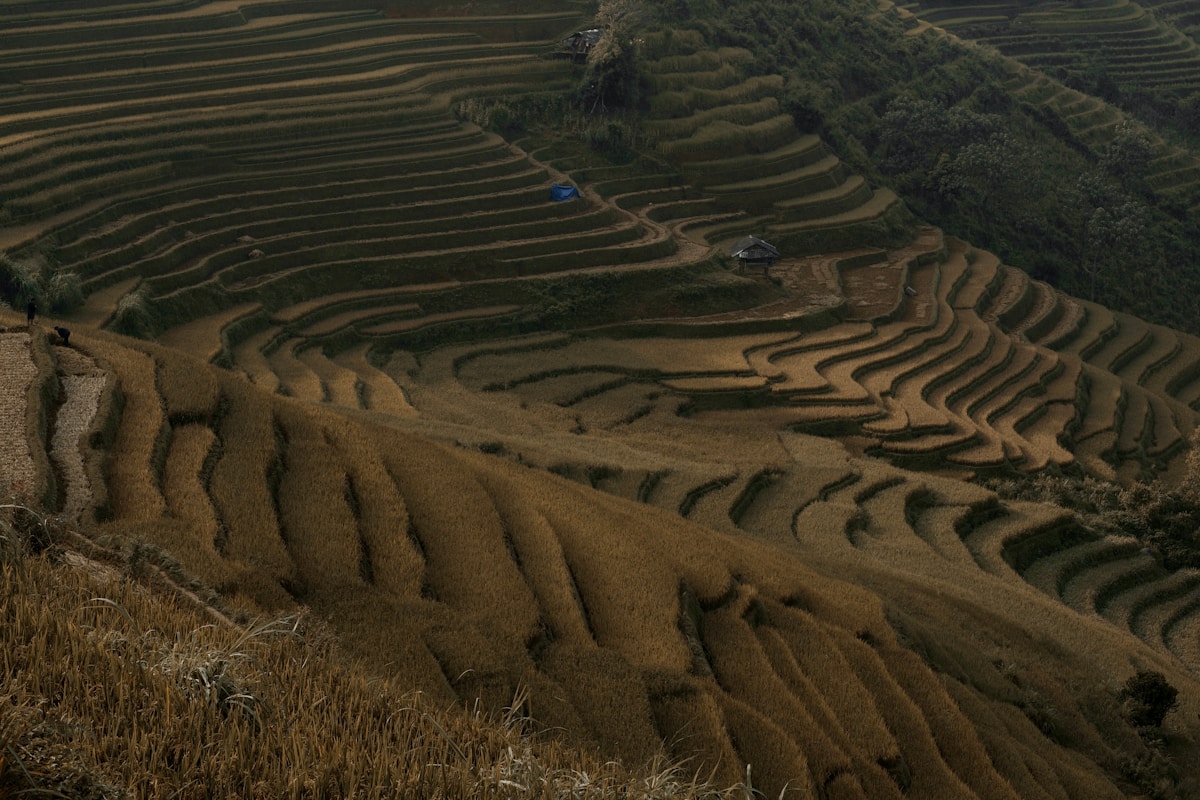
Mu Cang Chai has basic but sufficient accommodation. The choice is between the district town (more facilities, less scenic) and village homestays in the terrace communes (more experience, fewer facilities).
District town guesthouses
The district town of Mu Cang Chai has a cluster of guesthouses on and near the main road. These are simple two or three-storey concrete buildings with private rooms, en-suite bathrooms, and basic breakfast options. Most don’t have online booking profiles — arrive and ask.
Prices: ₫150,000–350,000 ($6–14) per room per night. Bargaining is accepted at the lower end outside harvest season.
Facilities: Running hot water (most), wifi (variable quality), fan or air-con (varies). Restaurant options within walking distance.
The district town guesthouses are functional but not special. The main advantage is being a base for motorbike exploration of all three communes.
Village homestays in the communes
Staying in the terrace communes places you in the middle of the landscape rather than 10–17km away from it. Hmong family homestays in La Pan Tan and De Xu Phinh operate informally — no booking system, just knock and ask.
What to expect: Simple mattress accommodation in a family home, usually in a separate guest room. Dinner and breakfast included — Hmong cooking (sticky rice, stir-fried vegetables, local chicken). Cold water bathrooms in some homes; some have hot water.
Prices: ₫200,000–300,000 ($8–12) per person including two meals.
Language: Very limited English in the villages. Some younger residents have basic communication ability. Gesture-based interaction is the reality.
Harvest season (late September)
During the peak terrace photography window, the district town fills up and village homestays have regular visitors. Prices increase 20–50% during this period. Arriving with a flexible itinerary is better than booking and hoping dates align with the harvest.
Tu Le option
24km south, Tu Le is a smaller valley with a guesthouse or two. Staying in Tu Le and day-tripping to Mu Cang Chai by motorbike gives the best of both valleys. The Muong sticky rice cooked in Tu Le guesthouses is a reason to stay there at least one night.
Honest assessment
Mu Cang Chai accommodation is basic. If you need consistent hot water, fast wifi, and a proper bed, the district town guesthouses are acceptable but not comfortable by international standards. If the landscape is the priority and conditions are secondary, the village homestays give a considerably more memorable experience.
Getting to Mu Cang Chai
From Hanoi: The drive is approximately 280km via Yen Bai, taking 6–8 hours by motorbike or hired car depending on road conditions and stops. The route follows Highway 32 through increasingly dramatic mountain terrain. Sleeper buses from Hanoi’s My Dinh station run overnight to Mu Cang Chai for approximately ₫200,000–300,000 ($8–12) as of 2026.
From Sapa: A scenic motorbike route of approximately 200km through mountain passes. The road is paved but winding and requires confident riding. Allow a full day with stops.
What to bring
- Warm layers for evenings (altitude makes nights cold year-round, cold in winter)
- Cash in Vietnamese dong — no ATMs in the commune villages and limited ATMs in the district town. Bring ₫1,000,000–2,000,000 ($40–80) minimum
- A torch for village homestays where lighting is minimal
- Basic snacks and water for day trips — shops are limited in the terrace communes
- Insect repellent for the rice paddy areas
Best time for terraces
The rice terraces are most photogenic during three periods: green season (June–July) when the paddies are filled with water and young rice, ripening season (August–early September) when the rice turns golden, and harvest season (late September) when the terraces are at peak colour. Outside these windows the terraces are still scenic but less dramatic.
More in Mu Cang Chai
- Best Hostels in Mu Cang Chai 2026: Guesthouses and Terrace Homestays
- Best Time to Visit Mu Cang Chai 2026: Harvest Season and Water Season
- Getting to Mu Cang Chai 2026: Bus from Hanoi and the Northwest Loop
- Mu Cang Chai Rice Terraces 2026: Seasons, Viewpoints and Photography
- Things to Do in Mu Cang Chai 2026: Terraces, Villages and Trekking
Book an experience
Top-rated experiences in Mu Cang Chai
The highest-rated tours and activities in Mu Cang Chai. Book today, cancel free if plans change.
Frequently Asked Questions
- Should I stay in Mu Cang Chai town or a terrace village?
- The district town has more facilities but is 10-17km from the terraces. Village homestays in La Pan Tan or De Xu Phinh place you in the middle of the landscape for dawn and dusk photography. Village facilities are more basic but the experience is significantly more memorable.
- How much do Mu Cang Chai village homestays cost?
- 200,000-300,000 VND ($8-12) per person including dinner and breakfast of Hmong cooking (sticky rice, stir-fried vegetables, local chicken). Cold water bathrooms in some homes; some have hot water.
- Is there accommodation available outside harvest season?
- Yes. The district town guesthouses operate year-round. Prices outside harvest season (late September) are 20-50% lower and walk-in availability is standard. Tu Le (24km south) is an alternative base with its own guesthouses.
Sorted your stay?
Here's how to get there — and get around once you arrive.
Airport Transfer
Fixed-price airport pickup to Mu Cang Chai — driver meets you at arrivals, no haggling.
Book a Transfer →Car Hire
Compare rates from local and international suppliers — 90-day price lock included.
Compare Cars →We may earn a small commission — at no extra cost to you.