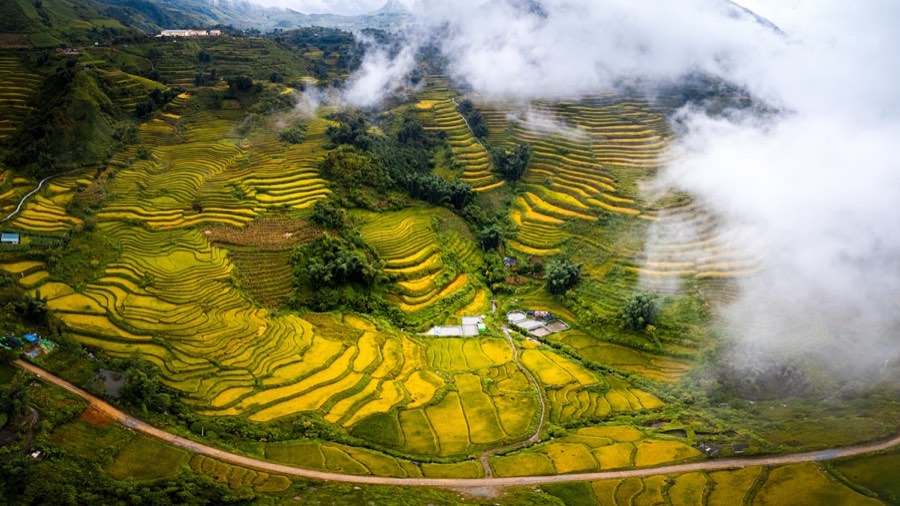
Mu Cang Chai has two peak periods separated by the agricultural calendar. The terrace landscape looks completely different in each.
Late September - rice harvest (peak season)
The most photographed period. As the rice matures, the terraces turn from green to gold and farmers begin cutting by hand. The colour transition takes approximately 2–3 weeks before the fields are harvested and the terraces return to bare earth.
Why visit: The golden terraces against the mountain backdrop is a genuinely spectacular landscape. The harvest itself - farmers cutting rice with sickles in coordinated family groups - is worth observing.
Practical reality: This is the busiest period for Mu Cang Chai. Guesthouses in the district town fill up, especially over weekends. Prices increase 20–50%. Photography groups from Hanoi and internationally descend on the main viewpoints. La Pan Tan in particular can feel crowded at viewpoints during golden hour.
Exact timing: Late September to early October, but varies 1–2 weeks depending on the year. The Yen Bai Tourism Department announces the “golden season” dates each year. Check local sources in September for current conditions.
May–June - flooded water terraces (second peak)
The terraces are flooded before planting. For approximately 3–4 weeks, the levelled fields hold water and mirror the sky and surrounding mountains. In clear morning conditions, the visual effect is striking - layers of sky reflected across the terraced hillsides.
Why this season is underrated: Fewer visitors than harvest season. Cooler temperatures. Equally good for photography but less publicised.
Limitation: Weather in May–June includes rain and mist. Overcast days obscure the mountains and reduce the reflection effect. Clear mornings are the window.
Other months
| Month | Conditions | Notes |
|---|---|---|
| December–February | Cold, clear | Bare fields. Fewer than 5°C at night. Not a terrace-photography destination. |
| March–April | Warming, pre-planting | Fields being prepared. Some green growth at lower elevations. |
| July–August | Hot, green, wet | Terraces full of growing rice - lush green landscape. Rain frequent. Viable but not peak. |
| October–November | Post-harvest, cooling | Stubble fields being plowed. Quietest tourist period. |
Weather at Mu Cang Chai
The district sits at 800–1,200m. Temperatures are consistently cooler than the lowlands:
- Summer (June–August): 25–32°C days, 18–22°C nights
- Autumn (September–November): 20–28°C days, 12–18°C nights
- Winter (December–February): 8–18°C days, 3–8°C nights - cold by Vietnamese standards
- Spring (March–May): 18–26°C days, 12–18°C nights
Fog is common in all seasons and particularly heavy in winter mornings. Morning fog over the terraces is photogenic but reduces visibility.
Recommendation
For most travellers: late September is the priority if you’re willing to accept more crowds. If you can be flexible and avoid weekends, a weekday arrival during harvest week gives the scenery without the photography groups at every viewpoint.
For travellers avoiding crowds: late May offers equally beautiful terraces with half the visitors.
Practical advice for harvest season visits
Book accommodation early: Guesthouses in the district town fill weeks in advance during late September. Contact options by phone (most guesthouses have basic English via WhatsApp) as soon as you have fixed dates. Overflow accommodation exists in the nearby town of Tu Le (24km south), which is quieter and has a different community (Muong rather than Hmong) worth visiting in its own right.
Beat the photography groups: The main La Pan Tan viewpoints attract photography groups from 05:30 onwards, particularly on weekends. Arriving at the terraces on a weekday and being on the road by 05:00 gives you a quieter first light. By 08:30, the groups have packed up and the viewpoints quieten again until the next afternoon golden hour.
Weather window: In late September, mist is common in the mornings. The clearest light is typically between 07:30 and 09:30 and again from 15:30 to 17:30. Overcast days still allow photography but the golden colour is muted without direct sunlight.
Transport during peak: Shared motorbike taxis (xe om) from the district town to the communes: ₫100,000–200,000 ($4–8) per trip. During harvest peak, some guesthouses organise group motorbike tours to the main viewpoints — convenient for those without their own transport. Motorbike rental from the district town: ₫150,000–200,000 ($6–8) per day.
Useful links:
More in Mu Cang Chai
- Best Hostels in Mu Cang Chai 2026: Guesthouses and Terrace Homestays
- Getting to Mu Cang Chai 2026: Bus from Hanoi and the Northwest Loop
- Mu Cang Chai Rice Terraces 2026: Seasons, Viewpoints and Photography
- Things to Do in Mu Cang Chai 2026: Terraces, Villages and Trekking
- Where to Stay in Mu Cang Chai 2026: Guesthouses and Homestays