Mu Cang Chai’s activities revolve around the terrace landscape. There are no organised tourist attractions - the experience is self-directed, exploring the terraced communes by motorbike or on foot.
Terrace viewpoints
The three main communes - La Pan Tan, De Xu Phinh, and Che Cu Nha - have established viewpoint locations. These are roadside pull-offs and short walking trails up to elevated points with the terrace panoramas below.
La Pan Tan viewpoint: The most photographed. The terraces drop steeply below a ridge road. In harvest season (late September), the golden tiers are densely layered across the hillside. 9km from the district town on the main road.
De Xu Phinh: Higher elevation, larger scale. The terracing covers both sides of a wide valley. Best for appreciating the sheer extent of the hand-built terrace system - centuries of agricultural engineering visible from a single point.
Tram Tau road terraces: Between the district town and Tu Le, smaller terrace systems are visible from the road. Less visited than the three main communes.
Motorbike riding
Hiring a motorbike and exploring the commune roads independently is the best way to move through the landscape. The circuit connecting all three main communes is approximately 50km on roads that are entirely paved but narrow and winding. Standard automatic scooter is adequate.
Hiring a xe om (motorbike taxi) driver for the day is an option for non-riders: ₫400,000–600,000 ($16–24) for a full-day guided circuit. Browse Mu Cang Chai and northwest Vietnam tours on GetYourGuide.
Black Hmong village visits
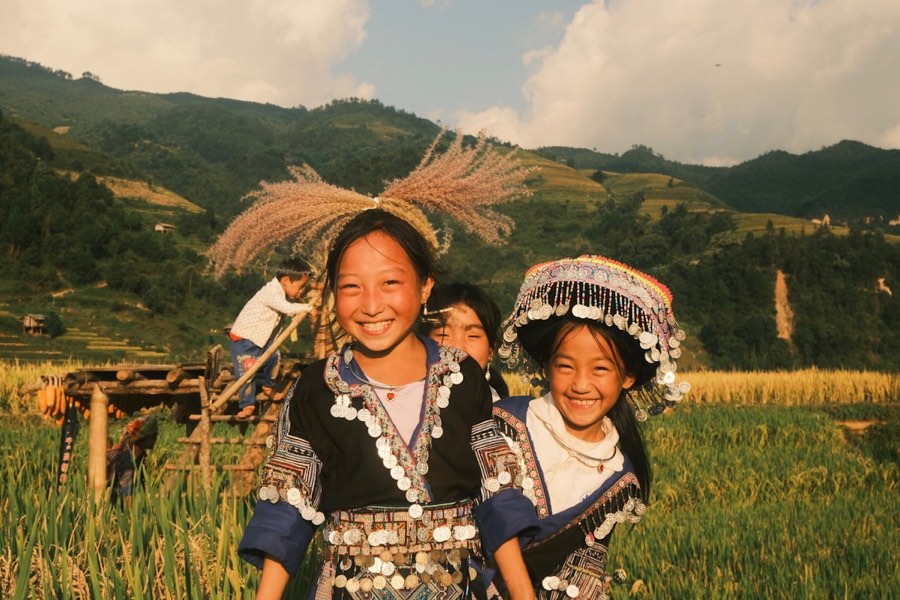
The terrace farmers are Black Hmong - distinct from the White Hmong of Sapa by their dark indigo-dyed clothing. The villages in the communes are genuine working agricultural communities. There is no formal village tour infrastructure. You walk into villages, observe daily life, and interact where possible.
The experience is less curated than in Sapa. Some travellers find this better - others find it harder to know what’s appropriate. Hiring a guide from the district town who speaks Hmong is the most respectful approach for extended village visits.
Trekking between communes
Footpaths connect the terrace communes across the hillsides - these are the walking routes used by farmers moving between fields. Trekking from La Pan Tan to De Xu Phinh on foot (8–12km, 4–6 hours) is possible with a guide. The trails pass through working terraces, bamboo forest, and smaller hamlets.
Guide hire: ₫300,000–500,000 ($12–20) for a full-day trek from the district town.
Tu Le Valley
24km south of the district town toward Nghia Lo, Tu Le is a smaller valley with its own terrace scenery and a large Muong community (different from the Hmong). The sticky rice grown in Tu Le (nep tu le) is considered among the best in Vietnam. Worth a half-day extension by motorbike.
Khau Pha Pass
One of the four great passes of Vietnam, Khau Pha (Cloud Pass) sits between Tu Le and the Mu Cang Chai district. At 1,200m, the pass road winds through clouds and offers views over the valley system on both sides. The pass road itself - especially coming from Tu Le - is as spectacular as the terrace viewpoints.
Photography guide
Mu Cang Chai is one of Vietnam’s most photographed landscapes. Understanding the light conditions makes a significant difference to results:
Morning golden hour (05:30–07:30): The terraces face east at La Pan Tan, catching first light directly. The low raking light creates strong shadows between the terrace walls and makes the rice straw or water surfaces glow. This is the primary photography window during harvest season.
Afternoon golden hour (16:30–17:30): The western slopes of De Xu Phinh catch afternoon light that is warmer and lower-angled than morning. Less known and less crowded than the morning window.
Overcast conditions: Flat cloudy light eliminates the dramatic shadows but allows even exposure across the steep terrace gradients. Good for detail photography and for colour work when the rice is at peak golden colour.
Drone flying: UAV/drone operations are technically regulated in Vietnam and require CAA permits. In practice, many photographers fly small drones without incident in rural areas like Mu Cang Chai — but be aware that permits are required and enforcement is possible near populated areas. Research current local rules before bringing drone equipment.
Vantage points: The La Pan Tan viewpoint off the main road (signposted at Km 189–192 from Yen Bai) is the most concentrated shooting position. The ridge road above De Xu Phinh requires riding 3–4km of dirt track off the sealed road — passable on a motorbike in dry conditions, best walked in wet season.
Top Tours at a Glance
Mu Cang Chai is best combined with Sapa or reached on a dedicated tour from Hanoi. Here’s how the main options compare:
| Tour | Duration | Price (from) | Group Size | Highlights |
|---|---|---|---|---|
| Mu Cang Chai 2-Day Rice Terrace Tour from Hanoi | 2 days | from $130/person | Small group | Overnight in Mu Cang Chai town, harvest-season terraces, Hmong villages |
| Sapa — Mu Cang Chai 3-Day Northwestern Vietnam Loop | 3 days | from $200/person | Small group | Sapa first, then overnight Mu Cang Chai, rice terrace walks, local guide |
| Mu Cang Chai Motorbike Day from Nghia Lo | Full day | from $55/person | Private | Easy rider style from Nghia Lo, Tu Le pass, terrace viewpoints |
| Tu Le to Mu Cang Chai Trekking Tour — 2 Days | 2 days | from $140/person | Small group | Trek over mountain pass, rice terrace walk to Mu Cang Chai, homestay |
| Mu Cang Chai Harvest Festival Photography Tour | 3 days | from $220/person | Small group | Timed for golden harvest season (Sept–Oct), photography guide, village access |
Browse all Mu Cang Chai and northwest Vietnam tours → GetYourGuide
More in Mu Cang Chai
- Best Hostels in Mu Cang Chai 2026: Guesthouses and Terrace Homestays
- Best Time to Visit Mu Cang Chai 2026: Harvest Season and Water Season
- Getting to Mu Cang Chai 2026: Bus from Hanoi and the Northwest Loop
- Mu Cang Chai Rice Terraces 2026: Seasons, Viewpoints and Photography
- Where to Stay in Mu Cang Chai 2026: Guesthouses and Homestays