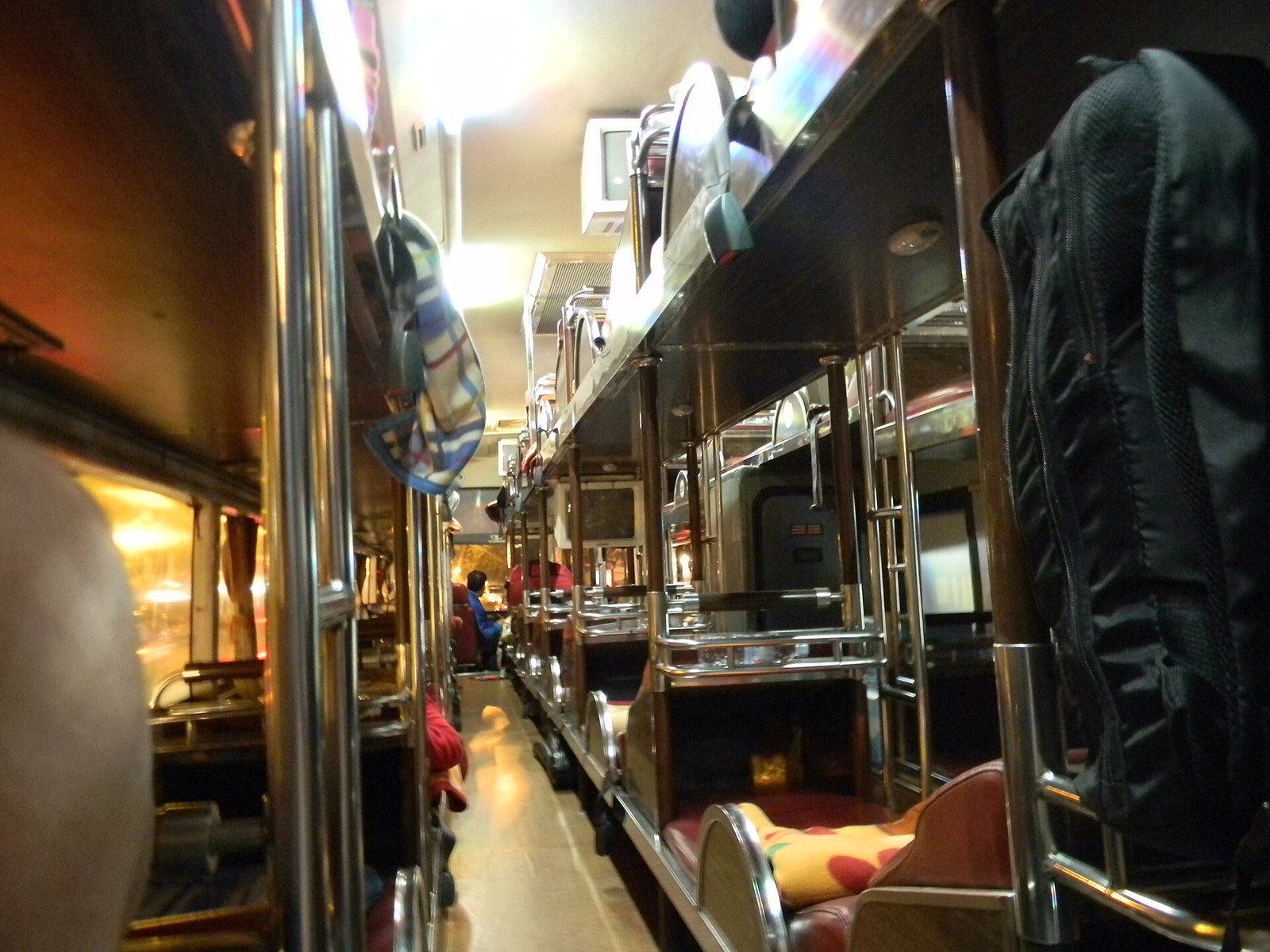
Sleeper buses are the backbone of budget travel in Vietnam. Seats recline almost flat, tickets are cheap, and you save a night of accommodation. They are also a mixed experience: some are genuinely comfortable, others are cramped and loud. This guide explains what you get, what it costs in 2026 and which routes make sense.
What Is a Sleeper Bus?
A standard sleeper has two or three rows of bunks over two levels, with a narrow aisle. Each berth is a reclining padded seat with a blanket, and passengers remove their shoes at the door. Most buses have a toilet on board on longer routes, but not all, and stops are every four hours or so.
Seat Types
- Standard sleeper: 40 berths, about 170 cm long. Taller travellers will feel squeezed.
- Limousine cabin: 9 to 22 seats in a minibus with wider recliners, sometimes with curtains. Typical on shorter routes like Hanoi to Ha Giang and Sapa.
- VIP double cabin: private cabins for two, available on a few operators for long runs.
Main Operators
- Futa Bus Lines (Phuong Trang): the biggest network, strong in the south and central coast, with a good app. Typical fares are from about 400,000 VND for Ho Chi Minh City to Da Lat and 400,000 to 500,000 VND for Hanoi to Da Nang. See Futa Bus for routes.
- Hoang Long: well known on northern and central routes, including Hanoi to Hue and Da Nang, with fares often quoted around 330,000 to 420,000 VND to Hue and 480,000 VND to Da Nang.
- Sapa Express and other limousine firms: run Hanoi to Sapa and Ha Giang, with pick-up in the Old Quarter.
- Open-tour operators: The Sinh Tourist, Hanh Cafe and similar sell multi-stop bus passes. These are convenient but less flexible than point-to-point tickets.
Quality changes with the vehicle and driver, not just the brand, so check recent reviews for the specific route.
Popular Routes and Prices (as of 2026)
Fares are typical ranges from operator and booking-site listings checked in late 2026. They move with vehicle type, departure time and season (Tet and December to March can add 30 to 50 percent), so confirm the price when you book.
| Route | Journey time | Approx. fare |
|---|---|---|
| Hanoi to Ha Giang | 6 to 7 hours | 250,000 to 400,000 VND |
| Hanoi to Sapa | 5 to 6 hours | 300,000 to 450,000 VND (Sapa Express about 400,000 to 430,000) |
| Hanoi to Hue | 12 to 14 hours | 350,000 to 550,000 VND |
| Hanoi to Da Nang (for Hoi An) | 14 to 18 hours | 400,000 to 700,000 VND |
| Ho Chi Minh City to Da Lat | 6 to 8 hours | 300,000 to 450,000 VND |
| Ho Chi Minh City to Mui Ne | 4 to 6 hours | 200,000 to 300,000 VND |
Hanoi to Ha Giang
This is the most common sleeper bus trip for motorbike loop riders. Buses leave the Hanoi Old Quarter in the evening and arrive in Ha Giang city in the early morning, with some daytime departures. The road is mostly highway then mountain bends, so sleeping is patchy. Use our Ha Giang Loop guide and Ha Giang loop tours to plan the rest.
Hanoi to Hoi An
There is no truly direct bus. Most operators go to Da Nang or sell a through ticket with a minibus transfer to Hoi An at the end. Count 16 to 18 hours in practice. Flying to Da Nang takes under 90 minutes and often costs about the same as a limousine ticket, so we suggest a flight unless you want the overnight experience. Compare rail with the Reunification Express guide.
Hanoi to Sapa
Sleeper buses go straight into the town, while the train drops you at Lao Cai. Our Hanoi to Sapa train vs sleeper bus guide compares the two.
How to Book
Online booking is easier than it used to be. You can compare options on Omio, buy through the operator’s app or website, or ask your hotel to book. Buying on the street or at an unmarked agency can lead to the wrong class of bus, so confirm the departure point and vehicle type in writing. Print or screenshot your confirmation because drivers sometimes check it against a manifest.
Tips for a Better Night
- Choose a lower berth if you get motion sickness.
- Bring a light jacket, because air conditioning can be strong.
- Keep your passport, cash and phone with you, not in the luggage hold.
- Book the evening departure so you arrive at first light.
- Carry water and tissue, since stops can be basic.
- Aim for the front or middle of the bus where the ride is smoother.
Safety and Comfort Notes
Vietnam’s roads can be demanding, especially at night. Avoid unlicensed operators, do not travel on overloaded vehicles and consider a day bus on mountain roads if you are nervous. Read our Vietnam safety guide for broader advice and getting around Vietnam for all transport options.
When to Choose Something Else
If your time is short, a domestic flight beats a 16-hour bus. If you want scenery, a daytime train or a drive with a private car and driver is more comfortable. Sleeper buses are best for budget travellers on routes under 9 hours.