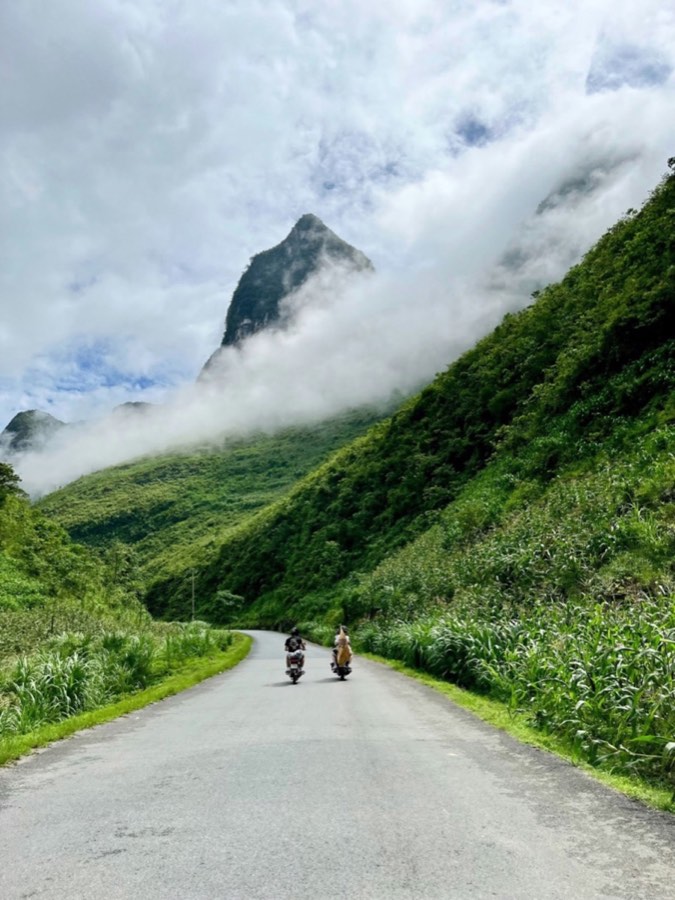
Riding through Vietnam is one of those experiences that defines the trip. The country is built for motorbike travel - a 1,650km north-to-south spine of mountains, coast, and plains connected by roads that range from mountain-pass perfection to pothole-littered adventure. Whether you have three days or three weeks, there is a route that fits your timeframe and experience level.
This guide covers the four routes that consistently deliver the best experience: the Ha Giang Loop in the far north, the Hai Van Pass between Da Nang and Hue, the historic Ho Chi Minh Trail through the central highlands, and the coastal road south from Da Nang to Mui Ne.
Licence requirements and insurance
Before the routes: licences matter more than most travellers think.
Vietnam’s traffic law requires all motorcycles over 50cc to have a licence recognised by Vietnamese authorities - either a Vietnamese driving licence or an International Driving Permit (IDP) with motorcycle category (A or A1). An IDP issued by your home country’s relevant motoring body (AA, AAA, RAC, NRMA, CAA etc.) is valid in Vietnam and costs approximately USD 20–25.
Police checkpoints on the Ha Giang Loop, the Ho Chi Minh Trail, and tourist-heavy coastal roads do stop motorcyclists. A fine for no licence runs VND 600,000–800,000 (approximately USD 25–35). More critically, most travel insurance policies void motorcycle coverage if you are riding without a valid licence - which becomes expensive if you are in an accident.
Get the IDP before you leave home. It takes a few days to process and the cost is negligible compared to any potential consequences.
Renting a motorbike in Vietnam
Hanoi is the best place to rent for northern routes (Ha Giang Loop, Ho Chi Minh Trail). Most riders fly into Hanoi first - compare international arrival fares with Aviasales before booking. On arrival at Noi Bai Airport, a pre-booked transfer into the city takes about 45 minutes and avoids the taxi queue. The main rental hubs are:
- Tigit Motorbikes (Hanoi) - largest and most reliable rental company in Vietnam, strong English support, GPS tracking on bikes, well-maintained fleet. Semi-auto 110cc Wave from approximately USD 8–10/day, manual XR 150 from USD 15–20/day.
- Offroad Vietnam (Hanoi) - specialist in enduro and adventure bikes, good for Ha Giang and trail riding. Royal Enfield Himalayan from approximately USD 25–35/day.
Da Nang and Hoi An are the base for the Hai Van Pass and southern coastal rides. Rentals here average USD 5–8/day for semi-automatic scooters. Most guesthouses can arrange rental; alternatively local shops around the tourist areas are plentiful.
Fuel costs: Petrol runs approximately VND 24,000–26,000/litre as of 2026 (roughly USD 1/litre). A 150cc bike uses approximately 3–4 litres per 100km, making fuel costs for most routes fairly minimal.
Insurance: Renting with a reputable company includes basic third-party liability. This does not cover you for bike damage or medical costs - your travel insurance (with IDP) covers those. VisitorsCoverage explicitly covers motorcycle riding when you hold a valid IDP - read the exclusions carefully before you ride. Read both policies before you ride.
Route 1: The Ha Giang Loop - 3 to 4 days
The Ha Giang Loop is the standout motorbike route in Vietnam, and arguably one of the finest roads in all of Southeast Asia. The circuit covers the Dong Van Karst Plateau Geopark - a UNESCO-recognised geological zone in Vietnam’s northernmost province - and runs close to the Chinese border for much of its length.
Distance: Approximately 350km circuit Starting point: Ha Giang city (6 hours by bus from Hanoi, or overnight bus) Recommended bike: Honda XR 150, Yamaha WR 155, or Royal Enfield Himalayan - semi-automatics work but enduro bikes handle the gravel sections much better
Classic 4-day route:
Day 1 - Ha Giang to Dong Van (~100km): Leave Ha Giang early. The road climbs quickly through limestone karst country. The first major milestone is Quan Ba (Heaven’s Gate) - a mountain pass at 1,500m with views over twin karst hills in the valley below (called the Fairy Bosoms, for obvious reasons). Continue through Yen Minh to Dong Van town. The market at Dong Van sells ethnic minority textiles and local produce; Saturday is market day.
Day 2 - Dong Van to Meo Vac via Mã Pí Lèng Pass (~40km): This short day has the best scenery on the loop. Mã Pí Lèng Pass (approximately 1,600m elevation) curves along a cliff edge above the Nho Que River gorge. The viewpoint halfway along is unmissable. Meo Vac is a small town with decent guesthouses; Sunday is market day here too.
Day 3 - Meo Vac to Du Gia (~100km): The road south from Meo Vac is less visited and less trafficked. You drop back through valley villages and limestone country to the Du Gia area - great if you want a quiet village guesthouse rather than a tourist town.
Day 4 - Du Gia to Ha Giang (~80km): Return route through more valleys before looping back to Ha Giang city.
Where to stay: Guesthouses along the route are basic but clean, averaging VND 150,000–250,000 (approximately USD 6–10) per person for a simple private room. In Dong Van town, the Ngan Nga Dong Van Hotel and Pho Cuc Guesthouse are reliable. Book ahead for weekend nights in peak season (September–October harvest).
Best season: September–October for golden rice fields and mild temperatures. March–April for mustard flowers. Avoid January–February (cold, foggy, reduced visibility on passes).
Route 2: Hai Van Pass - Da Nang to Hue - Half day to full day
The Hai Van Pass (Cloud Pass) connects Da Nang and Hue over a 496m mountain ridge. The road runs along the cliff edge with views over the South China Sea on one side and the Lang Co lagoon on the other. It is one of the most photographed road sections in Vietnam and was featured on Top Gear’s Vietnam special.
Distance: Approximately 20km over the pass itself; the full Da Nang to Hue route is approximately 100km Rental: Any basic scooter works. The road is well-sealed and not technically demanding.
The pass is best ridden in the morning before heat and haze build. Start from Da Nang (or Lang Co from the Hue side). The summit has a French-era fort and a cluster of tea and coffee stalls. Stop, enjoy the view, and take the descent down to Lang Co peninsula - a sand spit with a peaceful lagoon on one side and the sea on the other.
Full Da Nang–Hue option: From the bottom of the pass on the Hue side, continue along the coast through Phu Loc district and into Hue. The full journey takes approximately 3–4 hours including stops. The return can be by train - the Reunification Express crosses the pass by tunnel and covers the route in under 2 hours; load the bike onto the train’s cargo carriage (book cargo separately at the station).
Combined with Hoi An: Many riders combine Hoi An → Hai Van Pass → Hue as a one-way trip, leaving the bike in Hue or returning to Da Nang by train with the bike.
Route 3: Ho Chi Minh Trail - Central Highlands - 4 to 6 days
The Ho Chi Minh Trail (Ho Chi Minh Road, or Đường Hồ Chí Minh) runs parallel to Highway 1 but inland through the Central Highlands - a quieter, more scenic alternative through minority villages, coffee plantations, and mountain passes.
Distance: Approximately 1,700km from Hanoi to HCMC (full trail); most riders ride sections, not the complete route Best sections:
Phong Nha to Khe Sanh (~200km): This section passes through dense forest and the former DMZ (Demilitarised Zone). Khe Sanh was the site of one of the war’s major US Marine sieges - the combat base museum is low-key but worthwhile.
Khe Sanh to Hue via A Shau Valley (~150km): Winds through the mountains used as a North Vietnamese supply route. The road crosses into Hue via a route that sees very few tourist vehicles.
Da Lat to Buon Ma Thuot (~200km): Descends from Da Lat’s highlands through coffee country (Dak Lak is Vietnam’s coffee capital). The road runs past elephant conservation areas and waterfalls.
Recommended bike: 150cc manual or semi-auto minimum. Some sections have poor road quality; the XR 150 or similar is ideal.
Route 4: Coastal Road South - Da Nang to Mui Ne - 4 to 6 days
For those who prefer sea views over mountain passes, the coastal route from Da Nang south to Mui Ne covers some of Vietnam’s best beaches and lowest-key coastal towns.
Distance: Approximately 1,100km Highlight stops:
- Hoi An (just south of Da Nang) - leave the bike at the guesthouse, explore by bicycle
- Quy Nhon - underrated city with good beaches, strong local seafood culture, fewer tourists than further north or south
- Nha Trang - Vietnam’s busiest beach resort city; busy but the beachfront road is well-maintained for riding
- Mui Ne - famous for kitesurfing and sand dunes; the road approaching from Phan Thiet is particularly scenic
This route is largely flat coastal riding on well-maintained roads. A basic automatic scooter is fine for all of it. Daily distances of 150–200km are manageable, leaving time for beach stops and early finishes.
Fuel stops: Every town along the coast has petrol stations. Running out of fuel is not a realistic concern on this route.
Practical logistics
Bike maintenance: Carry a basic tyre repair kit (any Vietnamese bike shop can show you how to use it) and a spare inner tube. Punctures on mountain routes are not uncommon on gravelled sections. Every town has a xe om repair shop (recognisable by the cluster of bikes outside) that will fix a flat for VND 30,000–50,000 (approximately USD 1–2).
Buying vs renting: Some travellers buy a used motorbike in Hanoi or HCMC (typically a Honda Win, semi-auto 100cc, for approximately USD 200–350) and sell it at the other end. This gives flexibility but comes with mechanical risk and the hassle of paperwork. Renting from Tigit or a similar reputable company is less adventurous but far simpler.
Guided tours: For the Ha Giang Loop and Ho Chi Minh Trail, Easy Rider guides (local guides who ride and know the routes intimately) are an established option. They charge approximately USD 30–50/day and provide the local knowledge, language skills, and backup that independent riding cannot. Several operators in Hoi An, Hue, and Ha Giang offer this service.
Navigation: Download Google Maps offline for Vietnam before you leave a city with decent Wi-Fi. Mobile data coverage is good on main routes but patchy in highland areas. An Airalo eSIM for Vietnam gives you a multi-carrier connection across the full route - better than a single-network local SIM on the Ha Giang and Ho Chi Minh Trail sections where one network drops out.
Riding Vietnam is genuinely one of the best ways to see the country. The roads are there. The bikes are affordable. The routes described above have been done thousands of times by travellers of all experience levels. The main requirement is that you take it seriously: get the licence, choose the right bike for the terrain, and leave earlier than you think you need to.
If you’d rather ride with an Easy Rider guide than navigate alone, browse Ha Giang Loop tours for guided options that include bike, accommodation, and a local guide who knows every pass.
Where to book hotels: Search Booking.com for accommodation in Hanoi — most northern route riders base themselves in the Old Quarter before picking up a rental. For Da Nang–Hue riders, search Da Nang or Hue separately.
Book Your Trip
Flights — search and compare on Aviasales eSIM — stay connected with Airalo Travel insurance — get covered with EKTA Airport transfers — book with Kiwitaxi Car rental — compare with GetRentaCar Hotels — compare and book on Booking.com Tours and activities — browse GetYourGuide