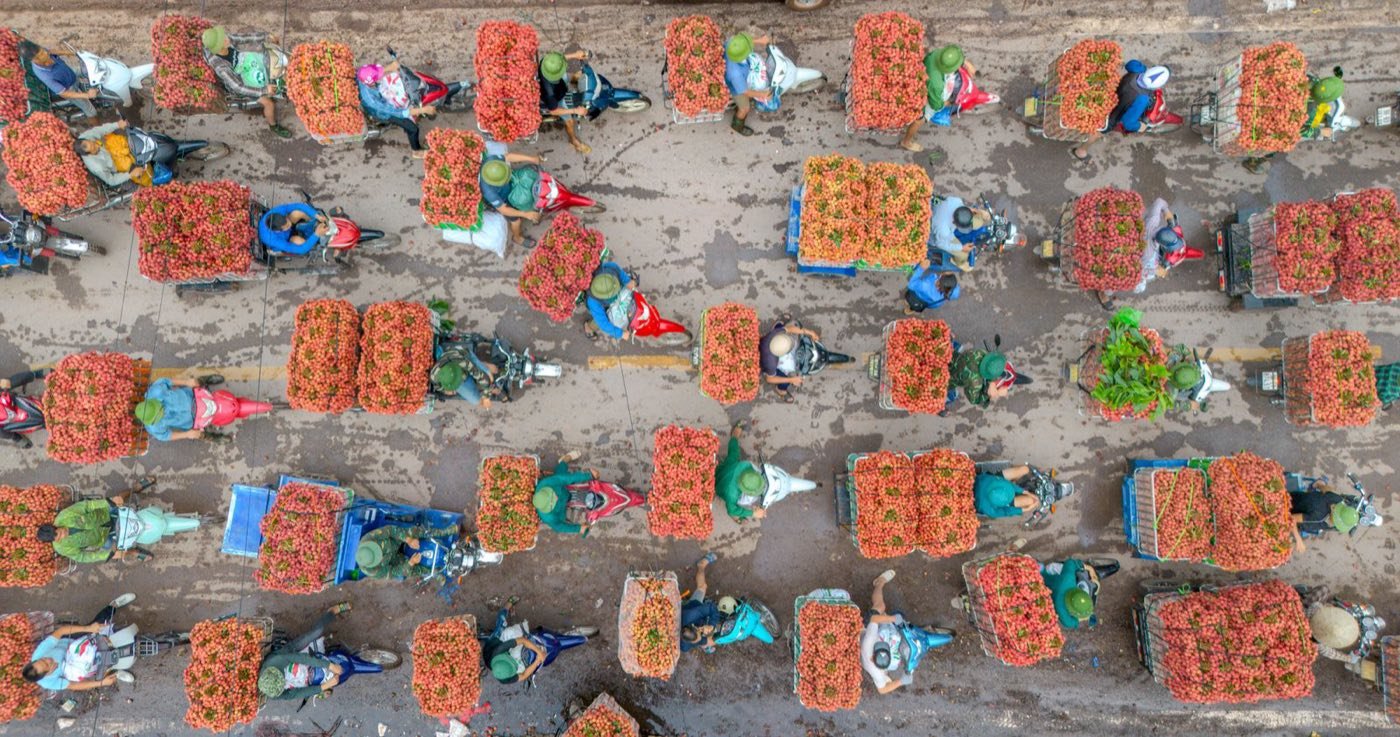
Vietnam is one of the best countries in Asia for fresh fruit. A long coastline, a mountainous north and the warm Mekong Delta mean there is almost always something ripe, and a good fruit stop often costs less than a bottle of water. This guide lists the fruits worth seeking out, when they are in season, where to buy them and how to eat them. For more on eating widely, see our street food guide and the must-try Vietnamese dishes guide.
Fruits to try
- Dragon fruit (thanh long): white or red flesh, mildly sweet, with small black seeds. Grown widely in southern Binh Thuan province and sold cold at markets.
- Mango (xoai): several varieties, eaten ripe and sweet or green with salt and chilli.
- Rambutan (chom chom) and longan (nhan): small and juicy, peeled by hand.
- Mangosteen (mang cut): a sweet and slightly tart white segmented fruit inside a thick purple shell.
- Lychee (vai): a short summer season in the north, best known from Bac Giang province.
- Durian (sau rieng): strong smelling, creamy, and loved by those who like it. Many hotels ban it indoors.
- Jackfruit (mit): sweet yellow segments, eaten fresh or dried.
- Pomelo (buoi): a large citrus with a thick rind, refreshing and lightly bitter.
- Papaya, guava, custard apple and star apple: found on markets throughout the year.
Seasons at a glance
Vietnam’s seasons differ by region, and dates vary each year, so treat this as a guide:
| Fruit | Typical season | Where to find it |
|---|---|---|
| Lychee | About June to July | Northern markets, especially Bac Giang |
| Mango | Spring to early summer | Mekong Delta, central coast |
| Rambutan, mangosteen, durian | Roughly May to August | Mekong Delta and southern markets |
| Dragon fruit | Spring to autumn, peak in summer | Binh Thuan and southern markets |
| Longan | Summer | Hanoi region and the south |
| Pomelo | Autumn, around Tet | Nationwide |
Where to buy fruit
- Markets: every city market has a fruit section. Ben Thanh in Ho Chi Minh City is touristy; local neighbourhood markets are cheaper. Dong Ba in Hue and the central market in Hoi An both sell fresh fruit.
- Street carts and bicycle sellers: the cheapest option, usually sold by the kilogram. Agree the price before they weigh.
- The Mekong Delta: orchard visits and the floating markets around Can Tho let you eat fruit straight from the tree. See our Can Tho guide for the area.
- Supermarkets: useful for pre-washed fruit and fixed prices.
How to buy and eat
- Point and ask the price per kilogram (“bao nhieu mot ky?”), then watch the weighing.
- Fruit is often served with a salt, sugar and chilli dip (muoi ot), especially with green mango and pineapple.
- Ask the seller to peel or cut if needed.
- Wash anything you eat whole with bottled or filtered water.
Smoothies, juices and sweet drinks
Fruit shakes (sinh to) are made with ice, condensed milk and fresh fruit, and are cheap. Sugarcane juice with kumquat is a common street drink. If you want plain fruit, say “khong duong” (no sugar) and “khong da” (no ice). Fruit also features in desserts; see our guide to Vietnamese desserts.
Taste it in the Delta
A Mekong Delta tour usually includes orchard stops and seasonal tastings, and a Can Tho tour covers the floating markets where much of the fruit trade happens. For official visitor information, see vietnam.travel.