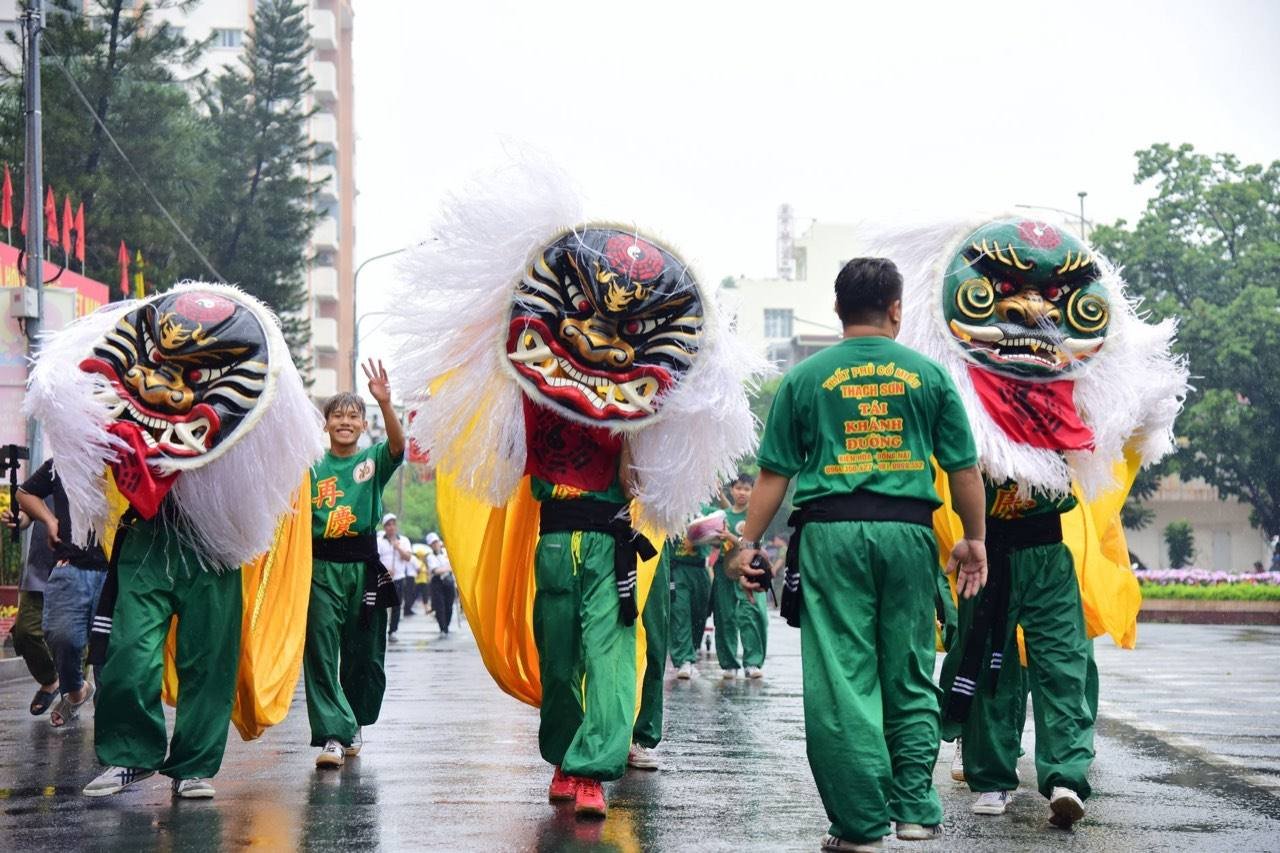
Every city has festivals. Hue has a calendar. Since the city restructured its cultural events programme into the Four Seasons Festival - Lễ hội Tứ Quý - the Imperial Citadel has become not just a monument but a living stage, with a different face in each quarter of the year. Court music echoes through Thai Hoa Palace in spring. Dragon boat races cut across the Perfume River at summer solstice. Lantern processions fill the citadel walls in autumn. And the winter festivals turn the royal temples into something that looks, briefly, exactly as it did two centuries ago.
For the dated programme, see our Hue Festival 2027 and Hue Festival 2028 guides.
For travellers, this matters practically: the timing of your visit to Hue now directly affects what you can experience, and some of the best events are free.
Why the Four Seasons Festival Exists
Hue was the imperial capital of unified Vietnam from 1802 to 1945 under the Nguyen dynasty, and the city’s entire identity is built on that 143-year chapter. The Royal Tombs, the Citadel, the temples, the cuisine - all of it flows from the court culture of that era. But for much of the 20th century, those traditions were frozen in amber, preserved as monuments rather than practised as living culture.
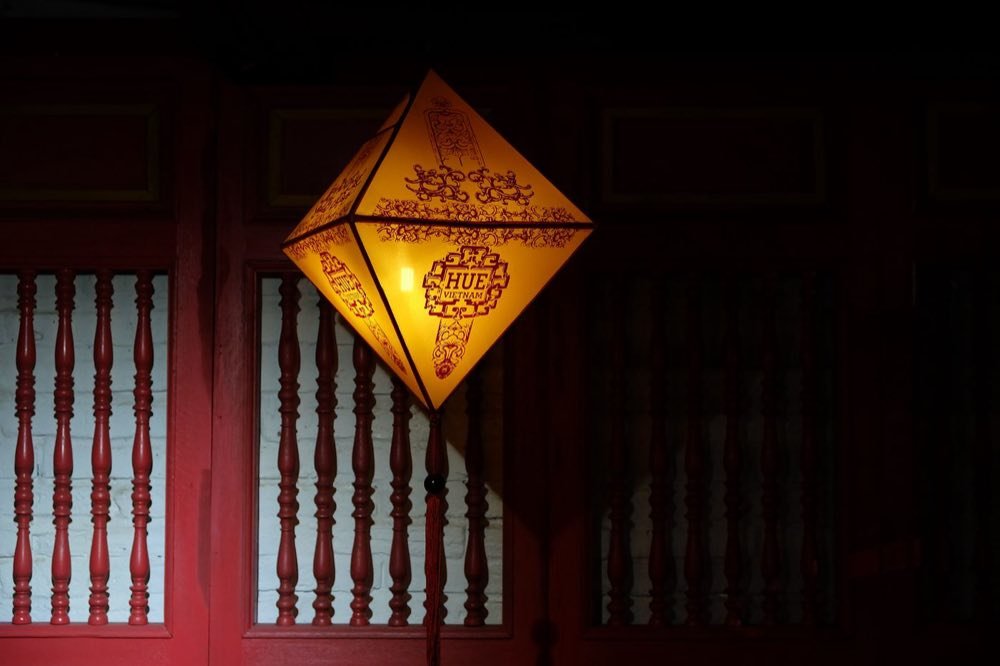 The diamond-shaped Hue lantern, a motif you see across the festival.
The biennial Hue Festival, first held in 2000, started to change that. By the 2020s the city went further, converting to a year-round model that distributes cultural programming across all four seasons rather than concentrating it in one large biennial event. The result is Lễ hội Tứ Quý: a structured calendar that reconnects each season with the ceremonies the Nguyen court once conducted at each quarter of the year.
UNESCO recognised nhã nhạc - Hue’s royal court music - as Intangible Cultural Heritage in 2003, and it anchors the performances across all four seasons. Most visitors encounter nhã nhạc as background music at a restaurant. The Four Seasons Festival is the context in which it was originally created: royal ceremony, candlelight, and an audience seated in front of the throne room.
Spring Festival (Xuân - January to March)
The spring programme centres on Tết and runs through the first lunar month. The most significant ceremony is the restoration of the Nam Giao sacrifice ritual - historically, the Emperor’s annual offering to Heaven at the Nam Giao Esplanade, about 3 km south of the Citadel. The ceremony was abandoned in 1945 and has been ceremonially revived in modern form for the festival. Drums, robes in yellow and blue, and a procession of officials in period costume - it is one of the most visually distinctive events in the entire calendar.
Inside the Citadel, the spring programme brings:
- Court music (nhã nhạc) performances at Thai Hoa Palace, typically on the evenings around the first and fifteenth day of the lunar month
- Spring temple fairs at the Mieu complex, where offerings are made at the ancestral temples of the Nguyen emperors
- Traditional games and craft demonstrations in the courtyards - calligraphy masters, folk singing (ca Huế), and tuong (classical opera) vignettes
- Ao dai fashion shows celebrating Hue’s role in establishing the national dress
Spring is also when Thien Mu Pagoda - the most photographed landmark along the Perfume River - holds its own Tết ceremonies open to visitors. These are separate from the Citadel programme but make a natural pairing on the same day.
Summer Festival (Hạ - April to June)
Summer is the busiest season in the festival calendar and the window when the biennial Hue Festival mega-edition falls, in even-numbered years. In odd years a lighter annual programme runs instead, but the summer events still anchor the year.
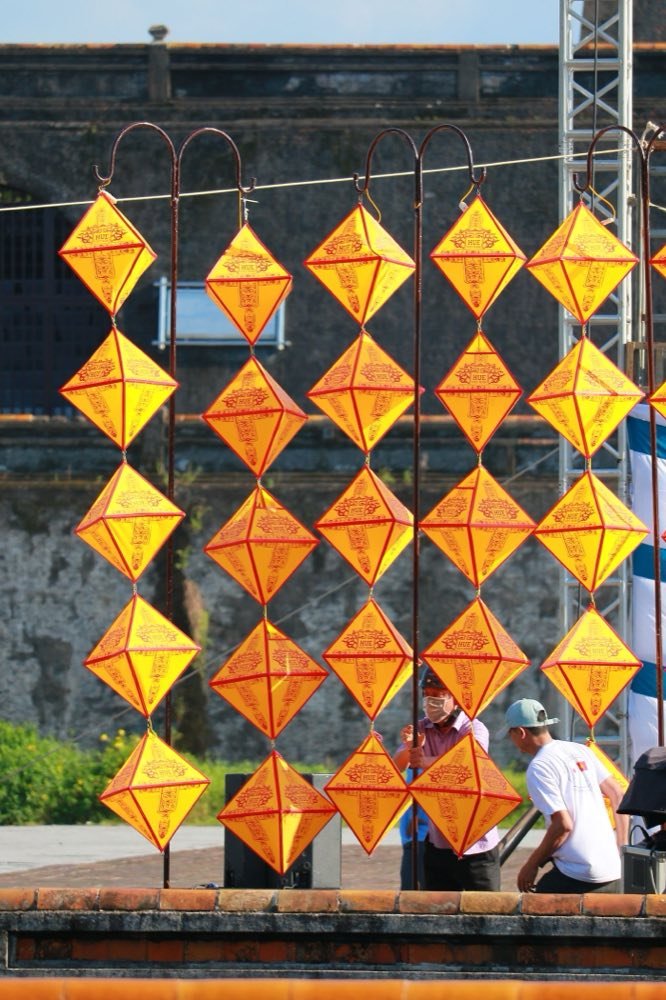 Lantern displays are set up beside the Imperial City walls.
The signature summer event is the royal court ceremony at Thai Hoa Palace, a reconstruction of the formal audiences the Nguyen emperors once held. Actors in period costume occupy every role from the emperor on the lacquered throne to the ranks of mandarins arranged in the courtyard below. The production quality is high - costumes are based on surviving museum originals - and the ceremony runs for approximately one hour.
Dragon boat racing on the Perfume River runs parallel to the Citadel events and draws large crowds to the riverbanks. Boats sponsored by different wards of the city race in decorated wooden craft under the gaze of the Trang Tien Bridge. No ticket required; the riverbanks fill from mid-morning.
The summer programme also includes:
- Night at the Imperial City - ticketed evening events when the Citadel stays open after dark, lit by lanterns along the inner corridors
- Street food and craft markets set up on Le Loi Boulevard, the avenue running along the south moat
- Tuong opera performances at the Duyệt Thị Đường Royal Theatre inside the Citadel, one of the oldest surviving theatre buildings in Vietnam
In the years of the biennial mega-edition, the summer programme expands to 10–14 days with international cultural delegations, large-scale outdoor performances, and events extending to nearby towns like Lang Co and Cau Hai.
Autumn Festival (Thu - August to October)
The autumn programme is anchored by the Mid-Autumn Festival (Tết Trung Thu), which falls on the 15th day of the eighth lunar month - typically mid-September. The Hue version is more elaborate than what you’ll find in most Vietnamese cities: the Citadel serves as the backdrop for lantern processions, lion dances, and children’s drum performances that trace the route of the old imperial court.
Mooncake stalls appear throughout the city weeks before the date; in Hue the traditional lotus seed and winter melon mooncakes are considered the authentic version and are sold alongside the dense, rich Hue-style varieties.
The other major autumn event is the Royal Games (Trò chơi cung đình) programme, a reconstruction of the entertainment activities once held for the imperial court. These include archery, chess on a human-scale board, and traditional shuttlecock competitions in the Citadel gardens.
Autumn is also climatically the most complicated season in Hue. October and November bring the rainy season - the Perfume River floods most years, and the city can receive heavy rainfall for extended periods. If visiting for the autumn programme, build flexibility into your schedule.
Winter Festival (Đông - November to January)
Winter in the festival calendar focuses on the most solemn events: offerings at the royal tombs, ancestral worship ceremonies at the Mieu complex inside the Citadel, and court music performed in quieter, more intimate settings than the summer spectacles.
The Hue Winter Festival (Hội mùa đông) typically runs for several days around late November or early December and is the quietest but often most atmospheric of the four seasons. Attendance is lower than summer, which means less crowding inside the Citadel. Evening performances of nhã nhạc at the Duyệt Thị Đường Royal Theatre, with perhaps 60–80 people in the audience rather than 300, have a different quality entirely.
The royal tomb ceremonies in winter - held at the tomb complexes of Minh Mang, Khai Dinh, and Tu Duc - involve incense offerings and the full court music repertoire. Some are accessible to visitors who happen to be present; others are private. Checking the official Hue City tourism programme in advance is the only reliable way to confirm which ceremonies are open.
What Travellers Can Actually See and Do
You do not need to plan your trip around festival dates to experience some of the Four Seasons programme. The Duyệt Thị Đường Royal Theatre inside the Citadel runs nhã nhạc performances most days of the week, independent of the seasonal calendar, at set times. Entry is typically ₫200,000 and included in some guided tour packages.
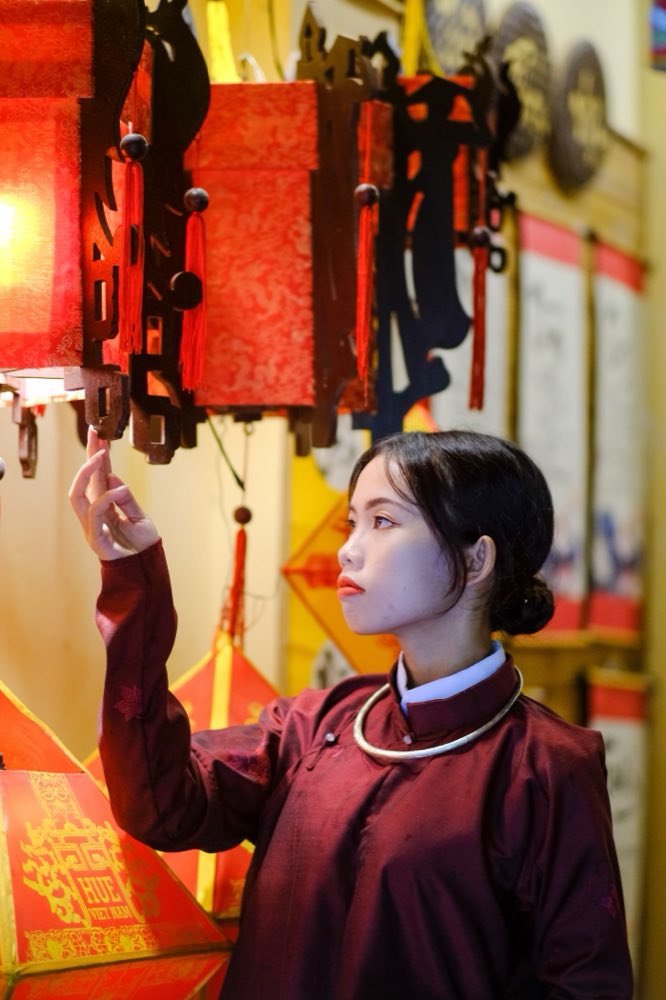 Traditional dress and lantern shops are part of the Hue cultural scene.
For the larger seasonal events, the best sources are the official Hue Festival website (huefestival.com) and the Hue City Department of Tourism, which publishes programmes for each seasonal edition. Dates shift between years because the programme follows the lunar calendar.
Guided tours from Hue - easily booked through any hotel or tour desk - often incorporate the seasonal programme with context from a guide who can translate what each ceremony represents. This makes a significant difference: watching the Nam Giao ritual without knowing its history is interesting; understanding that the last time it was genuinely performed was by the final emperor before abdication transforms it. Browse Hue tours and cultural experiences.
Practical Information
Tickets: The Citadel itself costs ₫200,000 ($8 as of 2026) for general entry. Separate performance tickets for Thai Hoa Palace or the Royal Theatre cost ₫100,000–₫200,000 per event. Outdoor processions and riverbank events are free. Combined Citadel + performance bundles are sold at the main gate.
Transport: Hue is straightforward to reach. The overnight train from Hanoi takes approximately 12–14 hours; from Da Nang, 2.5 hours. The airport (Phu Bai International) is 14 km from the city centre; taxis and grab cars cost approximately ₫150,000–₫200,000. During festival dates, particularly the biennial summer edition, book trains and buses several weeks ahead. Search flights to Vietnam.
Accommodation: During the biennial summer festival, hotels fill early and prices rise. The best hotels in Hue are clustered in two areas: the south bank near La Residence Hotel (upscale, Perfume River views) and around Pham Ngu Lao street near the Citadel gate (mid-range and budget). Book at least four to six weeks ahead for the main summer edition. During the quieter winter programme, rooms are available at short notice. Search Hue hotels.
What to wear: Lightweight cotton or linen works for most of the year. Summers are hot and humid; a small towel is more useful than a fan. For winter evening ceremonies, a light jacket suffices - Hue winters are mild by any northern standard. For entering temples and pagodas during the programme, covered shoulders and knees are required; ao dai hire near the Citadel gate provides a practical solution that also photographs well.
Travel insurance: Hue’s autumn rainy season can disrupt plans significantly - floods are common in October and November. Travel insurance for Vietnam provides cover for trip interruptions and medical costs.
Time needed: The programme at the Citadel alone warrants at least one full day during a seasonal festival; add a half day for the Royal Tombs and a morning boat trip on the Perfume River and you have a complete Hue visit. See our guide to things to do in Hue for a full itinerary structure.
The Four Seasons Festival has made it possible to visit Hue in any month and find a specific cultural reason to be there. That is rare in Vietnam, where most travellers treat Hue as a transit day between Da Nang and Hanoi. The city has earned more than that.