Choosing a base in Vietnam is one of the better problems a remote worker can have - the country has three genuinely good options and the train network makes rotating between them straightforward. The cities suit different working styles, budgets, and life priorities. Here is how they compare across the factors that actually matter.
Quick Summary
| Factor | Hanoi | Da Nang | Ho Chi Minh City |
|---|---|---|---|
| Monthly budget (comfortable) | $1,400-$2,000 | $1,000-$1,500 | $1,600-$2,500 |
| Coworking from (monthly) | ~$120 | ~$100 | ~$120 |
| Internet quality | Excellent | Excellent | Excellent |
| Beach access | No | 15 min | No |
| English spoken | Moderate | Good | Very good |
| Nightlife/dining variety | High | Moderate | Very high |
| Visa runs to | China, Laos | Laos | Cambodia |
| Best for | Culture, cooler climate | Beach-work balance | Networking, urban energy |
Hanoi
Vietnam’s capital is the most European-feeling of the three cities. Wide boulevards, a grid of French colonial architecture, tree-lined lakesides, and a slower pace than HCMC all contribute to a quality of life that surprises many first-timers. The Old Quarter is atmospheric but dense; Tay Ho (West Lake) is the preferred residential district for foreigners and longer-staying nomads, with quiet streets, lakeside cafes, and a tight expat community.
Cost of living: Hanoi is slightly cheaper than HCMC. A furnished one-bedroom apartment in Tay Ho rents from around 8,000,000 to 14,000,000 VND per month ($320 to $560). Street food is excellent and extremely cheap - bun cha (grilled pork noodles) or pho for 40,000 to 60,000 VND ($1.60 to $2.50) is a daily reality.
Coworking: Toong Coworking on Xuan Dieu runs around 3,000,000 VND per month ($120). Circo on Truc Bach lake is popular with creative workers and charges similar rates. The Hive Hanoi (Truc Phong area) is another reliable option. Day passes typically run 100,000 to 150,000 VND.
Internet: Fiber infrastructure is strong in Tay Ho and Hoan Kiem. Residential broadband with Viettel or VNPT runs 200,000 to 350,000 VND per month for 100 to 500 Mbps. 4G coverage across central Hanoi is solid.
Climate: The main trade-off in Hanoi is the winter. November through March can be cool, grey, and drizzly - “Hanoi winter” is a genuine thing, with temperatures dropping to 12 to 17°C in January and February. For nomads from colder climates this is a non-issue; for those chasing perpetual warmth, it is worth factoring in. The summer (May to September) is hot and humid with typhoon-season rain.
Best for: Nomads who want cultural depth, enjoy history and architecture, prefer a quieter pace to HCMC, and plan to explore northern Vietnam (Sapa, Ha Giang, Ninh Binh are all day- or weekend-trip distance). For curated accommodation options in Hanoi’s key neighbourhoods, see our Hanoi best hotels guide.
Search accommodation in Hanoi on Booking.com
Da Nang
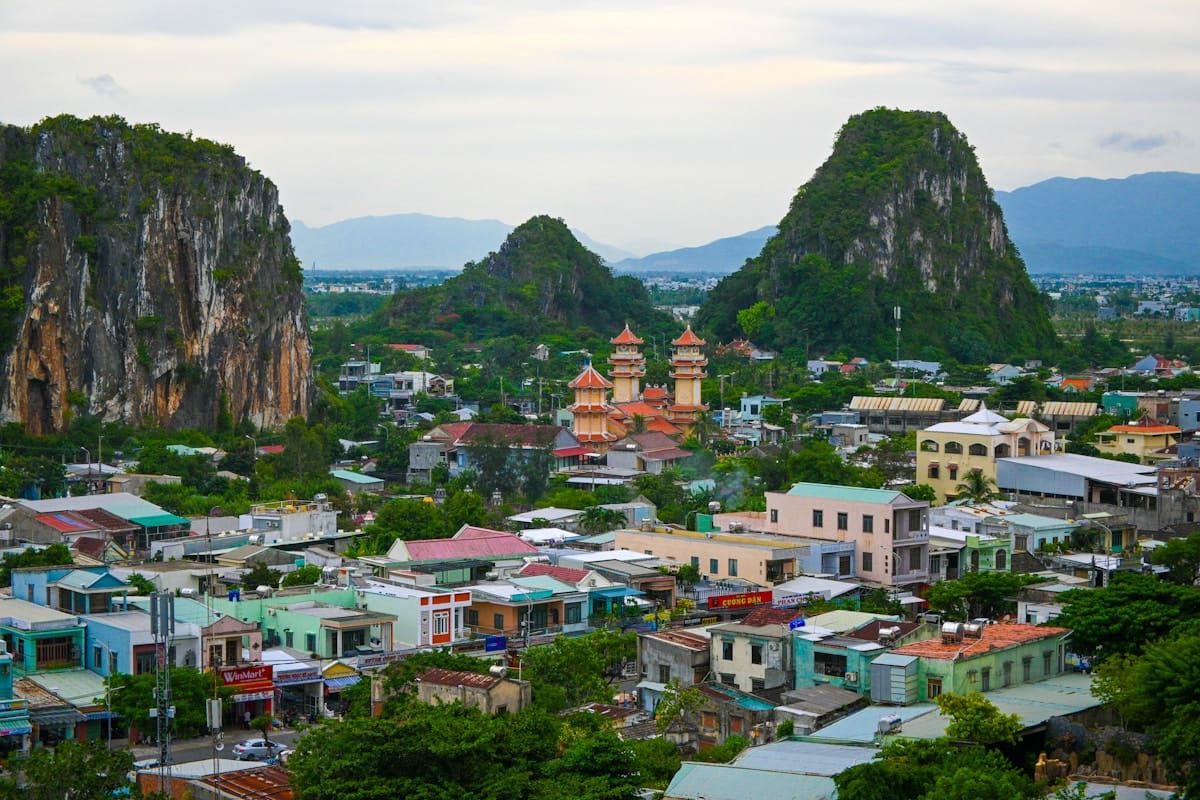
Da Nang is the nomad sweet spot that many people discover after a stint in HCMC and never quite leave. It sits at the midpoint of the country - Hue is 90 minutes north by road, Hoi An is 30 minutes south - and the city itself has a wide, clean beach that runs directly through its urban core. The My Khe beachfront is walkable from multiple coworking spaces.
Cost of living: The most affordable of the three cities at a comfortable level. A one-bedroom apartment near My Khe beach rents from 6,000,000 to 10,000,000 VND per month ($240 to $400). Food is similarly priced to Hanoi. A monthly coworking membership, apartment, food, transport, and occasional coffee shop day totals comfortably under $1,200 for most nomads.
Coworking: The standout space is Enouvo Space on Vo Nguyen Giap - fiber, ergonomic desks, a rooftop area, and a strong community of long-term residents. Monthly memberships from around 2,500,000 VND ($100). CoGo Da Nang on Nguyen Van Linh is a popular alternative. The Hab (near Pham Van Dong beach) is another well-regarded option. Several cafes near the beach function as informal coworking, especially Cong Caphe and local independents on An Thuong street.
Internet: Fast and reliable across central Da Nang and the beachfront districts. Enouvo Space runs dedicated fiber. Residential internet is as strong as the other cities.
Lifestyle: The beach is genuinely a daily lifestyle feature, not just a weekend trip. Surfing is popular from September to December when the northeast swell is up; kitesurfing draws a dedicated crowd to the southern beaches. The food scene is strong for its size - Mi Quang (turmeric noodles), banh mi, fresh seafood, and a growing international restaurant strip on An Thuong street.
Trade-offs: Da Nang is smaller. The professional networking scene is quieter than HCMC, and the nightlife is more limited. If your work involves client meetings, startup events, or active professional development, you may find it isolating after a few months.
Best for: Nomads who want beach access baked into their daily routine, value a tight-knit nomad community, are keeping costs low, and whose work does not depend on in-person professional networking. Check our Da Nang best hotels guide for neighbourhood-by-neighbourhood accommodation recommendations.
Search accommodation in Da Nang on Booking.com
Ho Chi Minh City (HCMC / Saigon)
The economic engine of Vietnam is the obvious choice for anyone whose work connects to business, startups, marketing agencies, or the broader Southeast Asian professional world. HCMC is chaotic, stimulating, and dense, with a service and hospitality infrastructure that matches any regional capital.
Cost of living: The most expensive of the three, though still very affordable by global standards. A one-bedroom apartment in District 1 or District 3 runs 12,000,000 to 20,000,000 VND per month ($480 to $800). Binh Thanh, District 7, and Phu Nhuan offer more space for the money at 8,000,000 to 12,000,000 VND. Dining out frequently at decent restaurants adds up faster than in Hanoi or Da Nang.
Coworking: The densest and most varied market. Dreamplex (three locations in HCMC - Bui Thi Xuan, Dien Bien Phu, and the riverside space in Binh Thanh) runs approximately $180 to $220 per month and is the premium choice, with reliable infrastructure, private phone booths, and regular community events. Toong Coworking at multiple District 1 and District 3 locations charges around $170 per month. Base Camp on Nam Ky Khoi Nghia is a strong mid-tier option at around $120. The Nest by AIA near the New World Hotel area is popular with the finance and insurance crowd. Day passes run 150,000 to 200,000 VND across most spaces.
Internet: Excellent. Most coworking spaces run dedicated fiber at 500 Mbps to 1 Gbps. Residential internet is widely available; the challenge is that some apartment buildings have unreliable in-building infrastructure despite strong line speeds at the building entrance.
Networking: HCMC has the strongest startup and professional ecosystem in Vietnam. Vietnam Silicon Valley runs regular events. The Vietnam Tech Circle Facebook group is active. Regular meetups for freelancers, founders, and remote workers happen weekly, particularly in District 1 and District 2 (Thu Duc City).
Trade-offs: Noise, traffic, and air quality are the main negatives. Central HCMC is genuinely loud and the traffic can be stressful. The heat is relentless from March to November. Accommodation is more expensive and the trade-off between price and central location is steeper than in the other cities.
Best for: Nomads who thrive in urban energy, need or want professional networking, work in startup/tech/marketing verticals with Southeast Asian overlap, or simply prefer the density and variety of a major metropolitan city. See our Ho Chi Minh City best hotels guide for accommodation by neighbourhood and lifestyle fit.
Search accommodation in Ho Chi Minh City on Booking.com
Hoi An: Honourable Mention
Hoi An deserves mention because it attracts a steady nomad flow, particularly from those who rotate through after Da Nang. The old town is beautiful, accommodation is affordable, and the slow pace suits certain kinds of creative and writing work. However, the internet infrastructure is patchier than the three main cities and the tourist density in peak season (December to February) can make it feel less like a working base and more like a resort. Most nomads use Hoi An as a two to four week side trip rather than a sustained base.
Making the Decision
If this is your first Vietnam stay and you are not sure, start in Da Nang. The cost is manageable, the nomad community is welcoming, and it is easy to hop to Hoi An for a week and Hanoi for a long weekend to form your own view. HCMC rewards those who know they want urban energy. Hanoi suits those who want culture, cooler air, and gateway access to the spectacular north.
Search flights to Vietnam — Get a Vietnam eSIM to arrive connected.
All prices quoted are approximate as of 2025 and subject to change. Verify current coworking rates directly with each space.