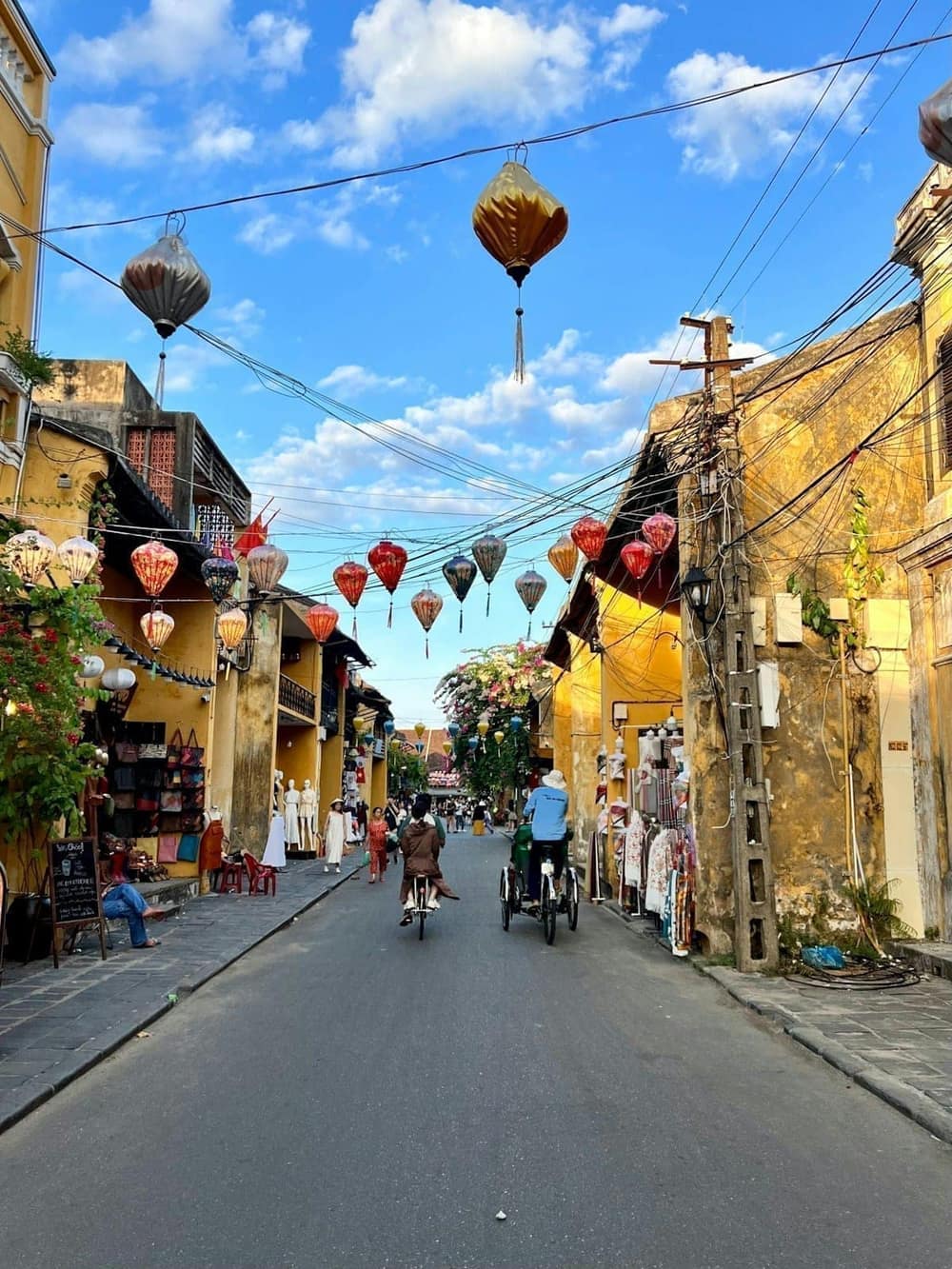
Hoi An is an unusual digital nomad destination - it’s built around tourism, not remote work, yet it attracts a consistent wave of nomads drawn to its unmatched atmosphere and low cost of living. The yellow-walled Ancient Town with lanterns overhead is the postcard image, but the Hoi An most nomads actually live in sits in the streets beyond the tourist core: the An Bang beach strip, the Cam Nam island across the Thu Bon River, and the quieter lanes between Phan Boi Chau and Ngo Gia Tu.
If you want infrastructure parity with a major Asian nomad hub, Da Nang (30 km north, 45 minutes by Grab) is the better choice. But if you’re after character, slow pace, and a lifestyle where an afternoon cycling through rice paddies is genuinely accessible, Hoi An earns its place on the shortlist. For accommodation options, see our Hoi An best hotels guide.
Coworking in Hoi An
Hoi An doesn’t have a formal coworking market like Da Nang or HCMC. What exists is a mix of cafe-coworking hybrids and a handful of dedicated spaces that have opened to serve the resident nomad population:
The Espresso Station - One of the most-used work cafes in Hoi An, located on Tran Hung Dao. Good Wi-Fi (80–120 Mbps), plenty of power sockets, and a decent espresso menu. No formal day pass - buy drinks. Opens 7am.
An Bang Beach area cafes - The strip of cafes behind An Bang beach (Duy Tan, Nguyen Phan Vinh streets) is where many nomads set up for the morning. Speeds vary but most deliver 50–100 Mbps. Coffee and a bowl of pho runs ₫50,000–70,000 ($2–2.80) - budget accordingly for a 4-hour session.
Coworking Hoi An (Hoi An Roastery building area) - A small coworking-style space near the Old Town boundary. Day passes approximately ₫150,000–200,000 ($6–8). Monthly options informal - negotiate directly.
Working from home / apartment - The most practical option for longer stays. Negotiate VNPT fibre broadband into your lease - landlords will typically add it for ₫200,000–350,000 ($8–14) per month. Confirm speeds before committing to the apartment.
Internet Speeds
Internet in Hoi An is reliable but not as fast as Da Nang or HCMC. Residential fibre (VNPT, Viettel) delivers 100–200 Mbps where it’s available. Old Town buildings sometimes have slower or shared connections due to building age. Most cafes outside the Ancient Town core run 50–130 Mbps. The An Bang beach area is generally solid.
Mobile data (4G Viettel or Mobifone) works well across the town and beach zones and is a reliable backup. eSIM options via Airalo let you arrive connected without hunting for a SIM card.
Average Monthly Rent in Hoi An
| Accommodation type | Monthly cost (USD, 2026) |
|---|---|
| For hotel and guesthouse options, see our Hoi An accommodation guide. |
| Furnished studio, Airbnb (anywhere in Hoi An) | $550–950 | | Furnished 1-bed, direct landlord, An Bang area | $300–550 | | Guesthouse room, An Bang or Cam Nam | $200–380 | | Villa with pool (4+ bedrooms, shared) | $1,200–2,500 total |
The Old Town itself is expensive for accommodation and not practical for daily work - it’s a tourist zone with heavy foot traffic. Most nomads base themselves in:
An Bang - 4 km from Old Town; beach-adjacent, quieter, good cafe scene. Cheapest rent relative to comfort.
Cam Nam - Small island across the Thu Bon River from Old Town. More local feel, fewer tourists, walkable to Old Town in 15 minutes. Popular with nomads wanting authenticity.
Cam Chau / Tan An - Between Old Town and the main road to Da Nang. Mix of local and expat housing, reasonable rents, good transport links.
For current apartment availability in the An Bang and Cam Nam areas, search accommodation in Hoi An on Booking.com.
Monthly Cost of Living Breakdown
Estimates for a solo nomad, 2026, ₫25,000 = $1 USD:
| Category | Monthly estimate (USD) |
|---|---|
| Rent (1-bed, An Bang, direct lease) | $320–520 |
| Cafe Wi-Fi (daily cafe sessions) | $60–100 |
| Groceries (local markets + Vinmart) | $70–120 |
| Eating out (mix of local and tourist restaurants) | $100–180 |
| Transport (bicycle + occasional Grab) | $20–50 |
| Utilities (if not included in rent) | $25–50 |
| Leisure (tours, cycling, beach) | $30–80 |
| Total | $625–1,100 |
Hoi An is slightly cheaper than Da Nang on rent if you stay outside the tourist core. However, eating in the Old Town regularly adds up - pho at a local spot on Nguyen Thai Hoc runs ₫35,000 ($1.40), while a restaurant aimed at tourists charges ₫150,000–200,000 ($6–8) for the same dish. Learn to eat where locals eat and your food budget drops sharply. Our Hoi An food guide covers the best local restaurants, street food, and markets where you can eat well for $1–3 per meal.
Visa Situation
Same situation as all Vietnam: no digital nomad visa. The 90-day e-visa ($25 USD at evisa.xuatnhapcanh.gov.vn) is the standard. Single or multiple entry available.
Border run options from Hoi An: most nomads head to Da Nang and take a bus to Laos (Savannakhet or Pakse) or fly from Da Nang to Phnom Penh for a Cambodia reset. Round trips cost $50–150 depending on transport choice. Laos tends to be more economical; Cambodia faster.
Hoi An vs Da Nang vs Ho Chi Minh City
| Factor | Hoi An | Da Nang | Ho Chi Minh City |
|---|---|---|---|
| Atmosphere / character | ★★★★★ | ★★★ | ★★★★ |
| Coworking infrastructure | ★★★ | ★★★★★ | ★★★★★ |
| Internet reliability | ★★★★ | ★★★★★ | ★★★★★ |
| Cost of living | ★★★★ (low) | ★★★★ (low) | ★★★ (moderate) |
| Beach access | ★★★ (An Bang, 15 min) | ★★★★★ | ✗ |
| Nightlife / social scene | ★★ | ★★★ | ★★★★★ |
| Nomad community size | ★★★ | ★★★★ | ★★★★★ |
| Tourist saturation | High in Old Town | Moderate | Low (vast city) |
Choose Hoi An if: Lifestyle matters as much as productivity. It’s the best-looking base in central Vietnam, the cycling culture is real, and you can eat incredibly well for very little. Best for nomads on 1–3 month stretches who’ve already done the HCMC stint and want something slower.
Choose Da Nang if: You need reliable coworking with fast fibre, beach access without a 30-minute Grab ride, and a larger nomad community to socialise with.
Choose Ho Chi Minh City if: You need proper business infrastructure, the biggest nomad network, or you’re building a client base in Southeast Asia.
Pros and Cons
Pros:
- Arguably the most beautiful base in Vietnam - Old Town UNESCO heritage ambience
- Cycling is genuinely viable as daily transport
- Low cost of living, especially outside tourist zones
- Vietnamese food at its central Vietnam best: cao lau, white rose dumplings, banh mi Phuong
- Quiet enough for focused work if you set up outside the Old Town
- Day trips (My Son, Cu Chi, Ba Na Hills) easy to schedule around work - see our best tours and activities in Hoi An
- An Bang beach accessible by bicycle
Cons:
- Limited formal coworking - mostly cafe-based
- Old Town is over-touristified during peak season (Feb–May, Jul–Aug)
- No airport - fly into Da Nang (DAD), then take a 45-minute Grab ($8–12)
- Tourist pricing in the Old Town restaurant zone inflates food costs if you eat there daily
- Smaller nomad community means less spontaneous networking than HCMC or Da Nang
- Flooding risk: Thu Bon River flooding in October–November can disrupt the town significantly
Practical Notes
- Getting around: Bicycle is the Hoi An nomad’s primary vehicle - flat terrain, everything within 5 km. Grab works for trips to Da Nang. Motorbike rentals from ₫150,000/day.
- Best work cafes outside Old Town: An Bang beach strip has the most reliable power + Wi-Fi combination. Avoid working inside the Ancient Town - too many tourists, inconsistent power.
- Grocery shopping: Vinmart on Nguyen Tat Thanh is the main supermarket. Local markets (Hoi An Central Market on Tran Phu) are cheaper for produce.
- Healthcare: Basic medical care at Hoi An Hospital; anything serious → Da Nang (Hoan My or Family Medical Practice). Travel insurance is essential.
- Best months: February–May (dry, pleasant temperatures, busy but manageable). September–November is wet season with flooding risk - factor this into lease timing.