Vietnam and Thailand are the two most-visited countries in Southeast Asia, and for good reason - both offer exceptional food, fascinating culture, and a huge range of travel experiences. They are also genuinely different in ways that matter for planning. Choosing between them depends on what you are after.
Quick Verdict
| Category | Thailand | Vietnam |
|---|---|---|
| Beaches | Winner - clearer water, more options | Ha Long Bay is unique; fewer beach options |
| Cost | Slightly higher (~USD 40–50/day budget) | Slightly cheaper (~USD 30–40/day budget) |
| Culture and history | Strong | Winner - Hoi An, Hue, cave systems |
| Food | Exceptional | Exceptional - different style |
| Getting around | Easier | More effort, more rewarding |
| First-timer | Easier choice | Better for return visitors |
| Infrastructure | More developed | Improving fast |
Both countries reward longer trips. The more time you have, the more sense it makes to combine them.
Climate and Best Time to Visit
Thailand and Vietnam both have regional climates that vary significantly within the country.
In Thailand, the Gulf coast (Koh Samui, Koh Phangan) has a different rainy season from the Andaman coast (Phuket, Krabi). The Andaman is best from November to April; the Gulf coast from January to September. Bangkok and Chiang Mai are pleasant from November to February. April (Songkran) sees the country’s biggest festival.
Vietnam stretches over 1,600 kilometres and weather varies sharply by region. The north (Hanoi, Ha Long Bay, Sapa) is best from October to April. Central Vietnam (Hoi An, Hue, Da Nang) is best from February to August. The south (Ho Chi Minh City, Phu Quoc, Mekong Delta) is dry from December to April. This variability means there is always somewhere in Vietnam in good weather - but it requires more itinerary planning than Thailand.
Cost Comparison
Both countries are excellent value by global standards, but Vietnam edges slightly cheaper.
Vietnam budget travellers typically spend USD 30–40 per day covering a guesthouse or budget hotel (USD 8–18), street food and local restaurants (USD 5–12 per day), and local transport. A bowl of pho costs around 40,000–70,000 VND (approximately USD 1.50–3).
Thailand budget travellers typically spend USD 40–55 per day. A simple guesthouse runs THB 300–700 (USD 8–20); pad thai from a street cart costs THB 50–80. Island accommodation and activities push daily spending up quickly - a day boat trip in Krabi easily costs THB 1,200–1,800.
At the luxury end, Thailand pulls ahead - its island resorts and Chiang Mai boutique hotels reach higher price points than Vietnam’s equivalent. Both countries have genuinely excellent mid-range options at USD 60–150 per night.
Visa costs differ meaningfully. Vietnam’s e-visa costs approximately USD 25 and permits a 90-day stay (as of 2026). Thailand offers 30 days visa-free for most Western passports - and for most trips, this is enough.
Top Experiences
Thailand’s standouts:
Bangkok is one of Southeast Asia’s great cities - the Grand Palace, Wat Pho, Chinatown, and an extraordinary street food and restaurant scene. It functions as both a destination and an excellent transit hub.
Chiang Mai offers a slower pace, excellent temples, cooking classes, and access to hill tribe regions. It is also one of the strongest bases for digital nomads in Southeast Asia.
The islands - Koh Samui, Phuket, Krabi, Koh Lanta - give Thailand its reputation for beach travel. The Andaman coast’s limestone karsts and turquoise water are among the most photographed seascapes in the world.
Vietnam’s standouts:
Hanoi is a chaotic, fascinating capital - French colonial architecture, the Old Quarter’s 36 streets, and some of the best street food eating in the country. The coffee culture alone merits a week.
Hoi An is the most atmospheric town in Vietnam: lantern-lit streets, tailors producing custom clothing overnight, and beautiful beaches 4km from the old town. Ancient Town is a UNESCO World Heritage Site.
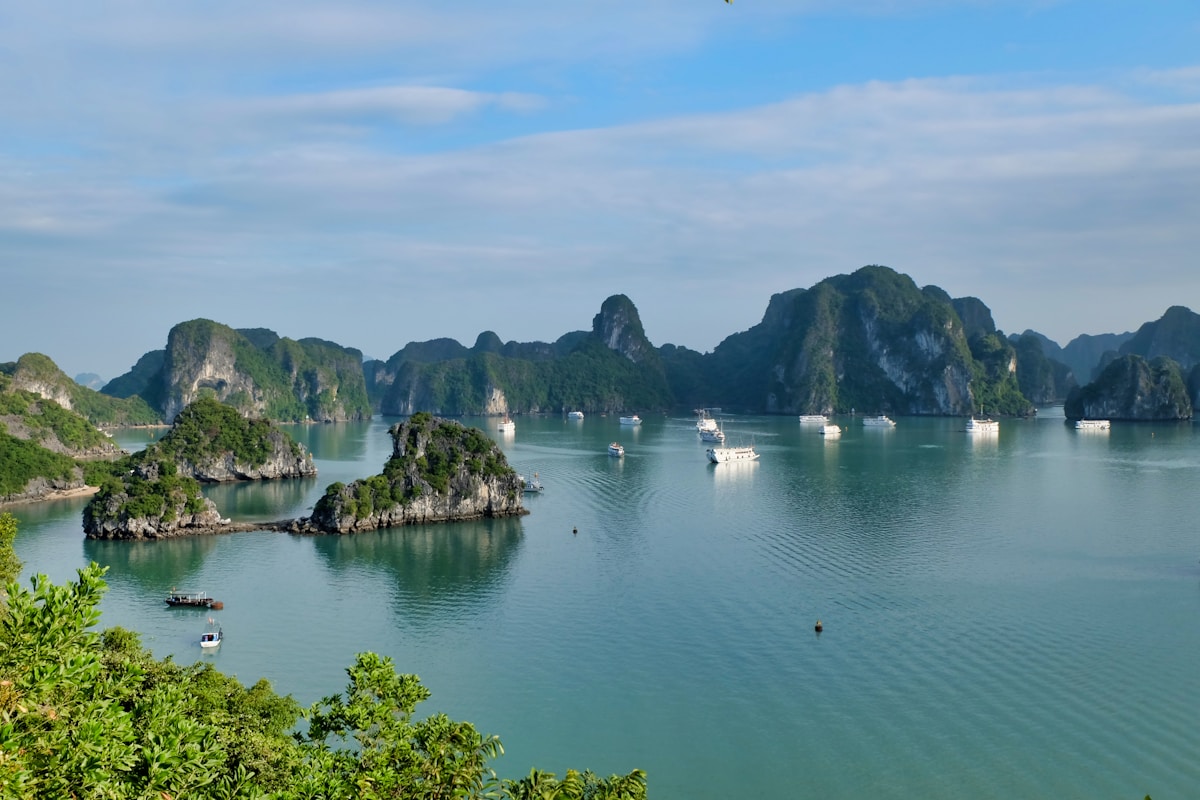
Ha Long Bay remains extraordinary despite its popularity - 2,000 limestone karsts rising from the Gulf of Tonkin. A two-night cruise on a traditional junk is the best way to see it and escape the day-tripper crowds. Browse Ha Long Bay cruise options.
Phong Nha and the cave systems of central Vietnam are genuinely world-class - Son Doong is the world’s largest cave, and permits are limited to around 1,000 visitors per year (booked years in advance).
Culture and History
Vietnam has a depth of history that is hard to match in Southeast Asia. The war museums in Ho Chi Minh City, the Imperial Citadel of Hue, the ancient trading port of Hoi An, and the UNESCO-listed My Son Cham towers all tell a layered story that rewards travellers who engage with it.
Thailand’s cultural highlights centre on Buddhist temples - the Grand Palace and Wat Pho in Bangkok, Doi Suthep above Chiang Mai, Sukhothai’s ancient ruins, and hundreds of active wats across the country. The culture is very much present and alive rather than museum-preserved.
Both countries have cultures that reveal themselves slowly. Street food is the most direct way in - eating where locals eat, at the times locals eat, is the single best thing you can do in either country.
Getting Around
Thailand is significantly easier to navigate. Domestic flights are cheap (Bangkok to Chiang Mai from THB 600 / USD 17 on budget carriers), the BTS Skytrain covers central Bangkok well, trains connect major cities, and minibus services run to most tourist destinations. Songthaews, tuk-tuks, and ride-hailing apps (Grab) fill the gaps.
Vietnam requires more effort but rewards it. The iconic Reunification Express train runs the full length of the country - the Da Nang–Hue section through the Hai Van Pass is one of the finest coastal rail journeys in Asia. Motorbike travel is the authentic way to explore rural Vietnam and is widely available for rent from USD 5–10 per day. Open-bus tickets linking major stops are cheap but slow.
Domestic flights in Vietnam are inexpensive (Hanoi–Ho Chi Minh City from USD 25–40 on VietJet or Bamboo Airways) and worth using to cover the full length of the country.
Who Should Choose Each?
Choose Thailand if:
- Beaches and island life are your main priority
- You want easy logistics and don’t want to plan in detail
- It is your first time in Southeast Asia
- You are combining with another destination and have limited time in each
Choose Vietnam if:
- Culture, history, and food depth matter more than beach perfection
- You have 2–3 weeks and want a single country itinerary
- You are returning to Southeast Asia and have already done Thailand
- Budget is a priority
Final Verdict
For a first-time visit to Southeast Asia, Thailand is the more forgiving and immediately rewarding destination. The logistics are simpler, the beaches are better-developed, and Bangkok is an accessible, manageable introduction to the region.
Vietnam has the edge for travellers who want to go deeper - it is more complex, occasionally more challenging, and ultimately more surprising. The food is exceptional, the history is layered, and the physical diversity of the country - from Sapa’s rice terraces to Hoi An’s lantern-lit streets to the Mekong Delta - is extraordinary for a single itinerary.
If you have 3–4 weeks and can only pick one: Vietnam rewards the commitment. If you have 2 weeks and want reliable sun and sand: Thailand delivers more consistently.
Plan Your Trip
✈️ Book your flights to Vietnam 🛡️ Get travel insurance 📱 Stay connected with an eSIM 🚗 Rent a car