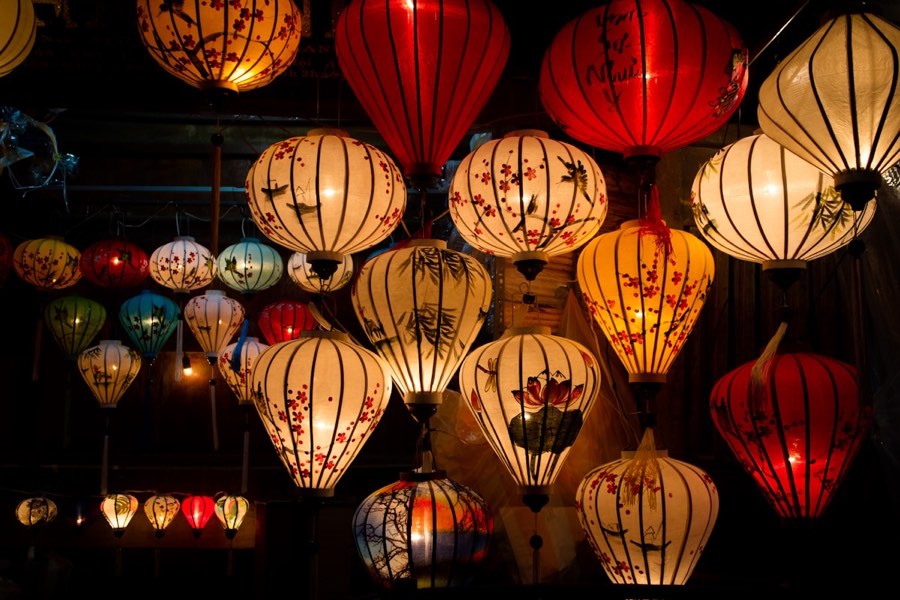
On the 14th day of each lunar month (the night of the full moon), Hoi An’s Ancient Town turns off its electric lights and illuminates the streets with coloured silk lanterns. The tradition dates to the Nguyen dynasty era when the town’s trading port held monthly ceremonies.
What happens during the lantern festival
From approximately 18:00 on the full moon evening:
- Electric street lighting in the old quarter is turned off
- Every shop, restaurant, and building hangs lanterns from their facades
- The streets of the old town are lit only by lantern light
- Coloured paper lanterns (typically yellow and red) are released on the Thu Bon River - they float downstream in clusters
- Traditional music performances operate at various points in the old town
- The night market on Nguyen Hoi Street runs all evening
- Candles are placed on the riverbank
The experience
The visual effect is genuine and striking. The old quarter’s architecture with lantern light and no modern electric light is what Hoi An looked like for centuries. The Thu Bon River at full moon with floating lanterns is one of the most atmospheric scenes in Vietnam.
It is also very crowded. The full moon evening draws significantly more visitors than normal evenings. The old quarter streets fill completely. If you want to see the river lanterns, stake out a riverbank position by 18:30.
Lantern releasing (floating lanterns)
Visitors can buy paper lanterns from street vendors at the river (₫20,000–50,000 / $0.80–2) and release them on the water. This is the primary tourist participation element. Crowds at the main launch spots (Bach Dang riverbank) are substantial - go slightly upstream or downstream from the main tourist concentration for more space.
Note: the lanterns are made of paper and wax - they sink after 5–10 minutes. The environmental impact is manageable but real.
2026 Lantern Festival Dates
The full moon falls on approximately the 14th–15th of each Gregorian month, varying by a few days each time. The major 2026 dates (check a Vietnamese lunar calendar for exact dates):
- January: Late January
- February: Late February (Tet period - largest celebration of the year)
- March: Mid-March
- April: Mid-April
- Through to December: Each full moon
Tet (Vietnamese New Year, January–February) coincides with a full moon and the combined celebration is the most spectacular of the year in Hoi An - also the most crowded by far.
Practical tips
Arrive by 17:30: The streets fill fast. Being in the old quarter before the lights go off gives a better position.
Riverbank viewing: Bach Dang Street facing the river is the primary lantern-launch location. Arrive early for riverbank space.
Tickets: The old town entry ticket (₫120,000) is required even on lantern festival evenings.
Photography: Low-light photography is the challenge. A phone camera in night mode works reasonably well. The lantern colours - yellows, oranges, reds - reproduce well even in low light.
Quieter street alternative: The streets one block back from the main tourist circuit (south of the main street) have the same lantern decoration with significantly less crowd pressure.
Useful links:
More in Hoi An
- Hoi An Beaches 2026: An Bang Beach and the Best Swimming Spots
- Best Hostels in Hoi An 2026: Budget Dorms Near the Ancient Town
- Best Hotels in Hoi An 2026: Boutique Heritage to Beach Resorts
- Best Restaurants in Hoi An 2026: Cao Lau, White Rose and Local Food
- Cooking Classes in Hoi An 2026: Best Schools and What to Expect
- Day Trips from Hoi An 2026: My Son, Da Nang and the Cham Islands
- Hoi An Food Guide 2026: What to Eat in Vietnam’s Ancient Town
- Things to Do in Hoi An 2026: Ancient Town, Tailors and Boat Trips
- Vegan Food in Hoi An 2026: Best Vegetarian and Plant-Based Options
- Best Hotels in Hoi An 2026: Old Town vs Beach vs Cam Nam