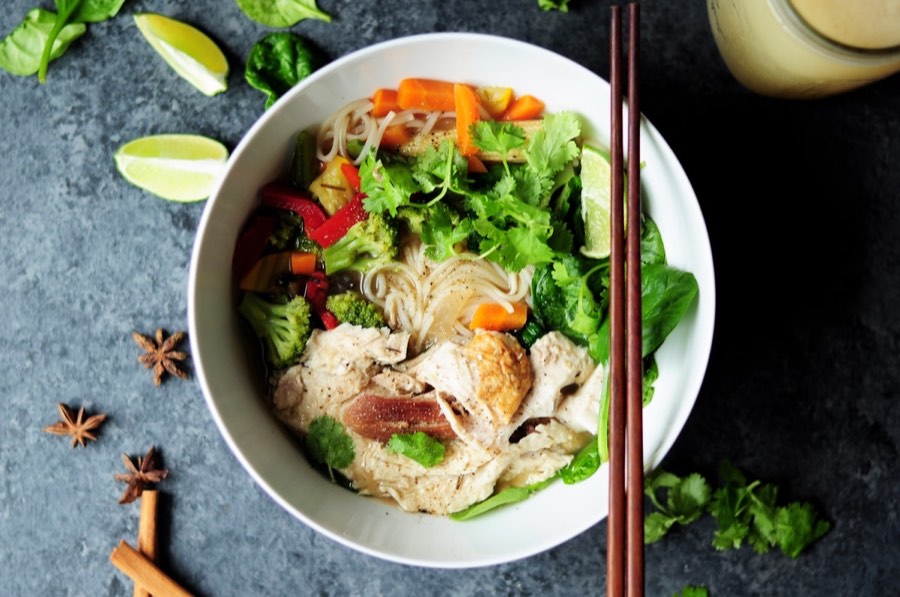
Hoi An’s cuisine reflects its trading port history. Chinese, Japanese, and Vietnamese culinary traditions merged here over centuries. Several dishes are genuine Hoi An originals - not variations on wider Vietnamese dishes but something that developed specifically in this town.
Cao Lau
Hoi An’s most distinct noodle dish. The noodles are made with water from the town’s ancient Ba Le Well and treated with ash from the Cham Islands - a specific chemistry that gives the noodles their dark colour and dense, slightly chewy texture. (Modern cao lau production may not strictly use these exact sources, but the dish remains specific to Hoi An.)
Topped with braised pork, bean sprouts, mint, rice paper crackers, and a small amount of pork fat broth. Different from any other Vietnamese noodle dish in texture and composition.
₫35,000–55,000 ($1.40–2.20). Found everywhere in Hoi An; very rare to find authentic versions elsewhere in Vietnam.
Where to eat it: Trung Bắc (87 Trần Phú) - well-regarded for cao lầu and a Hoi An staple address. Available at most restaurants in the old quarter.
Banh Bao Vac (White Rose Dumplings)
Translucent steamed dumplings folded into a rose-like shape. Shrimp or pork filling visible through the rice flour skin. Topped with fried shallots and served with a sweet and sour dipping sauce.
The recipe is a closely guarded family secret - one family makes all the white rose dumplings consumed in Hoi An, supplying every restaurant in town. ₫50,000–80,000 ($2–3.20) for a portion.
Where to eat it: White Rose Restaurant (533 Hai Bà Trưng) - the only restaurant licensed to make this dish, and the best place to eat it.
Banh Mi Hoi An
The Hoi An banh mi is larger and more loaded than versions elsewhere in Vietnam. The French baguette is piled with pate, Vietnamese sausage, grilled pork, butter, pickled vegetables, cucumber, coriander, and sauce. The bread is lighter-crusted than the Saigon version.
Banh Mi Phuong (2B Phan Chu Trinh) is the most famous; queues are normal from 07:00 onward. ₫30,000–50,000 ($1.20–2).
Where to eat it: Bánh Mì Phượng (2B Phan Châu Trinh) - Anthony Bourdain described it as the best bánh mì in the world. Expect a queue from 07:00.
Com Ga Hoi An (Hoi An chicken rice)
Shredded poached chicken on a compressed cake of turmeric-flavoured rice. Served with a clear broth, fresh herb plate, chilli and ginger sauce. The turmeric in the rice is the defining element - the rice is bright yellow and aromatic. ₫35,000–55,000 ($1.40–2.20).
Where to eat it: Cơm Gà Bà Buội (22 Phan Chu Trinh) - the original and still the most cited version, with queues at lunchtime.
Wonton Noodles (Mi Quang Hoi An)
Chinese-influenced wonton soup with yellow egg noodles, pork dumplings, and a clear pork broth. The Chinese merchant community influence is direct here. Different from the central Vietnamese mi quang - lighter broth, Chinese-style wontons. ₫35,000–60,000 ($1.40–2.40).
Where to eat it: Mì Quảng 1A (1A Hải Phòng) - a local institution for both mi quang and wonton noodles in Hoi An.
Banh Dap (Smashed Cake)
A crunchy snack dish - wet rice paper topped with a layer of dried crispy rice paper (banh trang), grilled until the top layer is crunchy. Eaten by smashing (“dap”) the two layers together and dipping in mam nem (fermented anchovy paste). Sold at evening street food stalls. ₫15,000–25,000 ($0.60–1).
Where to eat it: Evening street food stalls in the old quarter area; also available at Mì Quảng 1A (1A Hải Phòng) which serves several Hoi An snack dishes.
Che (Vietnamese Sweet Soups)
Hoi An has a strong che tradition - sweet bean soups and dessert drinks served in glass. Lotus seed che, mung bean che, and the mixed banh ba mau (three-colour dessert) are sold from street stalls in the old quarter. ₫15,000–25,000 ($0.60–1).
Where to eat it: Dessert stalls throughout the old quarter; the Hoi An morning market (Tran Phu Street) also has che vendors from early morning.
Morning Market Food
The covered market on Tran Phu Street has the best cheap morning food in Hoi An - bun ba duc (thick noodles with pork), banh cuon (steamed rice rolls), and fresh fruit. The market stalls open from 05:00.
Useful links:
More in Hoi An
- Hoi An Beaches 2026: An Bang Beach and the Best Swimming Spots
- Best Hostels in Hoi An 2026: Budget Dorms Near the Ancient Town
- Best Hotels in Hoi An 2026: Boutique Heritage to Beach Resorts
- Best Restaurants in Hoi An 2026: Cao Lau, White Rose and Local Food
- Cooking Classes in Hoi An 2026: Best Schools and What to Expect
- Day Trips from Hoi An 2026: My Son, Da Nang and the Cham Islands
- Hoi An Lantern Festival 2026: Full Moon Dates and What to Expect
- Things to Do in Hoi An 2026: Ancient Town, Tailors and Boat Trips
- Vegan Food in Hoi An 2026: Best Vegetarian and Plant-Based Options
- Best Hotels in Hoi An 2026: Old Town vs Beach vs Cam Nam