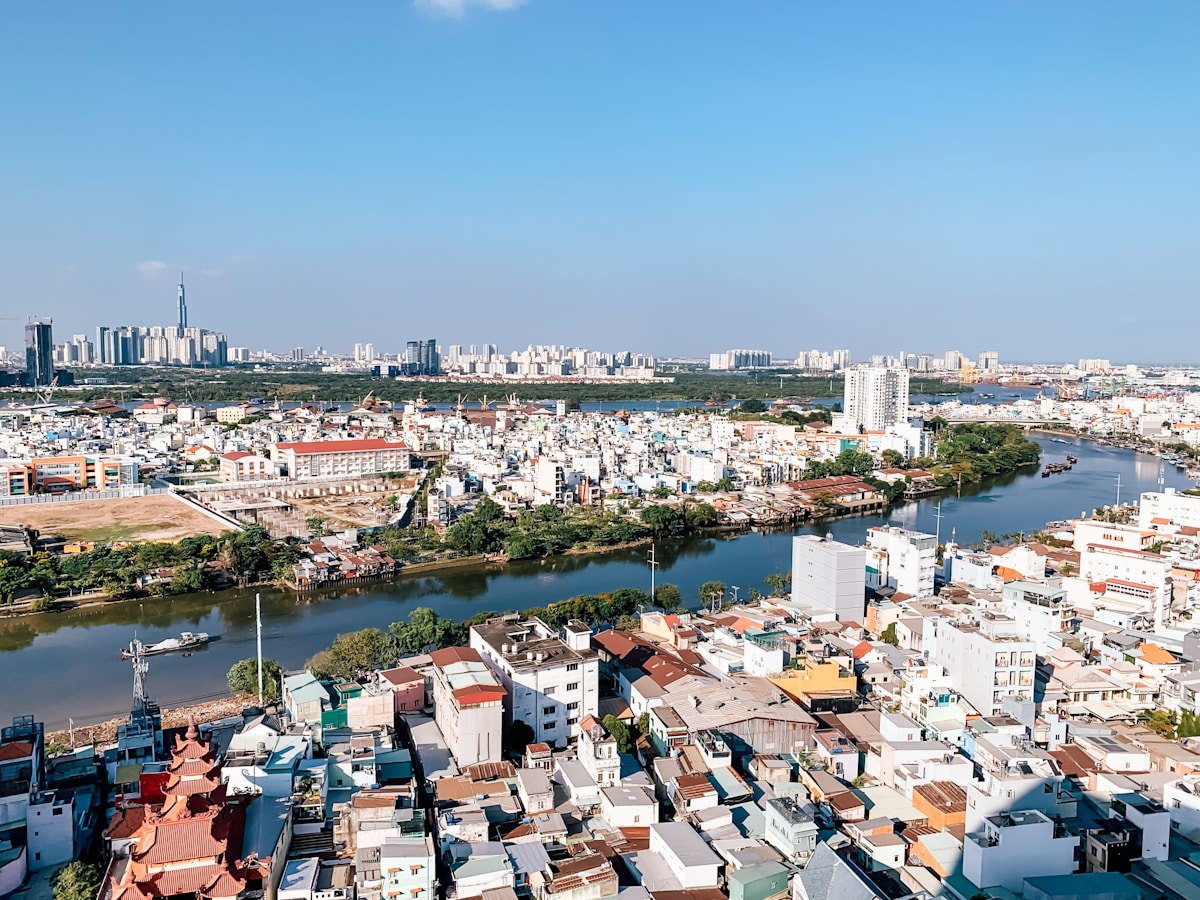
Ho Chi Minh City Travel Guide
Ho Chi Minh City travel guide covering war history, street food, the Cu Chi Tunnels, Mekong Delta access, and how to navigate Saigon's districts.
Guides for Ho Chi Minh City
Ho Chi Minh City (Saigon) is Vietnam’s largest city with over 9 million people in the city proper and approximately 13 million in the greater metro area. The economic capital and commercial centre of the country, it is faster, louder, and more frenetic than Hanoi - a city defined by motorbike traffic, street food, French colonial architecture, and war history. Most travellers spend two to four days here before heading north to the highlands or south to the Mekong Delta and Phu Quoc.
Getting there
As of late 2026, Ho Chi Minh City has two airports. Tan Son Nhat International Airport (SGN) sits 8km north of District 1 and retains domestic flights and regional services from hubs like Bangkok, Singapore, and Kuala Lumpur. The new Long Thanh International Airport (LTT), scheduled to open in December 2026 about 40km east of the city in Dong Nai Province, is set to take over most long-haul international routes from Europe, North America, and the Middle East. Check at booking which airport your flight uses — the transfer from Long Thanh is 30–45 minutes under normal conditions (longer at peak hour), with taxi and Grab pick-up planned at the terminal. See our Long Thanh December 2026 opening report for details.
Arrival paperwork: Vietnam requires a digital arrival card (completed within 72 hours of arrival), and from 1 July 2026 a digital health declaration submitted up to 7 days before travel. Both are covered in our Vietnam visa and entry guide.
From Tan Son Nhat (SGN): two terminals - international arrivals are in Terminal 2.
Airport to city centre options:
- Pre-booked transfer: A fixed-price airport transfer costs approximately VND 180,000–250,000 ($7–10 as of 2026) and is the most stress-free option, particularly with luggage or arriving at night.
- Grab (ride-hailing app): VND 100,000–160,000 ($4–6.50) to District 1. Download the app before arriving - it works like Uber and accepts cash or card. Wait at the designated ride-hailing pickup area outside arrivals.
- Metered taxi: Vinasun (white) and Mai Linh (green) are the two reliable taxi companies. A metered ride to District 1 costs approximately VND 130,000–180,000 ($5–7). Avoid unmarked taxis.
- Bus 109: Air-conditioned bus to the city centre, VND 20,000 ($0.80). Runs every 20 minutes from 5:30am to 1:30am. The cheapest option but slow during rush hour.
What HCMC is
Saigon was renamed Ho Chi Minh City after reunification in 1975 but is still called Saigon by most Vietnamese and almost all foreigners. The city sprawls across a flat river-delta landscape with the Saigon River running along its eastern side. The historic districts - Districts 1, 3, and Binh Thanh - contain the French colonial buildings and the main sights. The outer districts are residential and commercial with limited tourist interest, with the notable exception of Thu Duc City (formerly District 9 and Binh Duong areas), which has become Vietnam’s technology hub and home to the Vietnam National University campus.
Districts worth knowing
District 1 (Quan 1): The tourist and commercial centre. Ben Thanh Market, the Reunification Palace, Notre-Dame Cathedral Basilica, the Central Post Office, the Opera House, and Bitexco Financial Tower (the city’s most recognisable skyscraper, with the Saigon Skydeck observation deck on the 49th floor - approximately VND 200,000 / $8 entry as of 2026) are all here. Pham Ngu Lao and Bui Vien streets form the backpacker zone with budget accommodation, bars, and street food vendors open until late. Nguyen Hue Walking Street is the pedestrianised central boulevard - good for evening walks and people-watching.
District 3 (Quan 3): French colonial villas, tree-lined streets, independent cafes, and some of the best restaurants in the city. Quieter than District 1 and preferred by longer-stay visitors. The Jade Emperor Pagoda (Chua Ngoc Hoang), one of the most atmospheric Taoist temples in Vietnam, is here - free entry, open daily 7am–6pm.
District 4: Across the canal from District 1, known for street food. Vinh Khanh Street has a long row of seafood restaurants and grilled-meat stalls with prices significantly lower than District 1 - expect VND 30,000–60,000 ($1.20–2.40) per dish.
District 7 (Phu My Hung): The main expat district, planned and modern with international schools, Korean and Japanese restaurants, and a suburban feel. Crescent Mall is the main shopping centre.
Binh Thanh: The residential district northeast of the centre with strong local food scenes, particularly around Phan Xich Long Street. The Landmark 81 tower (461m) - Vietnam’s tallest building - is here, with a sky bar on the upper floors.
Thu Duc City: The new technology and education district on the east side. Home to the Saigon Hi-Tech Park and several university campuses. Not a tourist area, but relevant for digital nomads and business travellers.
Top things to do
War Remnants Museum: Among the most powerful war museums in Asia, documenting the Vietnam War (called the American War locally) through photographs, military equipment, and first-hand accounts. Difficult viewing but important. Open daily 7:30am–6pm. Entry approximately VND 40,000 ($1.60 as of 2026). Allow 2–3 hours.
Reunification Palace (Independence Palace): The former presidential palace of South Vietnam, preserved as it was on 30 April 1975 when a North Vietnamese tank crashed through the gates. The basement war rooms and rooftop helicopter are highlights. Open daily 7:30am–4pm. Entry approximately VND 65,000 ($2.60 as of 2026). Tickets are available at the gate; allow extra time during peak periods when queues build.
Notre-Dame Cathedral Basilica of Saigon: A red-brick neo-Romanesque cathedral built between 1863 and 1880 using materials shipped from France. Currently under long-term renovation (since 2017) - the exterior is partially scaffolded but the building is still photogenic and worth seeing from the outside.
Central Post Office: Designed by Gustave Eiffel’s firm and completed in 1891, this working post office has a grand interior with arched ceilings and old maps of Saigon. Free entry. You can still send postcards from here.
Bitexco Financial Tower and Saigon Skydeck: The 68-floor tower with a distinctive helipad is the city’s most photographed modern building. The Skydeck on the 49th floor provides 360-degree views. Open daily 9:30am–9:30pm.
Cu Chi Tunnels (day trip): A 250km network of underground tunnels used during the Vietnam War, 40km northwest of the city centre. Ben Duoc is the less-visited, more atmospheric site; Ben Dinh is closer and more touristed. Allow 3–4 hours including transport. Half-day Cu Chi Tunnels tours from HCMC cost approximately VND 250,000–500,000 ($10–20). Tours depart every morning, and there are usually last-minute tours available if you decide the evening before.
Ben Thanh Market: The city’s most famous market, a colonial-era building near the centre of District 1. Open from 6am until around 6pm for the indoor market; the night market stalls around the perimeter open from 6pm until 11pm. Prices are inflated - bargain at least 40–50% off the first quoted price.
Jade Emperor Pagoda: Built in 1909 by the city’s Cantonese community, filled with carved wooden figures, incense coils, and ceramic tiles. Barack Obama visited in 2016. Free entry.
Food - what to eat and where
HCMC’s street food is among the best in Southeast Asia. Key dishes and where to find them:
Phở (beef noodle soup): Pho Hoa Pasteur (260C Pasteur Street, District 3) is one of the most consistently recommended phở restaurants in the city - approximately VND 75,000–95,000 ($3–4) per bowl as of 2026. Pho Le (413 Nguyen Trai, District 5) is another long-standing favourite.
Bánh mì (Vietnamese baguette sandwich): Banh Mi Huynh Hoa (26 Le Thi Rieng, District 1) has had queues out the door for decades - approximately VND 55,000–65,000 ($2.20–2.60) per sandwich. The fillings are generous: pâté, cold cuts, pickled daikon, and chilli.
Cơm tấm (broken rice): The signature HCMC lunch dish. Com Tam Ba Ghien (84 Dang Van Ngu, Phu Nhuan) serves large plates with grilled pork chop, egg, and fish sauce for approximately VND 45,000–65,000 ($1.80–2.60).
Bún thịt nướng (vermicelli with grilled pork): Available from street vendors across the city for approximately VND 35,000–50,000 ($1.40–2).
Street food tip: Stalls with high local turnover are the safest bet. Sit-down street food meals in District 1 tourist areas cost VND 50,000–100,000 ($2–4); the same dishes in Districts 3, 4, or Binh Thanh cost VND 25,000–50,000 ($1–2). See our food guide and best restaurants guide for more options.
Getting around
Grab: The dominant ride-hailing app in Vietnam. Works for motorbikes (GrabBike) and cars (GrabCar). A GrabBike across District 1 costs approximately VND 15,000–30,000 ($0.60–1.20). A GrabCar from District 1 to District 7 costs approximately VND 60,000–100,000 ($2.40–4). Pay by cash or linked card.
Xe ôm (motorbike taxi): Traditional motorbike taxis, identifiable by drivers waiting at street corners. Negotiate the price before riding. Roughly 50% more than Grab prices but available where signal is weak.
Metro Line 1: Vietnam’s first metro line opened in late 2024, running 19.7km from Ben Thanh Market (District 1) to Suoi Tien Theme Park (Thu Duc) with 14 stations. Tickets cost approximately VND 7,000–20,000 ($0.30–0.80) depending on distance. Useful for reaching Thu Duc and eastern districts.
Walking: District 1 and District 3 are walkable, but pavement space is often occupied by parked motorbikes. Crossing roads requires steady pacing - walk at a constant speed and motorbikes will flow around you. Do not stop or run.
Cycling: Not practical for general transport due to traffic intensity, but some travellers use it within quieter District 3 streets.
See our getting around HCMC guide for detailed transport information.
Where to stay
Budget (from approximately VND 150,000–400,000 / $6–16 per night as of 2026):
- The Common Room Project (District 1) - well-reviewed hostel with private pods and a rooftop, near Bui Vien
- M2C Hostel (District 1) - clean dorms on Pham Ngu Lao, walking distance to Ben Thanh Market
Mid-range (from approximately VND 800,000–2,000,000 / $32–80 per night):
- Tabino Hotel (District 1) - Japanese-style compact rooms, excellent location near Nguyen Hue Walking Street
- Fusion Suites Saigon (District 1) - spa-inclusive hotel, each booking includes two spa treatments per day
Luxury (from approximately VND 5,000,000–15,000,000 / $200–600 per night):
- Park Hyatt Saigon (District 1) - the benchmark luxury hotel, directly on Lam Son Square opposite the Opera House
- The Reverie Saigon (District 1) - Italian-designed interiors on the upper floors of Times Square tower
See our best hotels guide for district-by-district recommendations.
Day trips from HCMC
The Mekong Delta is 2–3 hours southwest by road. Can Tho is the largest delta city and the best base for floating markets - Cai Rang floating market is the main one, best visited at dawn. My Tho and Ben Tre are closer alternatives for a shorter day trip. Organised day tours to the Mekong Delta handle all transport and typically cost VND 500,000–1,200,000 ($20–48) per person.
The Cu Chi Tunnels are 40km northwest - see above for details.
Vung Tau, a coastal city 2 hours southeast, is the closest beach option from HCMC. Reachable by hydrofoil from Bach Dang Wharf (District 1) in approximately 90 minutes for around VND 250,000 ($10) one way.
See our day trips guide for full details on each option.
Best time to visit
HCMC has two seasons: dry (November–April) and wet (May–October). The dry season has lower humidity, less rain, and more comfortable walking conditions. The wet season brings heavy afternoon downpours - usually lasting 30–60 minutes - but mornings are often clear. Temperatures are consistent year-round: 25–35°C (77–95°F). The city is functional in all months; the wet season is not a dealbreaker. For what each month looks like in practice, see Vietnam in July and Vietnam in August.
The busiest tourist period is December–February (coinciding with Tet/Lunar New Year in January or February). During Tet week, many local businesses close and the city empties as residents return to their home provinces - an unusual and interesting time to visit, though restaurant options narrow.
Frequently Asked Questions
How many days in Ho Chi Minh City is enough? Two to three days covers the main sights: the War Remnants Museum, Reunification Palace, Ben Thanh Market, and the best street food. Add a day for the Cu Chi Tunnels or a day trip to the Mekong Delta if time allows. HCMC is a gateway city - most travellers don’t linger beyond four days before heading north or south.
What is the difference between District 1 and other districts? District 1 is the tourist and commercial centre with most hotels, restaurants, and major sights. It is busy, loud, and convenient. District 3 is the quieter French colonial area preferred by longer-stay visitors and those who want better restaurants without tourist pricing. District 4 and Binh Thanh have strong local food scenes.
How do you get from HCMC to the Mekong Delta? The Mekong Delta is 2–3 hours southwest by road. Can Tho is the largest city and best base; Ben Tre and My Tho are closer alternatives for a shorter day trip. Organised tours from HCMC handle transport and are practical if you only have one day. Independent travel to Can Tho overnight gives more flexibility.
Is the Cu Chi Tunnels worth visiting? Yes, for most travellers interested in the Vietnam War. The tunnels offer a visceral sense of the wartime conditions - cramped underground passages, booby trap replicas, and period context - that no museum replicates. Ben Duoc is the less-visited, more atmospheric site; Ben Dinh is closer to the city and more touristed. Allow 3–4 hours including transport.
Is HCMC safe for tourists? Generally yes. The main risks are bag snatching on busy streets (keep phones in pockets, carry bags on the building side), taxi scams (use Grab or Vinasun/Mai Linh only), and traffic. Violent crime against tourists is rare. The Bui Vien backpacker strip is boisterous late at night but not dangerous.
More in Ho Chi Minh City
- Things to Do in Ho Chi Minh City
- Ho Chi Minh City Food Guide - Best Dishes and Where to Eat
- Best Restaurants in Ho Chi Minh City
- Saigon Food Culture - Southern Vietnamese Cuisine and Where to Eat
- Vietnamese Coffee Culture - Ca Phe Sua Da, Egg Coffee and Where to Drink
- Ho Chi Minh City Vegan Food Guide
- Best Coffee Shops in Ho Chi Minh City
- Best Cafes to Work in Ho Chi Minh City
- Best Hotels in Ho Chi Minh City
- Best Hostels in Ho Chi Minh City
- Getting Around Ho Chi Minh City
- Day Trips from Ho Chi Minh City
- Ho Chi Minh City History
- Nightlife in Ho Chi Minh City
- Cu Chi Tunnels Guide
Tours and activities
- Cu Chi Tunnels Tours - What to Expect, Best Operators and Prices
- Mekong Delta Day Trips from Ho Chi Minh City
Nearby destinations
Plan your trip
- Hanoi vs Ho Chi Minh City - Which Should You Visit?
- Ho Chi Minh City to Phu Quoc - Route Options and Mekong Stopover
- 1 Week in South Vietnam - HCMC, Mekong Delta and Phu Quoc
- 2 Weeks in Vietnam - The Classic North to South Itinerary
- Vietnam Family Trip - Best Destinations and Itinerary with Kids
- Vietnam Honeymoon - Best Destinations and Romantic Itinerary
Safety and scams
HCMC is generally safe for travellers, but petty theft is common in tourist areas. Key points:
- Bag snatching: The most reported crime against tourists. Motorbike riders grab bags and phones from pedestrians. Keep your phone in a front pocket, carry bags on the building side of the pavement, and avoid using your phone while walking near the kerb.
- Taxi scams: Only use Vinasun or Mai Linh taxis, or Grab. Some fake taxis use similar-looking liveries (e.g. “Vinasan” instead of “Vinasun”). Check the company name on the door.
- Ben Thanh Market overcharging: Opening prices are typically 2–3x the expected sale price. Bargain firmly or walk away.
- Shoe-shine and massage scams: Declining firmly and walking away is the best response.
- Traffic: The biggest real danger. Cross roads slowly and predictably. Never make sudden movements.
Costs overview
Budget daily: approximately VND 350,000–700,000 ($14–28 as of 2026). Mid-range: VND 700,000–2,000,000 ($28–80). Street food: VND 25,000–80,000 ($1–3.20) per dish. A sit-down restaurant meal with drinks: VND 150,000–400,000 ($6–16). Accommodation ranges from VND 150,000 per dorm bed to VND 15,000,000+ for luxury suites.
Planning to visit? Browse hotels in Ho Chi Minh City — free cancellation on most bookings.
Book an experience
Top experiences in Ho Chi Minh City
Explore the best tours and activities in Ho Chi Minh City , with instant confirmation and free cancellation on most bookings.