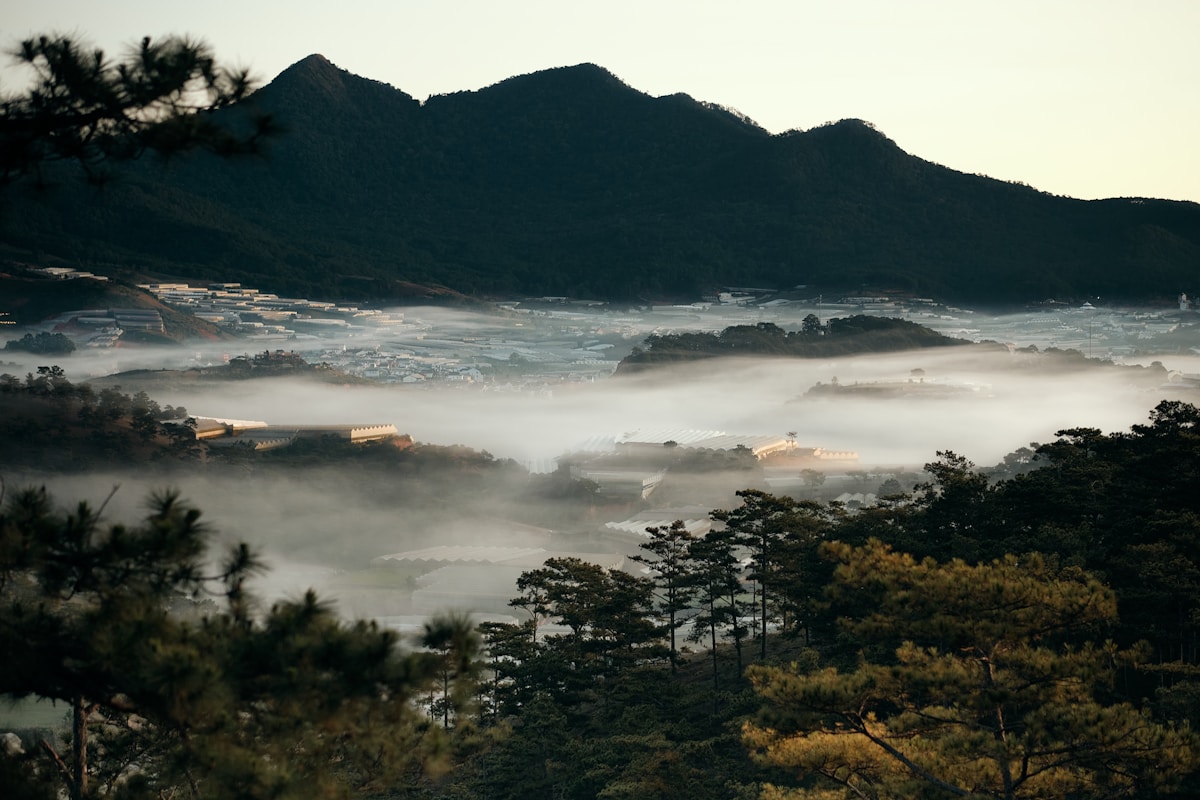
Vietnam’s two most popular mountain towns offer very different things. Sapa in the north is a trekking base - a launch point for journeys into ethnic minority villages and rice terrace valleys that belong to a genuinely different culture from lowland Vietnam. Da Lat in the south is Vietnam’s “City of Eternal Spring” - a former French hill station turned romantic getaway with flower gardens, colonial architecture, strawberry farms, and one of Vietnam’s most interesting local food scenes.
Both sit at around 1,500 m elevation. Both are cooler than the lowlands. Almost everything else about them differs.
Setting
Sapa (1,500–1,600 m) is in Lao Cai Province in the far northwest, 350 km from Hanoi and 38 km from the Chinese border. The town itself is a functional mountain settlement that has expanded rapidly with resort hotels in recent years - the Topas Ecolodge, Silk Path Grand Resort, and a cable car to Fansipan Peak (3,143 m, Vietnam’s highest mountain) represent the upmarket end. The real reason to come is what lies below: Muong Hoa Valley, with its staircase rice terraces and H’mong, Dao, Tay, and Giay villages.
Da Lat (1,500 m) is in Lam Dong Province in the Central Highlands, 300 km northeast of Ho Chi Minh City. It was developed as a French colonial retreat in the 1910s–1940s - the Sofitel Da Lat Palace (originally the Lang Bian Palace, 1922) still presides over Xuan Huong Lake, and dozens of French-style villas dot the surrounding hillsides. The surrounding highlands are agricultural: flower farms, coffee plantations, silk farms, and strawberry fields supply much of Vietnam with fresh produce.
Climate
Sapa has four distinct seasons, unlike most of lowland Vietnam. Spring (March–May) brings mild temperatures (15–20°C), possible fog, and fresh greenery. Summer (June–August) is warmer and lush, with rice terraces at their most vibrant. Autumn (September–October) is peak season: the rice harvest turns terraces gold, and this is the most photographed period. Winter (November–February) brings genuine cold - near 0°C at night, frost above 2,000 m, occasional snow on Fansipan. The fog that fills the valleys in winter can be atmospheric or frustrating depending on your tolerance for obscured views.
Da Lat has two seasons: the dry season (November–April) and the wet season (May–October). Temperatures are remarkably stable year-round: 15–24°C. The cool, dry months of November through March are the most comfortable, with clear skies and cool nights. The wet season brings daily afternoon rain (usually 1–3 hours) but the mornings are often clear. Da Lat never gets cold enough to be uncomfortable - a light jacket handles the evenings year-round.
Trekking and Outdoor Activities
Sapa’s main activity is trekking. The classic day trek from Sapa town descends through Cat Cat Village, past waterfalls, and into the Muong Hoa Valley to Ta Van and Lao Chai villages - 12–16 km, 5–7 hours, manageable fitness required. Guided treks cost USD 25–40 per person for a day trek including lunch; multi-day versions with village homestays run USD 60–120 per person for two nights.
Fansipan Peak is trekable in 2–3 days (hire a guide, essential - trails are unmarked; guides from USD 30/day) or reachable by cable car in 20 minutes (approximately USD 22 round trip as of 2026). The cable car is genuinely impressive; the summit views (on clear days) extend to China.
Da Lat’s outdoor activities are more diverse but generally less demanding. Lang Bian Mountain (2,167 m, 12 km from Da Lat town) has a two-hour hike to the summit with good views - guided day trip from USD 20. Cycling routes around Tuyen Lam Lake and into the countryside are popular. Datanla Waterfall (4 km from centre, USD 3 entry) has a toboggan run and walking trails that take 1–2 hours. More adventurous options: Dalat Phat Tire Ventures runs canyoning, white-water rafting, and mountain biking tours in the surrounding highlands from USD 35–80.
Food
Da Lat
Da Lat’s food identity is genuinely distinct within Vietnam. The temperate climate produces:
Banh trang nuong (grilled rice paper with egg, green onion, dried shrimp, and chilli) - the street food most associated with Da Lat, called “Vietnamese pizza” by visitors. USD 1–2 at the central market.
Banh mi xiu mai (Da Lat-style banh mi with pork meatballs in tomato sauce) - different from any other banh mi in Vietnam, USD 1.50.
Strawberries - grown on surrounding farms, sold fresh by street vendors and turned into ice cream, jam, and wine. A punnet of fresh strawberries costs USD 1–2.
Avocado and artichoke - unusual in Vietnamese cuisine; Da Lat produces both for the country and puts them in everything from avocado ice cream to artichoke tea.
The night market section of Da Lat Central Market is one of Vietnam’s better concentrated street food scenes, running from around 5 p.m. until midnight.
Sapa
Sapa’s restaurant scene is more generic, oriented toward Vietnamese and international food for tourists. Salmon - raised in the cold mountain streams - appears on many menus and is a regional specialty worth trying (grilled salmon with lemongrass, USD 8–12 at local restaurants). Black H’mong and Dao food traditions include rice wine, sticky rice cooked in bamboo, and grilled corn, but these are more accessible at village homestays than at Sapa town restaurants.
Accommodation and Cost
Sapa
- Budget dorm: USD 8–14/night
- Mid-range hotel (Sapa town): USD 30–60/night
- Boutique resort (Topas Ecolodge): USD 120–180/night
- Village homestay (Ta Van, Lao Chai): USD 10–18/person including dinner and breakfast
Da Lat
- Budget guesthouse: USD 12–20/night
- Mid-range hotel: USD 30–60/night
- Sofitel Dalat Palace: USD 130–200/night
- Hang Nga Guesthouse (“Crazy House”): USD 15–35/night (and worth it for the experience)
Overall costs are similar, though Da Lat has better domestic flight connectivity which can reduce total transport costs for travellers coming from Ho Chi Minh City.
Getting There
Sapa: Overnight train Hanoi → Lao Cai (8–9 hours, from USD 18 hard seat / USD 28 sleeper as of 2026) + 40-minute minibus to Sapa (USD 3–5). Tourist sleeper bus direct from Hanoi: 5–6 hours, USD 12–15.
Da Lat: Flight from Ho Chi Minh City to Lien Khuong Airport: 50 minutes, from USD 20 as of 2026. Sleeper bus from Ho Chi Minh City: 7–8 hours, USD 12–18. From Nha Trang by bus: 4 hours, USD 8–12.
Best For
Choose Da Lat if:
- You’re based in southern Vietnam (Ho Chi Minh City, Mui Ne, Nha Trang)
- Food, flowers, and French colonial atmosphere are the draw
- You want a comfortable, accessible mountain escape
- Cold winters or serious trekking aren’t priorities
- Family or romantic trip where varied activities matter
Choose Sapa if:
- You’re visiting northern Vietnam and basing in Hanoi
- Trekking through rice terrace valleys and ethnic minority villages is the main goal
- Fansipan Peak or multi-day hiking with homestays are on the list
- The autumn harvest season (September–October) aligns with your trip
When to Visit
Da Lat: November through March offers the most comfortable conditions. The strawberry season peaks December–February. Avoid major Vietnamese public holidays when domestic tourism peaks and accommodation prices spike.
Sapa: September and October for the rice harvest. March and April for fresh greens and fewer crowds. Avoid December–February if cold bothers you; avoid weekends if possible as domestic tourism from Hanoi is heavy on Friday–Sunday.
The Verdict
These cities don’t really compete - they serve different itineraries and different parts of the country. If you’re doing a classic north-to-south Vietnam route, Sapa belongs near the start and Da Lat belongs near the end. Travellers who want an accessible mountain break without the commitment of a full trekking expedition will find Da Lat more satisfying. Travellers who want to walk through landscapes that look like paintings will choose Sapa.
Both are worth it. Neither disappoints.
See our guides to Da Lat and Sapa for detailed neighbourhood guides and activity recommendations. You can also browse Da Lat tours on GetYourGuide and Sapa tours on GetYourGuide to compare trekking and activity options.
Plan Your Trip
✈️ Book your flights to Vietnam 🛡️ Get travel insurance 📱 Stay connected with an eSIM 🚗 Rent a car