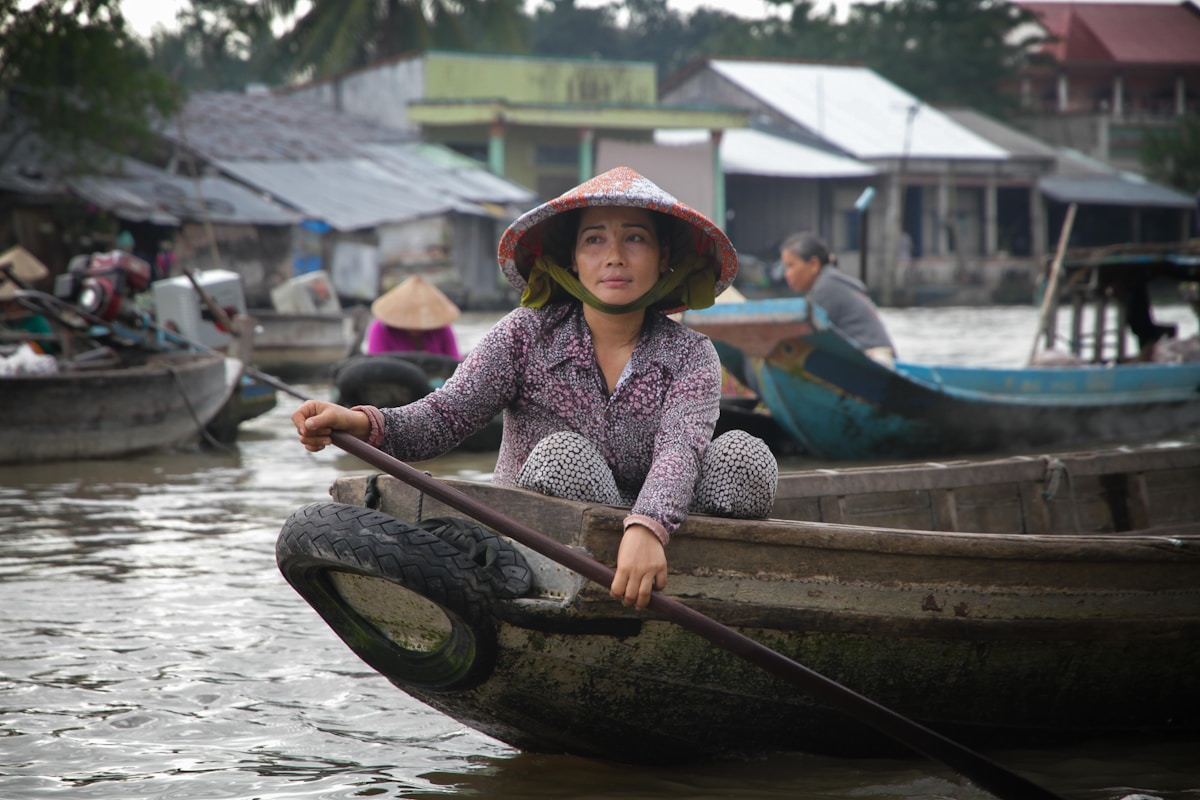
The Mekong Delta’s annual flood season — known locally as mùa nước nổi, or “the season of rising water” — is now underway. The flooding, which typically peaks from August through to November, transforms the landscape of the delta’s provinces into a network of waterways, flooded rice paddies and submerged grasslands that are navigable only by boat.
Where the Action Is
The Dong Thap province is the most accessible centre of the flood season experience for visitors. The area around Hong Ngu Ward, Thuong Phuoc and Thuong Lac is particularly active during the September–October peak, with small wooden boats available to hire for exploring flooded fields. Local guides take visitors through lotus ponds, fishing communities and areas where villagers set traditional fish traps — a practice that dates back centuries and which the seasonal floods make economically significant for rural families.
The flooding is an ecological and economic event before it’s a tourist attraction: the annual inundation deposits nutrient-rich silt across the delta’s farming land, replenishes fish stocks, and provides livelihoods for fishing communities. That context gives the experience more depth than a straightforward boat tour.
What the Season Looks Like Right Now
Flood waters in early September are rising but have not yet reached their November peak. This means some areas accessible only at peak flooding are not yet navigable, but the major sites around Dong Thap are already active. Water levels vary from year to year depending on upstream rainfall and dam releases in China and Cambodia; local guides have the most accurate real-time information on which areas are worth visiting.
Conditions to plan for: daytime temperatures around 30–33°C, high humidity, and afternoon rain showers common through October. A light waterproof layer and sun protection are practical necessities. Accommodation in the Dong Thap area is limited — most visitors day-trip from Can Tho.
Getting There
Can Tho is the most practical base. From Can Tho, Dong Thap province is roughly 80–90km northeast and reachable by bus, motorbike or hired car. Some operators offer guided day tours from Can Tho specifically timed for the flood season. Our Mekong Delta day trip guide covers the logistics of getting out into the delta from the city.
For broader trip planning, see our Vietnam itineraries — several include a Mekong Delta leg that can be timed to coincide with the flood season window.
Is It Worth Visiting During the Floods?
Yes — for the right kind of traveller. The landscape during flood season is genuinely unusual: a flat delta that is normally defined by rice fields and canals becomes something closer to a shallow lake. But it’s not a passive experience — the value is in going out on the water with someone who knows the area. Organised tours that include a local guide, a traditional wooden boat and stops at fishing communities make the most of what the season offers.
The window is August to November, with September and October the peak months. If your Vietnam itinerary passes through the delta during that period, it’s one of the best times to visit.