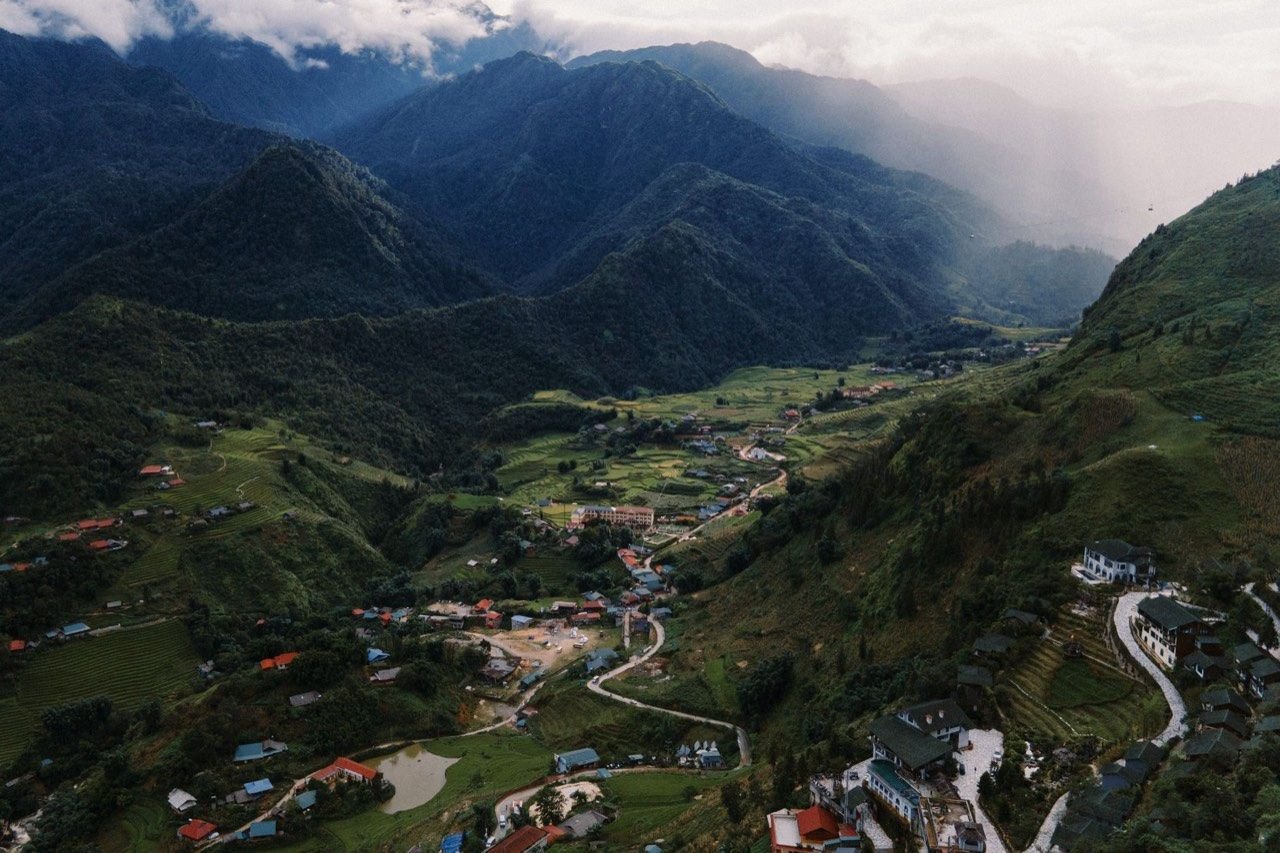
The accommodation decision in Sapa is more consequential than in most Vietnamese cities: you are choosing between staying in Sapa town, a hilltop settlement at 1,600m with hotels, restaurants, and cable car access, and staying in a valley homestay in an ethnic minority village, where you sleep in the terraced landscape itself. For a first visit of two nights, Sapa town makes logistical sense. For longer stays or returning visitors, at least one night in a valley homestay changes the experience significantly.
Sapa Town: Hotels and Lodges
Sapa town has grown rapidly and the centre lacks charm, but upper-floor rooms in the better hotels have views of Muong Hoa Valley that rival anywhere in Vietnam on a clear morning. The town’s advantage is that everything - tours, restaurants, the Fansipan cable car, and onward transport - is accessible without a Grab or motorbike.
Silk Path Grand Resort & Spa sits on the ridge above Sapa town with panoramic valley views. The view on a clear day is extraordinary - this is the defining luxury Sapa experience. Large rooms, an excellent spa, and full F&B on-site. ₫3,000,000–8,000,000 ($120–320) per night as of 2026.
Hotel de la Coupole - MGallery is the most atmospheric option in Sapa town. The French-era colonial revival design references Sapa’s history as a hill station built by French administrators in the 1920s. Indoor pool, multiple restaurants, and reliable service. ₫2,500,000–7,000,000 ($100–280) per night as of 2026.
Amazing Sapa Hotel is the standout mid-range choice - valley views from upper floors, consistent reviews for cleanliness and breakfast quality, and genuine value in the ₫800,000–1,800,000 ($32–72) tier.
Sapa O’Chau is a hotel and social enterprise run by a Black Hmong woman who grew up near the terraces - it trains local ethnic minority youth in hospitality. The rooms are good, the mission is worth supporting, and the staff genuinely know the local area. ₫700,000–1,500,000 ($28–60) per night.
Pinocchio Hotel Sapa covers the budget end of Sapa town with clean rooms, functional facilities, and enough English to help with logistics. ₫250,000–500,000 ($10–20) per night.
Topas Ecolodge: The Remote Option
Topas Ecolodge is 18 stone bungalows on a ridge 18km from Sapa town, solar-powered and surrounded by the Hoang Lien mountain range. This is the property for travellers who want the mountain experience without Sapa town’s noise and tourist infrastructure. The remoteness is the product. ₫2,000,000–5,000,000 ($80–200) including breakfast. Book far in advance - it fills up months ahead during peak season.
Valley Homestays: Lao Chai, Ta Van, Ban Ho
Valley homestays put you in the terraced landscape that Sapa is famous for. The evening atmosphere - meals with the family, quiet broken only by the valley - is something a Sapa town hotel simply cannot replicate. Prices: commercial homestays in Lao Chai and Ta Van cost ₫300,000–700,000 ($12–28) per person including dinner and breakfast. More remote homestays in Ban Ho (15km from Sapa) cost ₫200,000–400,000 ($8–16) with simpler facilities.
The homestays closest to Sapa - Cat Cat village and the main Lao Chai path - are purpose-built for visitors with hot water, Western toilets, and multilingual menus. For more authentic contact with ethnic minority communities, trek further to villages like Ban Ho, Sin Chai, or Ta Phin.
Booking Notes
Valley views are a premium worth paying. A room facing Muong Hoa Valley on a clear morning is the defining Sapa hotel experience. Ask specifically for valley-facing rooms when booking - not all properties confirm room orientation automatically.
Heating is essential from November to March. Sapa at 1,600m can drop near freezing in December and January. Confirm that room heating actually works before paying - some budget properties have heating on paper that doesn’t function.
Cloud forecast matters. Sapa is in cloud more often than it is clear. The valley views that justify the premium rates cannot be guaranteed. Don’t make a booking decision entirely on view potential.
Getting from Hanoi: overnight train to Lao Cai (8–9 hours, from approximately ₫180,000 / $7.20 for hard sleeper) then a 38km bus to Sapa, or a direct tourist bus from Hanoi (5–6 hours, from approximately ₫200,000 / $8). Both routes take similar total time.
For specific hotel picks with current prices, see our full Best Hotels in Sapa guide, or search all Sapa hotels on Booking.com to compare rates and valley view availability.