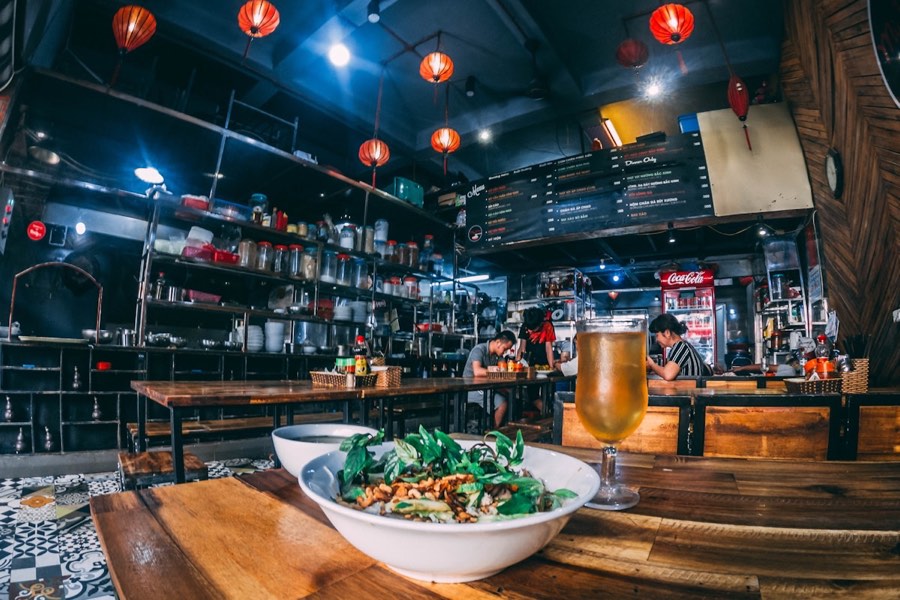
Ha Giang’s food is highland Vietnamese - simple, hearty, and specific to the ethnic communities of the plateau. The restaurant scene is minimal. This is a destination for landscape and culture, not food - the loop villages (Đồng Văn, Mèo Vạc) have basic guesthouse restaurants with set meals, and self-sufficient touring with packed food is common on the more remote sections.
Where to eat in Ha Giang
Phở Bắc stalls on Nguyen Trai street, Ha Giang town - the daily breakfast for locals heading out on the loop. Beef pho in a northern style, lighter than the southern version. Open 6–9am. 30,000–50,000 VND/bowl.
Cơm Hà Giang restaurants on Tran Hung Dao street - rice set meals (cơm bình dân) with local vegetables and pork. The standard lunch option in Ha Giang town. These are mostly unmarked; look for tables out front and a visible queue at lunchtime. 50,000–80,000 VND/person.
Thắng Cố stalls at the weekend markets - thắng cố (slow-cooked horse meat and offal stew) is available at H’Mong stalls at the Đồng Văn Sunday market and the Mèo Vạc Sunday market. This is the defining dish of the H’Mong highlands - not to every taste but genuinely regional and worth trying in context. A bowl costs 40,000–60,000 VND.
Bánh cuốn stalls at the Ha Giang morning market - steamed rice rolls with pork and mushroom filling, served with a light broth. Typically sold before 9am only. 30,000–50,000 VND.
Nhà Hàng Hương Núi (Ha Giang town centre): The most accessible restaurant in town for lẩu gà đen - black chicken hotpot, the highland specialty. The gà đen (H’Mong black-feathered chicken, a local breed raised free-range on the plateau) has darker, leaner, more flavourful meat than commercial chicken. A pot for two costs 200,000–400,000 VND.
Đồng Văn Market food stalls (Dong Van town, on the plateau): The Sunday market stalls serving thắng cố and grilled corn are the most authentic food experience on the Ma Pi Leng loop. Eating here - surrounded by the H’Mong community for whom this is a normal weekly market - is the context that makes the food meaningful.
Thắng cố (horse and buffalo stew)
The defining food experience of Ha Giang is thắng cố at a Sunday market. Large communal pots of horse or buffalo stew simmer at stalls throughout the market. The meat is tough and the broth is intensely flavoured from slow cooking. It is served in bowls with pickled vegetables and drunk with corn wine.
This is genuinely the traditional food of the Hmong community - not a tourist dish - and eating it in the market context (surrounded by the community for whom it’s normal, not just visitors) is the point. The Meo Vac Sunday market has the best thắng cố experience.
Rượu ngô (corn wine)
Distilled from corn fermented in large clay pots in Hmong households. The clear spirit is 35–45% alcohol. The quality of home-distilled corn wine varies significantly - the best versions from experienced distillers have a clean, smooth profile. The commercial bottles sold as “Ha Giang corn wine” are more consistent but less interesting.
Drunk in small glasses as an accompaniment to food at market stalls and guesthouse dinners. Sipping rather than shooting is sensible at altitude.
Bánh tam giác mạch (buckwheat cake)
Made from buckwheat flour, this is available throughout the plateau area. The distinctive triangular or round flat cakes are eaten as a snack. In October, when the buckwheat fields are in bloom, fresh buckwheat products appear at market stalls throughout the plateau. The cakes have a slightly nutty, earthy flavour and a dense texture.
Gà đen (free-range black chicken)
The black chicken (H’mông black-feathered chicken, a distinctive local breed) is raised free-range on the plateau. The meat is darker, leaner, and more flavourful than commercial chicken. Served grilled, in soup, or stir-fried. Available at guesthouses along the loop that cook dinner for guests.
Rice dishes
Simple rice dishes (cơm tấm style or fried rice) are available at every guesthouse and loop town restaurant. Expect ₫40,000–70,000 ($1.60–2.80) for a rice plate with meat and vegetables. The food is fuel-level simple but adequate. Don’t come to Ha Giang for the food - come for the landscape, eat what’s available.
Pho and noodle soups
Standard Vietnamese pho and bún bò are available in Ha Giang town and the larger loop towns. The northern style pho here is the same as Hanoi pho - lighter broth, minimal toppings. ₫35,000–60,000 ($1.40–2.40).
Practical eating on the loop
Carry snacks for riding days - the sections between towns can be 40–50km with no reliable food options. Bánh mì, crackers, or dried fruit from Ha Giang town supermarkets are practical loop supplies. Water: carry at least 2 litres per riding day. The altitude and physical effort of mountain riding is more dehydrating than expected.
Useful links:
More in Ha Giang
- Best Hostels in Ha Giang 2026: Budget Loop Accommodation
- Best Time to Visit Ha Giang 2026: Buckwheat Flowers and Harvest Season
- The Ha Giang Loop 2026: Vietnam’s Most Dramatic Motorbike Route
- Ha Giang Loop Route Planning 2026: Day-by-Day Itinerary
- Ha Giang Motorbike Rental 2026: Semi-Auto, Manual and Easy Rider
- Things to Do in Ha Giang 2026: The Loop, Markets and Karst Plateau
- Trekking in Ha Giang 2026: Hoang Su Phi and Village Treks
- Best Hotels in Ha Giang 2026: Town Guesthouses and Loop Accommodation