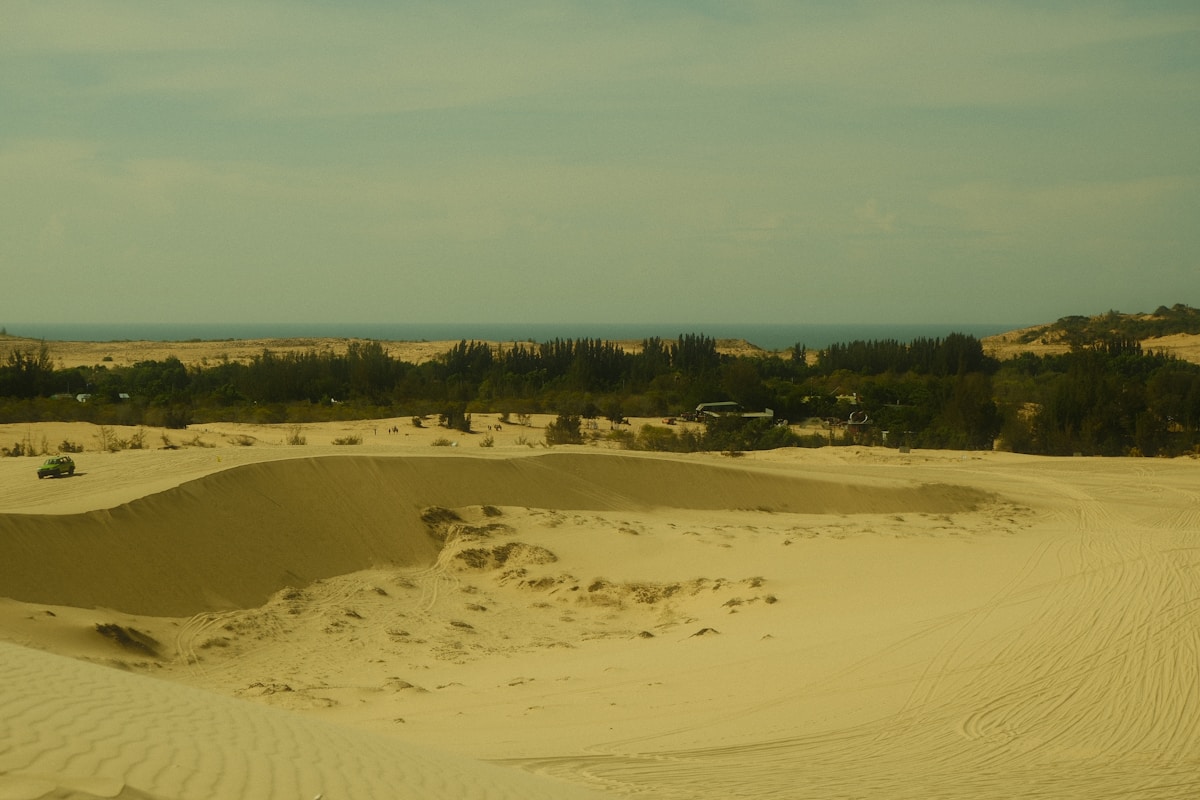
Mui Ne is better known for windsurfing and kite surfing than for desert landscapes, but the sand dunes north of town are one of the most unusual natural sights in southern Vietnam - a stretch of coastal dune system that owes its existence to the same dry, wind-scoured climate that makes Mui Ne one of the sunniest spots in the country. There are two distinct dune sites, with different characters, scales, and visiting logistics.
Top Tours at a Glance
| Tour | Duration | Price (from) | Group Size | Highlights |
|---|---|---|---|---|
| Mui Ne Sunrise/Sunset Sand Dunes Jeep Tour | 4–5 hrs | from $15/person | Small group | Red Dunes, White Dunes, Fairy Stream, local English-speaking guide, hotel pickup |
| Mui Ne Private Sand Dunes Jeep Tour | 4–5 hrs | from $40/person | Up to 4 | Private jeep, flexible sunrise or sunset timing, ATV ride optional add-on |
| Mui Ne Jeep Tour + ATV Included | 4 hrs | from $25/person | Small group | Both dune sites, 20-min ATV ride included, Fishing Village, Fairy Stream |
| Mui Ne Group Sunrise Jeep Tour | 4 hrs | from $12/person | Up to 8 | Shared jeep, sunrise Red and White Dunes, most economical guided option |
| Mui Ne Private Jeep + ATV (Unforgettable) | 5 hrs | from $55/person | Private | Full circuit with private ATV, Hidden Pagoda, Bau Trang freshwater lake |
Browse all Mui Ne sand dunes tours → GetYourGuide
The two dune sites
Red Dunes (Đồi Cát Đỏ)
The Red Dunes - locally called Đồi Cát Đỏ - are 7km north of central Mui Ne along the coastal road. The name comes from the iron oxide in the sand, which gives the dunes a warm ochre-to-rust colour that becomes particularly vivid in low morning or evening light. The dunes here are not vast by Saharan standards, but they are genuine coastal dunes shaped by the prevailing northeast monsoon winds, and they are far more accessible than the White Dunes.
The Red Dunes area is the base for most ATV and sandboard operations. Local operators park at the edge of the dunes and offer rentals on a negotiated basis. Expect to pay approximately 150,000–250,000 VND for 30 minutes on an ATV as of 2026, though this is subject to negotiation - always agree a price before getting on. Sandboard (plastic sled) rentals are around 30,000–50,000 VND, operated by local children who will also pull you back up the slope for a small tip.
The Red Dunes are walkable in under an hour at a slow pace. The ridge at the top gives a view back over Mui Ne Bay to the south and the coastal dune system stretching north. At sunrise, when the dunes are empty and the light is orange-gold, it is a genuinely striking landscape. By 9am in high season, vendors and tourist jeeps have arrived and the mood is different.
White Dunes at Bau Trang (Hồ Bàu Trắng)
The White Dunes (Bàu Trắng - White Lake) are 25–30km north of Mui Ne town and considerably more dramatic in scale. The dunes here are large, wind-sculpted formations of white-grey quartz sand, and two freshwater lakes - Bau Trang and Bau Sen - sit at their base. The contrast between the white sand, the dark green pine trees, and the bright lake water is what makes this site visually distinctive.
The White Dunes take more effort to visit. The road north from Mui Ne is paved for most of the journey but includes some rougher sections near the dunes themselves. Most visitors come on a jeep tour organised through their guesthouse or a local operator - a half-day group jeep tour covering both the Red Dunes and White Dunes typically costs USD 15–25 per person, or USD 40–60 for a private jeep with a driver. The private option is worth considering if you want to control your timing at each site.
The lakes at Bau Trang allow swimming, and visiting in the early morning when the dunes are quiet gives you the best chance of having the ridgelines to yourself. Many jeep tours combine the White Dunes with the Red Dunes and the Fairy Stream (Suoi Tien) - a shallow wading stream through red rock formations - as a half-day circuit.
Jeep operators and pricing
Jeep tours in Mui Ne operate on an informal, negotiated basis. Most guesthouses along the resort strip (Ham Tien Road) can arrange bookings; the guesthouse rate is usually slightly higher than booking directly with a jeep driver at the Red Dunes car park, but comes with more reliability.
Typical pricing as of 2026:
| Tour type | Approximate price |
|---|---|
| Group jeep tour (both dunes + Fairy Stream) | USD 15–25 per person |
| Private jeep tour (half-day, 1–4 passengers) | USD 40–60 |
| Private jeep + motorbike escort guide | USD 50–70 |
| ATV rental at Red Dunes (30 min) | 150,000–250,000 VND |
All prices are approximate and subject to seasonal variation and negotiation. High season (December–April) commands higher rates.
Sunrise vs sunset - which is better?
Sunrise at the Red Dunes is the more popular option among photographers and early risers. The sun rises over the sea to the east, casting long warm light across the dune ridges from around 5:30–6:30am (varying by season). The dunes are cool underfoot, almost no other visitors are present in the first hour, and the combination of mist off the sea and directional light produces the conditions most people imagine when they picture the dunes.
Sunset is logistically easier - you can arrive from town at 5pm rather than 4:30am - and the light on the red sand is equally good in the last 45 minutes before dark. The trade-off is that more visitors are present, and jeep tracks in the sand are more visible by late afternoon.
For the White Dunes, morning is clearly better: the light comes from the east and illuminates the white sand more evenly, and the freshwater lakes are calmer before the afternoon wind picks up. Arriving before 8am is worth the early start.
How to get there from Mui Ne town
Red Dunes (7km from town):
- Motorbike taxi (xe om): Approximately 50,000–80,000 VND one-way. Negotiate before departure. Most drivers will wait while you visit.
- Rented motorbike: 150,000–200,000 VND per day from guesthouses or rental shops along Ham Tien Road. Gives you maximum flexibility for timing.
- Grab: Available in Mui Ne but availability decreases after dark - reliable for getting there, less reliable for the return if you are at the dunes at sunrise.
White Dunes (25–30km from town):
- Jeep tour: The standard option. Most tours depart at 4:30–5:00am for sunrise or around 1:30pm for an afternoon visit.
- Hired car or motorbike with driver: Flexible but requires more organisation. Ask at your guesthouse.
- Self-driving a rented motorbike is possible for experienced riders; the route is straightforward but involves some unpaved sections near the dunes.
What to bring
The dunes are exposed with no shade. In summer (April–October), midday temperatures can reach 35–38°C and the sand surface becomes painful to walk on barefoot. For any visit, bring:
- Water: At least 1 litre per person. Nothing is sold at the White Dunes. At the Red Dunes, vendors sell cold drinks but at tourist prices.
- Sunscreen and a hat: Necessary regardless of time of day.
- Old footwear you don’t mind filling with sand - or sandals you can remove easily. Socks are not practical.
- A light layer for sunrise visits: Pre-dawn temperatures at the coast can be surprisingly cool (18–22°C) even in the dry season.
- Cash: ATV operators and local vendors are cash-only. The nearest ATM is in central Mui Ne town.
Practical notes
The Red Dunes are free to enter - there is no admission charge to walk the dunes themselves. ATV and sandboard rentals are optional. The White Dunes (Bau Trang) have a small entrance fee of approximately 10,000–15,000 VND per person, typically collected at a makeshift checkpoint on the access road.
Sand is fine and gets into everything. Protect your camera gear, phone, and bag. A dry bag or ziplock bag for electronics is useful.
Watch out for overcharging on ATVs - quotes can vary significantly. If you are quoted more than 250,000 VND for 30 minutes, walk away and try another operator.
Combining with other Mui Ne activities
The standard Mui Ne half-day tour circuit covers the Red Dunes, Fairy Stream, and White Dunes in a single jeep trip. The Fairy Stream (Suoi Tien) adds around an hour - a shallow wading walk through red-and-white sandstone formations that is genuinely unusual and worth combining with the dunes.
Mui Ne’s main street (Ham Tien Road) has a good concentration of seafood restaurants for lunch or dinner after the dunes. Fresh seafood cooked simply - grilled, steamed, or with salt-and-chilli - is the local speciality and significantly cheaper here than in Hanoi or Ho Chi Minh City.