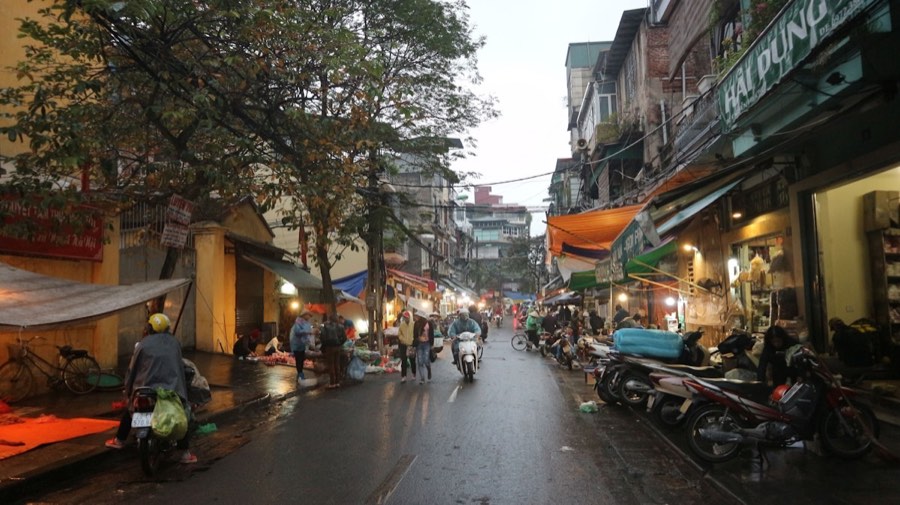
Vietnam and Cambodia are neighbours that complement each other remarkably well, and travellers crossing between them often cite the contrast - from Vietnam’s kinetic energy to Cambodia’s quieter, more melancholy soul - as one of the most memorable parts of a Southeast Asia trip.
Choosing between them is rarely an either/or question for anyone with two weeks or more. But if you’re allocating limited time and want to understand the differences, here’s what matters.
Countries at a Glance
Vietnam is a 1,650 km-long country of 98 million people with extraordinary regional diversity. The north has Hanoi’s ancient culture and the northern highlands; the centre has Hoi An, Hue, and Da Nang; the south has Ho Chi Minh City and the Mekong Delta. The food changes dramatically between regions. The infrastructure for tourism - overnight trains, tourist buses, internal flights, well-worn routes - is among the best in Southeast Asia.
Cambodia is a smaller, quieter country of 17 million. Its defining attraction is the Angkor Archaeological Complex near Siem Reap - the largest religious monument ever constructed, and among the most impressive historical sites on earth. Phnom Penh has its own gravity: the Royal Palace, the National Museum, and the Tuol Sleng Genocide Museum offer essential context for understanding 20th-century history. The country is rebuilding from trauma that still shapes daily life.
Historical and Cultural Sites
This is where the comparison becomes genuinely difficult.
Vietnam’s historical depth runs from ancient Cham temples to the Imperial Citadel of Hue to Ho Chi Minh City’s Reunification Palace. The Vietnam Museum of Ethnology in Hanoi is one of Southeast Asia’s finest museums. The Vietnamese culture - food, coffee, architecture, literature - has absorbed Chinese, Cham, French, and American influences and produced something entirely its own.
Cambodia’s Angkor Wat is the singular trump card. The temple complex built by Khmer kings from the 9th to 15th centuries covers 400 square kilometres and contains temples that took decades to build. Angkor Wat itself at sunrise - with the reflection in the moat and the towers catching the first light - is one of the genuine unmissable experiences of world travel. Bayon, Ta Prohm (the “jungle temple”), and Pre Rup extend the circuit across two to three days minimum. Angkor Archaeological Park pass: USD 37 for one day, USD 62 for three days as of 2026.
Phnom Penh’s Tuol Sleng Genocide Museum (S-21) and the Killing Fields at Choeung Ek are essential, difficult, and important - context for the Khmer Rouge period (1975–1979) that killed an estimated 1.5–2 million Cambodians. Entry to S-21 is approximately USD 8; Choeung Ek is USD 6 as of 2026.
Food
Vietnamese food is among the world’s great cuisines and arguably the most accessible of Southeast Asian food traditions to unfamiliar palates: fresh, balanced, herb-heavy, and enormously varied by region. A bowl of pho in Hanoi, banh mi on a Saigon street corner, or cao lau in Hoi An’s ancient town - each is a distinct culinary tradition developed over centuries.
Cambodian food is less documented internationally but genuinely rewarding. Fish amok - fish steamed in coconut curry with fresh herbs, served in a banana leaf - is the signature dish. Lok lak (stir-fried beef on lettuce with a lime-pepper dipping sauce) is the reliable lunch order. Num banh chok (fermented rice noodles with green fish curry) is the breakfast staple. Phnom Penh has a growing fine-dining scene and excellent street food; Siem Reap caters heavily to international tastes.
Beaches
Vietnam’s coastal geography - 3,260 km of coastline - is a significant advantage. Phu Quoc Island’s turquoise water, Da Nang’s My Khe Beach, and Nha Trang’s offshore diving make it a complete beach destination.
Cambodia’s beaches have struggled with overdevelopment and infrastructure issues, particularly around Sihanoukville (which developed rapidly and chaotically before 2019). Koh Rong and Koh Rong Sanloem islands offshore are genuinely beautiful - powdery sand and clear water - but the boat-and-island logistics add complexity. Otres Beach near Sihanoukville is calmer and more established than Sihanoukville town itself.
If beaches are 40%+ of your travel motivation, Vietnam is the clearer choice.
Cost
Both countries are affordable by global standards, with some important differences.
Accommodation: Vietnam offers good value at every level. Budget guesthouses from USD 10–15, mid-range hotels from USD 30–60, luxury from USD 100+. Cambodia is comparable: guesthouses in Phnom Penh and Siem Reap from USD 12–20, mid-range from USD 40–80. Siem Reap has excellent boutique hotels - Shinta Mani and Viroth’s Hotel are frequently cited - at USD 80–150.
Food: Vietnam is slightly cheaper. Street food from USD 1.50–3; restaurant meals from USD 5–12. In Cambodia, street food from USD 2–4; restaurants from USD 7–15. Siem Reap restaurants targeting tourists run USD 10–20 per head.
Attractions: Vietnam’s major sites (museums, old towns, boat trips) are cheap - usually USD 2–8. Cambodia’s Angkor Pass is the major expense at USD 37+ per day.
Transport: Vietnam’s train network and tourist bus infrastructure is more developed and cheaper. A Hanoi–Ho Chi Minh City sleeper train costs USD 30–75. Cambodia’s road network is improving but travel between cities is mostly by bus (USD 8–15 per journey).
Combining Both Countries
The overland crossing between Ho Chi Minh City and Phnom Penh is the most popular connection - Giant Ibis and Mekong Express run comfortable direct buses (USD 12–18, 6–7 hours). The Moc Bai/Bavet border crossing is straightforward; visas can be arranged before departure or on arrival.
A logical 3-week combined itinerary:
- Hanoi (3 nights) → Ha Long Bay / Ninh Binh (2 nights) → Hoi An (2 nights) → Ho Chi Minh City (2 nights) → Mekong Delta day trip → bus to Phnom Penh (2 nights) → Siem Reap and Angkor (3 nights) → fly home
Reverse the order equally well. Flying from Siem Reap back to Hanoi (via Ho Chi Minh City or direct on certain carriers) avoids backtracking.
Best For
Choose Vietnam if:
- Regional food diversity is a high priority
- Beaches are a significant part of your trip
- You want more transport flexibility and infrastructure
- Northern highlands (Sapa, Ha Giang) or the Mekong Delta are on your list
Choose Cambodia if:
- Angkor Wat is a bucket-list item that is itself the reason for the trip
- You want a quieter, less-touristy atmosphere than Vietnam’s main corridors
- Phnom Penh’s complex, important history is something you want to engage with
- You’re combining with Thailand (Bangkok–Phnom Penh or Bangkok–Siem Reap connections are well-established)
When to Visit
Both countries share broadly similar seasons. November through April is the dry season and the most comfortable time to visit both. May through October is the wet season - heavy afternoon rain, high humidity, but lower prices and fewer tourists. Cambodia’s Tonle Sap Lake (adjacent to Siem Reap) actually shrinks significantly in the dry season; the lake is most impressive during and just after the wet season (September–November).
The Verdict
Vietnam is a more complete country for a dedicated trip - more diverse, more varied in terrain and culture, and more infrastructure. Cambodia’s Angkor is irreplaceable and alone justifies a visit. The ideal answer is both: cross the border overland and spend the last three to four days of a Vietnam trip in Phnom Penh and Siem Reap. The contrast between Vietnam’s pace and Cambodia’s quieter, heavier atmosphere is itself a significant travel experience.
For planning your Vietnam itinerary, see our 2-week Vietnam itinerary and our guide to getting around Vietnam. Browse Vietnam tours on GetYourGuide for curated multi-day and activity options across the country.
Plan Your Trip
✈️ Book your flights to Vietnam 🛡️ Get travel insurance 📱 Stay connected with an eSIM 🚗 Rent a car