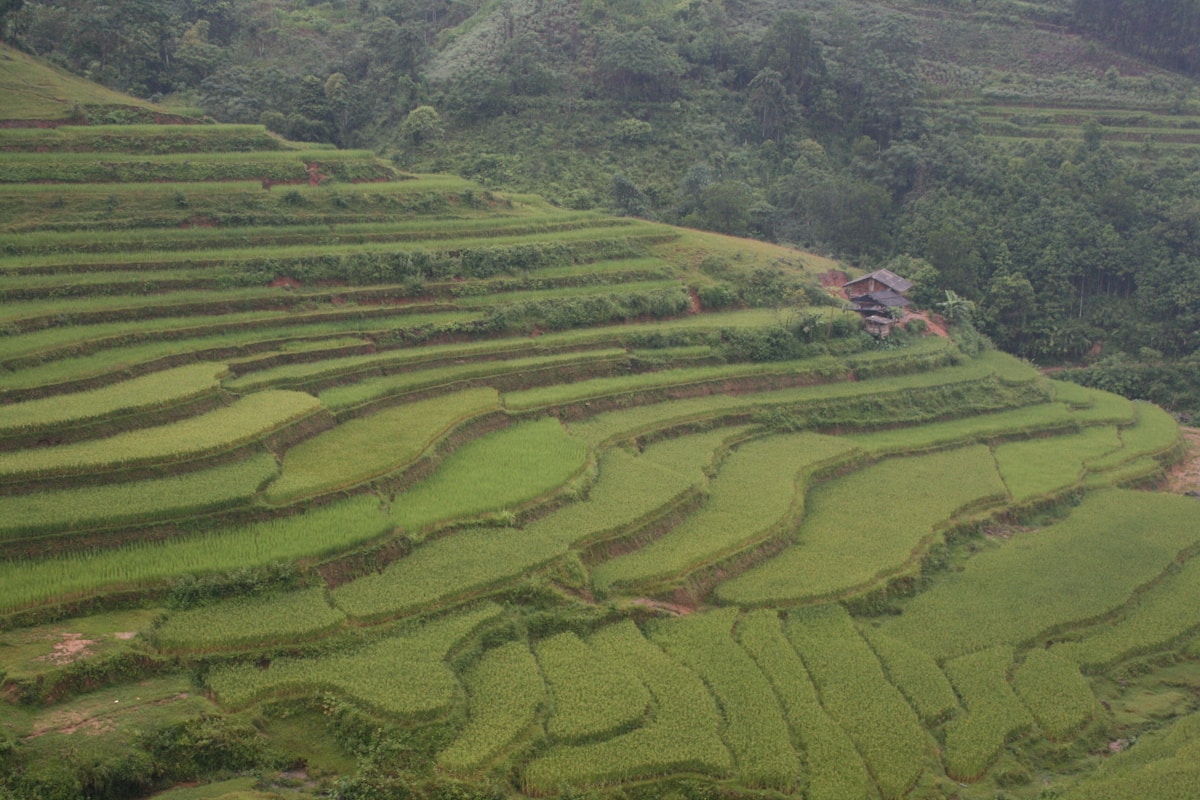
Pu Luong Nature Reserve sits in Thanh Hoa province, about 150km southwest of Hanoi. The reserve covers more than 17,000 hectares of karst limestone mountains, rice terraces, and Muong minority villages. Unlike Sapa, Pu Luong has no town — accommodation is scattered through the valley and the villages, which means your choice of property determines your entire experience here.
Eco-lodges vs homestays: understanding your options
The distinction matters in Pu Luong more than almost anywhere else in Vietnam. The reserve has two entirely separate accommodation worlds.
Eco-lodges are purpose-built retreats on stilts above the valley floor, typically featuring bamboo bungalows, swimming pools, restaurant service, and trekking guides. These are more expensive but deliver a high standard of comfort alongside genuine access to the landscape. They generally include breakfast and some offer full board. Prices range from approximately ₫800,000–3,000,000 ($32–120) per room per night.
Village homestays are the traditional accommodation option — staying in a Muong minority family home on a bamboo platform or in a separate stilthouse. Dinner and breakfast cooked by the family are almost always included. Facilities are basic: cold water is standard, squat toilets common, sleeping on thin mats or basic mattresses. The value is the experience itself. Prices are ₫200,000–400,000 ($8–16) per person including meals.
Eco-lodges (₫800,000–3,000,000 / $32–120)
Pu Luong Retreat: The best-known eco-lodge in the reserve. Stilthouse bungalows set on the hillside above the rice terraces, each with a private terrace and valley views. The property has an infinity pool positioned to look out over the paddies, an open-sided restaurant, and a team of local trekking guides. Breakfast is included. The lodge runs guided treks to nearby Muong villages, Ban Hieu waterfall, and the upper sections of the reserve. Rooms from approximately ₫1,500,000–3,000,000 ($60–120) as of 2026.
Pu Luong Nature Lodge: Bamboo bungalows on stilts in a working rice paddy valley. The lodge has a strong emphasis on sustainability — waste management, local hiring, and community involvement are all stated priorities. The restaurant focuses on seasonal local produce with Muong-influenced dishes. Pool, bike rental, and trekking packages available. Rooms from approximately ₫1,200,000–2,500,000 ($48–100) as of 2026.
Pu Luong Eco Garden Resort: A mid-range eco-lodge with garden bungalows and a pool. Slightly more accessible from the main road than some of the deeper-valley properties, which makes it useful for shorter stays. Good standard of rooms with en suite bathrooms and air conditioning. Rooms from approximately ₫800,000–1,800,000 ($32–72) as of 2026.
Village homestays (₫200,000–400,000 / $8–16 per person)
Ban Hieu village is the most visited hamlet in the reserve and has the most developed homestay network. Several Muong families have guest rooms — typically a shared sleeping area on a raised bamboo platform or a separate stilthouse for visitors. The village sits near the Ban Hieu waterfall, one of the most photogenic spots in the area. Arrive without a booking in low season; during harvest peak (September–October), contact guesthouses in advance.
Ban Buon and Ban Kho Muong are quieter communities deeper in the valley with fewer tourists and a more traditional feel. English is limited so some basic Vietnamese phrases or a phrasebook help. Meals here — sticky rice, river fish, stir-fried vegetables, locally distilled rice wine — are often highlights in themselves.
Pho Doan village guesthouses sit near the reserve entrance and offer simple private rooms at ₫300,000–500,000 ($12–20) with private bathrooms. These are the most practical option for travellers arriving late or leaving early who want slightly more reliable facilities than a full homestay.
What to know before booking
Location matters more than the name. The reserve valley is about 15km end to end. An eco-lodge at one end is not close to the attractions at the other. When booking, ask specifically where the property sits relative to Ban Hieu waterfall, Kho Muong village, and the main trekking trails. A misaligned booking can mean unnecessary motorbike hiring.
Transport from Hanoi. Most eco-lodges offer Hanoi pickup for approximately ₫1,200,000–2,000,000 ($48–80) for the vehicle. Limousine vans from My Dinh run to Quan Hoa town (the nearest major road junction) for around ₫150,000 ($6) per seat; arrange onward transport from there in advance.
Mobile signal. Viettel has the best coverage in the reserve. Wifi at eco-lodges is adequate for messaging but not streaming. Village homestays rarely have wifi.