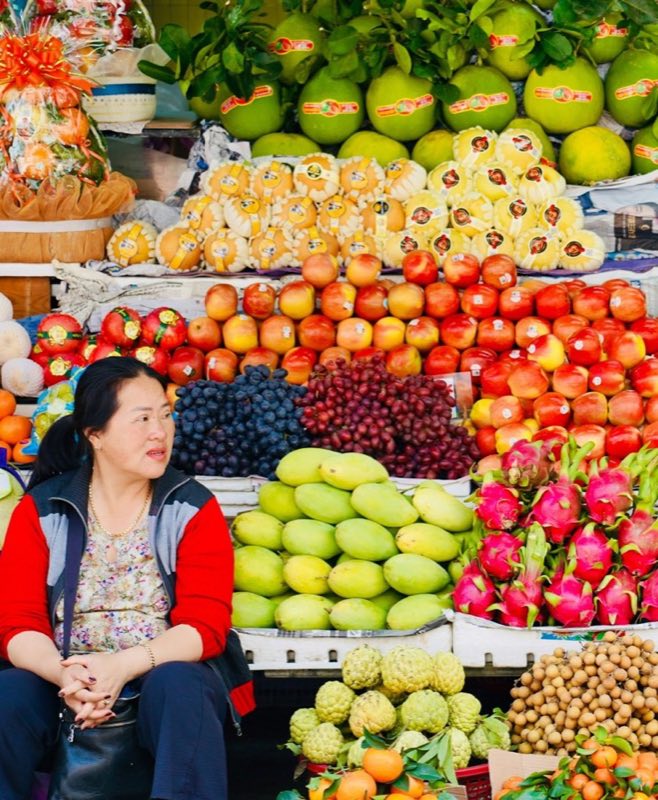
Da Lat’s cuisine reflects its cool highland climate and French colonial history. The city grows produce that is impossible to find in tropical Vietnamese cities - and this shapes an eating culture unlike anywhere else in the country.
Sinh To Bo (Avocado Smoothie)
The drink most associated with Da Lat. Fresh avocado blended with condensed milk, sugar, and ice. The result is thick, rich, and sweet. Da Lat grows its own avocados and the freshness of the fruit is directly tasted.
Available at virtually every smoothie and cafe stall in the city. ₫25,000–40,000 ($1–1.60).
Where to eat it: Any smoothie or fruit stall at the Da Lat Night Market (Nguyen Thi Minh Khai area) has good versions; Goc Ha Thanh (8 Nguyễn Chí Thanh) also serves it.
Atiso Tea (Artichoke Tea)
Da Lat is Vietnam’s artichoke capital. The dried artichoke flowers make a mild, slightly bitter tea that is associated with the city and sold widely as a local product. Hot artichoke tea in a cool Da Lat evening is a specific pleasure.
₫10,000–20,000 ($0.40–0.80) per glass at market stalls.
Where to eat it: Market stalls at the Da Lat Night Market; also available at Quan Hoa Restaurant (6 Phan Đình Phùng) alongside their full menu.
Lau Banh Mi (Baguette Fondue)
A Da Lat original. Sliced French baguette dipped in a beef and tomato broth served in a fondue-style pot at the table. The French baguette tradition meets Vietnamese hotpot culture. Warming and filling for cool Da Lat evenings.
₫50,000–80,000 ($2–3.20) per serving.
Where to eat it: Small restaurants near the central market area specialise in lau banh mi; Goc Ha Thanh (8 Nguyễn Chí Thanh) is a reliable local option.
Da Lat Strawberries
The highland climate allows strawberries to grow here - rare in Vietnam. They are smaller and more intensely flavoured than supermarket strawberries. Sold fresh at the market, dipped in salted plum powder, or as jam and dried products.
Fresh strawberries at the market: ₫50,000–100,000 ($2–4) per kilogram.
Where to eat it: Da Lat Night Market (Nguyen Thi Minh Khai area) has the best selection of fresh strawberry products including dipped strawberries and smoothies.
Banh Trang Nuong (Grilled Rice Paper)
Street food that appears across central Vietnam but is closely associated with Da Lat. Rice paper grilled over charcoal with egg, spring onion, dried shrimp, and sauce. Crispy and immediately satisfying. ₫15,000–30,000 ($0.60–1.20).
Where to eat it: Da Lat Night Market (Nguyen Thi Minh Khai area) from 17:00 onward - this is the best spot for banh trang nuong in the city.
Banh Mi Da Lat
A lighter, crispier baguette than the HCMC style. The French colonial bakery heritage is directly present in the dough texture. Simply dressed with pate, butter, and pickles. ₫20,000–40,000 ($0.80–1.60).
Where to eat it: Thanh Thảo (1 Phan Đình Phùng) is a long-running local restaurant with good banh mi and cơm tấm; street carts are available throughout the city from 06:00.
Ruou Can (Communal Tube Wine)
A highland minority (K’Ho) tradition - fermented sticky rice wine drunk communally through long bamboo straws from a clay pot. Found at traditional restaurants and homestays in the highlands around Da Lat. ₫50,000–100,000 ($2–4) per session.
Where to eat it: Quan Hoa Restaurant (6 Phan Đình Phùng) and some traditional homestays in the villages surrounding Da Lat offer ruou can experiences; ask at your accommodation.
Ca Phe Chon (Weasel Coffee)
The expensive Da Lat specialty. Coffee beans eaten and passed by civet cats (in the wild version) or farmed civets, collected, cleaned, and roasted. The enzymatic process gives a specific flavour profile. Genuine wild-harvested weasel coffee: ₫150,000–300,000 ($6–12) per cup. Farmed versions are cheaper.
Note: the farmed civet coffee industry raises significant animal welfare concerns. Wild-harvested is more expensive but doesn’t involve caged civets.
Where to eat it: Le Rabelais (12 Trần Phú, inside the Dalat Palace Heritage Hotel) serves quality coffee including ca phe chon; specialty coffee shops near the central market area also stock it.
Preserved Fruits and Jams
The Da Lat market sells locally produced strawberry jam, raspberry jam, artichoke preserves, and candied ginger - all made from Da Lat’s highland produce. Good gifts and genuinely local products.
Where to eat it: The main Da Lat market (Chợ Đà Lạt) has the best selection of preserved fruits and jams from local producers; the Da Lat Night Market also has packaged versions available.
Useful links:
More in Da Lat
- Best Cafes to Work in Da Lat 2026: Highland Cafes with Wifi
- Best Hostels in Da Lat 2026: Budget Stays in the Highland City
- Best Hotels in Da Lat 2026: Colonial Villas and Lake View Hotels
- Best Restaurants in Da Lat 2026: Banh Mi, Hotpot and Highland Food
- Da Lat Coffee Guide 2026: Weasel Coffee, Cau Dat Farm and Cafe Culture
- Day Trips from Da Lat 2026: Coffee Farms, Nha Trang Drive and Waterfalls
- Hiking in Da Lat 2026: Bidoup Park, Waterfalls and Highland Trails
- Things to Do in Da Lat 2026: Waterfalls, Coffee Farms and Hiking
- Vegan Food in Da Lat 2026: Highland Produce and Plant-Based Cafes
- Best Hotels in Da Lat 2026: Lakeside Villas to Budget Guesthouses