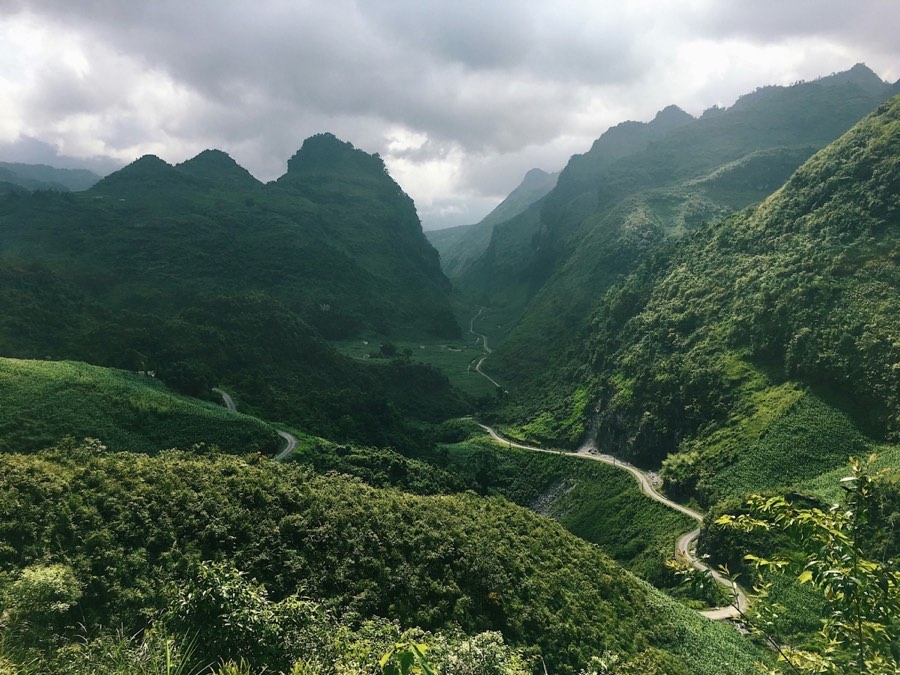
Cao Bang province sits in Vietnam’s far northeast, bordering China. The province is remote by any measure — it takes 7–8 hours by bus from Hanoi — but its centrepiece, Ban Gioc Waterfall, is one of the most impressive in Southeast Asia and draws travellers willing to make the journey. Where you stay determines how much of that effort pays off.
Cao Bang town vs Trung Khanh: the core decision
Almost everyone who visits Ban Gioc stays in one of two places: Cao Bang city (the provincial capital) or Trung Khanh district town (the gateway to the waterfall).
Cao Bang town has the best range of hotels, restaurants, and transport connections. The town market area has several clean mid-range hotels. If you are combining Ban Gioc with a visit to Pac Bo — Ho Chi Minh’s wartime base in the forest — Cao Bang town is a more central starting point. The downside: it is 90km from the waterfall, about 2 hours each way, which makes dawn access to Ban Gioc difficult from here.
Trung Khanh district town is 3km from the waterfall. Staying here gives you the pre-dawn start that makes Ban Gioc genuinely stunning — before the Chinese day-trippers cross the border and before Vietnamese tour buses arrive. The town is small with limited restaurants, but it does the job for a night or two.
Cao Bang town hotels (₫300,000–700,000 / $12–28)
Bang Giang Hotel: A reliable mid-range choice in Cao Bang town. Central location with easy access to the market and bus station. Rooms are clean and air-conditioned with hot water. The staff can help arrange motorbike hire and share route advice for the Ban Gioc road. Approximately ₫350,000–600,000 ($14–24) as of 2026.
Kim Cuong Hotel: Another solid option in Cao Bang city. Family-run with a helpful reception team. Standard rooms are comfortable for the price. Slightly larger than many local guesthouses, with a lift, which is useful if arriving with heavy luggage. Approximately ₫300,000–550,000 ($12–22) as of 2026.
Local guesthouses near the bus station: Several family-run guesthouses cluster around the Cao Bang bus terminal. These are the cheapest town options at ₫150,000–280,000 ($6–11) for a basic private room. Standards vary; check the room before paying. Useful for travellers arriving on the overnight bus who need a few hours of rest before heading to Ban Gioc.
Near Ban Gioc Waterfall (Trung Khanh district)
Ban Gioc Waterfall Tourist Area: The state-run resort complex adjacent to the falls has bungalows and a guesthouse section within the waterfall park itself. This is the only accommodation that puts you literally within the site boundary, which means very early access to the falls. Facilities are functional rather than charming. Rooms approximately ₫400,000–800,000 ($16–32) as of 2026. Booking through local agents or contacting the site directly is recommended — online booking availability fluctuates.
Trung Khanh town guesthouses: The district town has a dozen or so small guesthouses along the main street. These are basic — clean rooms, cold or solar-heated hot water, simple Vietnamese breakfast if requested. The key advantage is the 3km proximity to the falls. Prices run ₫250,000–450,000 ($10–18) per room. Examples include Lan Anh Guesthouse and Hoang Gia Guesthouse, which independent travellers regularly recommend on hiking forums.
Homestays in Phuc Sen and Quay Son valley: A handful of farming villages along the road between Cao Bang and Ban Gioc offer basic homestays. These are more common during organised trekking tours but can sometimes be arranged directly. The Quay Son River valley between Tra Linh and Trung Khanh is particularly scenic and makes for a more immersive overnight. Expect ₫200,000–350,000 ($8–14) per person including a home-cooked dinner.
Practical notes
Motorbike is the best local transport. From either Cao Bang town or Trung Khanh, a motorbike gives you full flexibility to visit Nguom Ngao Cave, the Quay Son River viewpoints, and Pac Bo at your own pace. Rental costs approximately ₫100,000–150,000 ($4–6) per day. The road from Cao Bang to Ban Gioc has dramatic scenery but is winding — allow 2 hours and ride carefully in wet conditions.
Dawn is non-negotiable for Ban Gioc. The falls face east and catch the best light from 7am to 9am. They also see the lightest tourist load before 8am. This is the single strongest argument for staying in Trung Khanh rather than Cao Bang town. The drive from Cao Bang town at 5am in the dark, on winding mountain roads, is doable but not ideal.
Border formalities. The area close to Ban Gioc Waterfall is within the border zone. Bring your passport at all times. The Chinese side of the falls is viewable from the Vietnamese bank; crossing is not permitted for standard tourist visas.