Cao Bang and Ban Gioc Waterfall: The Complete Visitor Guide
Cao Bang province travel guide covering Ban Gioc Waterfall, Nguom Ngao Cave, Pac Bo, transport from Hanoi, accommodation, and the best time to visit.
Guides for Cao Bang Ban Gioc Waterfall
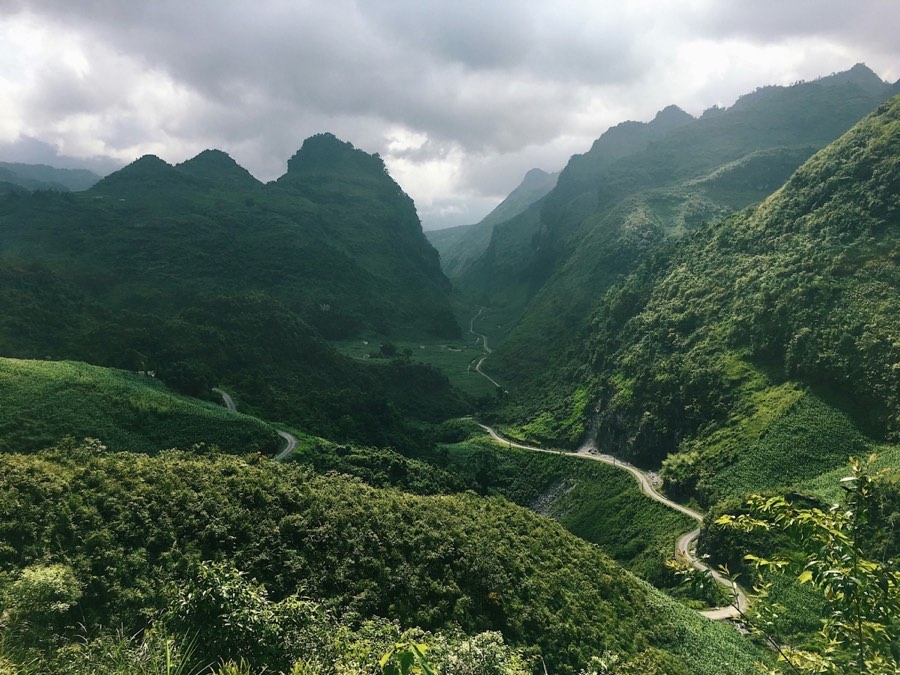
Cao Bang province sits in Vietnam’s far north, pressed against the Chinese border in a landscape of karst mountains, forest, and rivers that most visitors never reach. The province’s centrepiece is Ban Gioc Waterfall - one of the largest in Southeast Asia, straddling the Vietnam-China border, and dramatically more impressive than the tourist infrastructure around it would suggest. Combine it with Nguom Ngao Cave and the historic Pac Bo site, and Cao Bang makes a compelling two or three day detour from the more obvious northern Vietnam circuit.
Ban Gioc Waterfall
Ban Gioc (Bản Giốc) is a tiered waterfall on the Quay Son River in Trung Khanh district, approximately 90km from Cao Bang city. The falls are divided into two main sections by a central rocky island - the larger western section belongs partly to Vietnam, partly to China; the smaller eastern section is fully Vietnamese. The full width at high water is approximately 300m.
What makes Ban Gioc remarkable is the combination of scale and setting. Unlike many famous waterfalls that are approached through car parks and gift shops, Ban Gioc is set in open farmland with karst peaks behind it and local farmers working fields in the foreground. The aesthetics are genuinely unusual.
Entry: Approximately VND 45,000/person as of 2026. The main viewing platform gives a direct view across the falls. A bamboo raft ride (approximately VND 100,000–150,000 per raft) takes you partway onto the river for a closer angle - particularly worthwhile in high water season.
Timing: The waterfall gets tour groups from approximately 09:30 onward. Arriving by 08:00 gives you 90 minutes of relatively quiet viewing. The afternoon light (13:00–15:00) is good for photography from the main platform.
Getting there from Cao Bang city: By motorbike (rental approximately VND 100,000–150,000/day), the 90km journey takes around 2–2.5 hours on Route QL34. The road is sealed and in reasonable condition; a basic automatic scooter manages it without difficulty. Alternatively, a local bus from Cao Bang to Trung Khanh town (approximately VND 40,000–60,000, 2 hours) connects to a shorter final section by xe om or taxi.
Nguom Ngao Cave
Approximately 3km from Ban Gioc, Nguom Ngao Cave (Nguom Ngao means “Tiger Cave” in the Tay language) is one of northern Vietnam’s more substantial cave systems. The accessible section runs approximately 2,144m, though the full cave is over 3km. Stalactite and stalagmite formations are unusually varied; several large chambers have notable acoustic properties.
Entry fee: Approximately VND 40,000/person as of 2026. A guide is included in the ticket price (not optional - the cave is quite dark in sections and the guide carries the lighting).
Visit duration: 45–90 minutes depending on how slowly you move through. The cave temperature stays around 17–20°C regardless of outside temperature - noticeably cool after the walk from Ban Gioc. Bring a light layer.
Combined visit: Ban Gioc and Nguom Ngao are best done on the same day - they are 3km apart. Most visitors do the waterfall first, then the cave, then return to Cao Bang city in the afternoon (arriving by 16:00–17:00 if you started early).
Pac Bo Historical Site
For those interested in Vietnamese revolutionary history, Pac Bo (Pác Bó) is a significant site approximately 55km north of Cao Bang city, also near the Chinese border. It was here that Ho Chi Minh returned to Vietnam in February 1941 after 30 years abroad, hiding in a limestone cave while beginning to organise the Viet Minh resistance movement.
The site includes the Lenin Stream (a brook Ho Chi Minh named after the Soviet leader), Karl Marx Mountain, the cave where he lived for several months, and a small museum with photographs and documents from the period. It is well-maintained and visited mainly by Vietnamese domestic tourists.
Entry fee: Approximately VND 15,000–20,000/person as of 2026. The area is calm and genuinely historically interesting; expect to spend 1–2 hours.
Getting there: Pac Bo is on Route QL3 north of Cao Bang city, before the road reaches Trung Khanh. It is easily included as a stop if travelling to Ban Gioc via the northern route, though the most direct road to the waterfall does not pass through it. A motorbike from Cao Bang city reaches Pac Bo in approximately 1.5 hours.
Getting to Cao Bang from Hanoi
The journey from Hanoi to Cao Bang is around 270km. Options:
Overnight sleeper bus - the most convenient option for travellers. Buses depart from Hanoi’s My Dinh Bus Station most evenings between 20:00–22:00, arriving in Cao Bang early morning (approximately 05:00–06:00). Fare approximately VND 160,000–220,000 (USD 6–9). Operators include Duc Hao and Phuong Trang. Book through your guesthouse or at the bus station.
Day bus from Gia Lam Bus Station - buses depart throughout the morning, with journey times of 6–7 hours. Fare similar to overnight buses. This option means you arrive in Cao Bang in the afternoon with a full day of daylight remaining.
Motorbike from Hanoi - entirely possible as a multi-day ride through the northeast (Ba Be Lake → Cao Bang is a popular routing). From Hanoi via Route 3 to Cao Bang takes approximately 7–8 hours of riding.
Private car - hired from Hanoi operators for approximately USD 80–120 for the one-way trip. Worth it for groups of three or four. Several Hanoi travel companies offer car with driver from Hanoi for this route.
Where to stay in Cao Bang
Accommodation in Cao Bang province is functional rather than luxurious. There are no boutique hotels or international chains here, which is part of the appeal.
In Cao Bang city:
- Kim Ngan Hotel - central location near the market, clean private rooms, popular with Vietnamese domestic travellers and the occasional foreigner. Rooms from approximately VND 250,000–350,000 (USD 10–14) per night.
- Thanh Loan Hotel - mid-range option with air conditioning and en-suite rooms, reasonably central. Rooms from approximately VND 300,000–400,000 (USD 12–16)/night.
- Bang Giang Hotel - larger hotel aimed at domestic business travellers; reliable rather than characterful. Rooms from approximately VND 400,000–600,000 (USD 16–24)/night.
Near Ban Gioc Waterfall (Trung Khanh district): Staying near the falls has the advantage of early morning access before the day-tripping tour groups arrive. A cluster of simple guesthouses operates near the waterfall entrance:
- Homestay options in Trung Khanh town - several local families offer basic rooms for VND 150,000–200,000 (USD 6–8) per person, often including a simple breakfast. Ask at your Cao Bang guesthouse for current recommendations or check Booking.com for the Trung Khanh area.
Best time to visit
September–October: Peak season, and deservedly so. The summer rains have eased, the Quay Son River is running high (making Ban Gioc most dramatic), the surrounding landscape is intensely green, and the skies are usually clear by mid-morning. Rice harvest coincides with this window in some areas.
March–April: Spring is the second-best window. Temperatures are comfortable (18–25°C), visibility is generally good, and the crowds are lower than September–October.
May–August: Possible but the rainy season (peaking July–August) brings road flooding risk on the mountain routes to Trung Khanh, occasional closure of Nguom Ngao Cave during heavy rain periods, and reduced visibility. Not impossible, but higher risk.
November–February: Cold in the highlands (Cao Bang sits at 200–500m elevation), often misty or foggy, and the reduced water flow makes Ban Gioc less impressive than at other times of year. Not recommended unless you have specific reasons.
How long to spend
One day (rushed): Possible from Hanoi as part of an overnight bus → day trip → overnight bus return, but exhausting and allows very little time at the sites.
Two days (recommended minimum): Overnight bus from Hanoi → Day 1 in Cao Bang city and Pac Bo → Day 2 at Ban Gioc and Nguom Ngao → afternoon overnight bus back. This is the most common independent itinerary.
Three to four days: Allows a more relaxed pace, time for motorbike exploration of the surrounding countryside, Ba Be National Park as an add-on (approximately 130km southwest of Cao Bang), and overnight accommodation near the falls.
Cao Bang is genuinely off the main tourist circuit. You will see far fewer Western travellers here than in Ha Giang or Sapa, and the limited infrastructure keeps it that way. If you have the time and are comfortable with basic travel logistics, it is one of the more rewarding detours in northern Vietnam.
For guided alternatives - including Ha Giang loop tours and northern Vietnam multi-day itineraries - browse tours in Vietnam.
Planning to visit? Browse hotels in Cao Bang Ban Gioc Waterfall — free cancellation on most bookings.
Book an experience
Top experiences in Cao Bang Ban Gioc Waterfall
Explore the best tours and activities in Cao Bang Ban Gioc Waterfall , with instant confirmation and free cancellation on most bookings.
Frequently Asked Questions
- How do I get from Hanoi to Cao Bang?
- The most straightforward option is a direct overnight sleeper bus from Hanoi's My Dinh Bus Station to Cao Bang City - approximately 7–8 hours, with buses departing in the evenings (around 21:00–22:00). Tickets cost approximately VND 160,000–220,000 (USD 6–9). Alternatively, take a day bus from Gia Lam Bus Station to Cao Bang (around 6–7 hours), also approximately VND 160,000–220,000. From Cao Bang city, Ban Gioc Waterfall is a further 90km and requires a separate local bus or motorbike rental.
- What is the entrance fee for Ban Gioc Waterfall?
- The entry fee to the Ban Gioc Waterfall viewing area is approximately VND 45,000 per person (around USD 1.80) as of 2026. A bamboo raft ride onto the water for a closer view costs approximately VND 100,000–150,000 per raft (not per person - typically holds 2–4 people). Arrive before 09:00 to beat tour groups from Hanoi.
- Can you visit Ban Gioc Waterfall independently?
- Yes. You can reach Cao Bang by bus from Hanoi, then rent a motorbike or take a local bus from Cao Bang city to the Trung Khanh district area near the falls. An independent visit is straightforward if you are comfortable with basic motorbike riding or organising local transport. Guided tours from Hanoi are also widely available and take the logistics out of the equation.
- What is the best season to visit Cao Bang?
- September and October are widely considered the best months. The rains have eased, water levels in the falls are high (making them most impressive), and the surrounding karst landscape is intensely green. Spring (March–April) is also good with mild temperatures and clear skies. Avoid July–August (peak rainy season, road flooding risk) and December–January (cold, mist, reduced visibility).