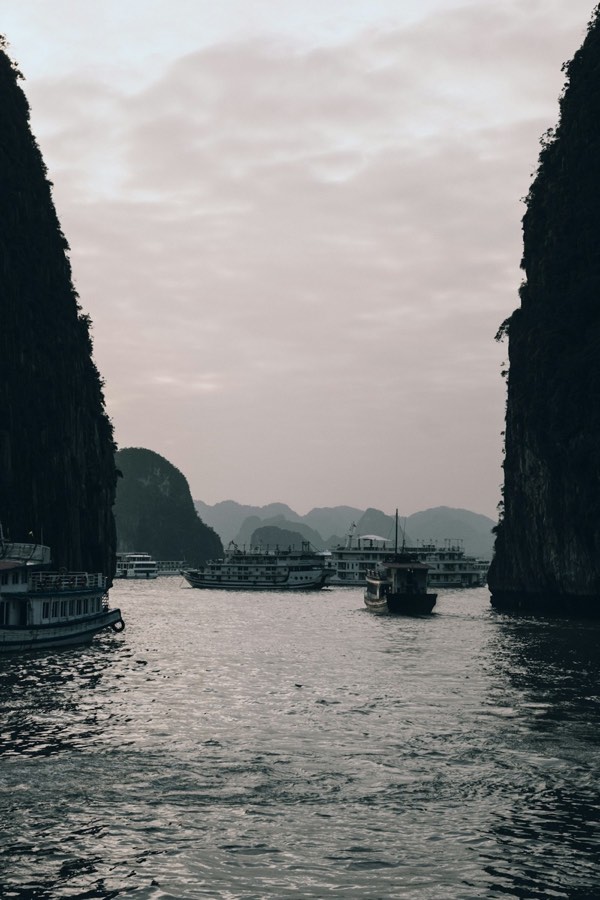
Vietnam and Laos share a 2,100 km border and a broadly similar Buddhist heritage, but their personalities are vastly different. Vietnam is fast, ambitious, and relentlessly forward-facing - one of Southeast Asia’s fastest-growing economies, with cities that feel like they’re always mid-construction. Laos is slow, landlocked, and intentionally at peace with its pace. “Please don’t rush us,” the Lao tourism board has said in so many words. They mean it.
Choosing between them - or combining them - is one of Southeast Asia’s best travel decisions.
Countries at a Glance
Vietnam stretches 1,650 km from north to south, with distinct regions that function almost as separate countries: the political and cultural north centred on Hanoi, the royal heritage of central Vietnam (Hue, Hoi An), and the commercial south anchored by Ho Chi Minh City. The country has 98 million people, one of Southeast Asia’s most diverse cuisines, and tourist infrastructure that has expanded rapidly.
Laos is Southeast Asia’s only landlocked country, with 7.5 million people and an economy that runs on hydropower, agriculture, and tourism. Its cultural identity is anchored in Theravada Buddhism - more than 60% of the male population spend time as monks - and in a river-connected landscape defined by the Mekong. The pace is unlike anywhere else in the region.
Cultural Experience
Vietnam’s cultural density is extraordinary. The Temple of Literature in Hanoi (founded 1070), the Imperial Citadel of Hue, Hoi An’s UNESCO Ancient Town, and the Cham Museum in Da Nang represent cultural threads spanning 2,000 years. The War Remnants Museum and Reunification Palace in Ho Chi Minh City provide essential context for the 20th century. The Vietnam Museum of Ethnology documents 54 officially recognised ethnic groups.
Laos offers a different kind of cultural depth - quieter, more contemplative. Luang Prabang’s daily alms-giving ceremony (tak bat) at sunrise, where hundreds of monks walk in procession to receive food from residents, is one of the most moving daily rituals in Southeast Asia. The city’s 34 temples within a 4 km area represent a concentration of active Buddhist practice unmatched in the region. Vientiane, the capital, is one of Southeast Asia’s smallest and most relaxed capital cities: the Pha That Luang gold stupa (built 1566) and the COPE Visitor Centre (on the legacy of unexploded ordnance from the Vietnam War-era bombing of Laos) are the essential stops.
Nature and Adventure
Both countries offer exceptional natural landscapes.
Vietnam: Ha Long Bay (2,000 limestone islands in the Gulf of Tonkin), Phong Nha-Ke Bang National Park (home to Son Doong Cave, the world’s largest cave), the northern highlands of Ha Giang and Mu Cang Chai, and the Mekong Delta. The variety of landscape within Vietnam is remarkable.
Laos: The Nam Ou River and its waterways north of Luang Prabang; the Kuang Si Waterfalls (30 km from Luang Prabang, turquoise tiered pools free of charge to enter); the Kong Lor Cave (7.5 km long navigable cave in Khammouane Province); the Bolaven Plateau in the south (coffee country, waterfalls); and the 4,000 Islands (Si Phan Don) where the Mekong fans into a maze of islands and channels, and where Irrawaddy dolphins are still occasionally spotted.
Laos has fewer tourists and a wilder feel to its natural sites. Vietnam’s nature sites are better organised and more accessible.
Food
Vietnamese food is one of the world’s great culinary traditions. Regional variation is extreme: pho in Hanoi, bun bo Hue (spicy beef noodle soup) in Hue, cao lau in Hoi An, banh xeo (crispy crepes with shrimp and pork) in Da Nang, hu tieu in Ho Chi Minh City. The coffee culture (ca phe trung egg coffee, ca phe sua da iced coffee, drip coffee through a traditional phin filter) is a world of its own. Eating is a primary reason to visit Vietnam.
Lao food is built around sticky rice - glutinous rice eaten by hand, formed into a ball, dipped into dishes. Larb is the national dish: raw or cooked minced meat dressed with fish sauce, lime juice, toasted rice powder, and herbs. Jaew bong (buffalo skin chilli paste) appears on most tables. Or lam is a rich stew of vegetables, dried buffalo meat, and lao bong (Sichuan pepper leaf). In Luang Prabang, the food scene includes excellent French-influenced bakeries and cafes alongside Lao restaurants - the baguette tradition from the French colonial period is strong.
Cost Comparison
Vietnam
- Budget accommodation: USD 10–20/night
- Mid-range hotel: USD 35–70/night
- Street food: USD 1.50–3/meal
- Restaurant meal: USD 5–12/person
- Overnight train (Hanoi–HCMC): USD 30–75
Laos
- Budget guesthouse: USD 12–25/night (Luang Prabang slightly higher)
- Mid-range hotel: USD 40–90/night
- Street food: USD 2–5/meal
- Restaurant meal: USD 6–15/person
- Bus travel (Luang Prabang–Vientiane): USD 15–25
Vietnam’s internal transport network is significantly more affordable and extensive. Budget airlines (Vietjet, Bamboo Airways) run Hanoi–Da Nang–Ho Chi Minh City connections from USD 20–40; overnight trains cost USD 18–30. Laos has limited domestic flights and road travel that can be slow.
Accommodation
In Vietnam, Hanoi’s Old Quarter boutique hotels (Essence Hanoi, La Siesta Classic) run USD 35–70. Hoi An Ancient Town guesthouses start USD 25–40. Resort hotels on Phu Quoc or at Da Nang’s beach from USD 60–150.
In Laos, Luang Prabang is the benchmark: guesthouses from USD 20–30, boutique heritage hotels like Villa Santi or Avani+ Luang Prabang from USD 80–150, Amantaka (the luxury address) from USD 500+. Vientiane has broader budget options from USD 15–25.
Getting Around
Vietnam has excellent tourist transport. The “Reunification Express” train from Hanoi to Ho Chi Minh City (1,725 km, 30–35 hours, from USD 30 hard seat or USD 55 sleeper as of 2026) passes through some of Vietnam’s most dramatic coastal scenery. Budget flights are fast and cheap. Tourist bus networks (The Sinh Tourist, Kumho) connect all major destinations.
Laos transport is slower. The Laos–China Railway opened in 2021, connecting Vientiane to Luang Prabang by train in approximately 2 hours - a major improvement from the 10-hour bus journey. Road travel elsewhere is slow, with mountain roads and limited services. The Mekong slow boat from Luang Prabang to the Thai border at Huay Xai takes two days and is an experience in itself: diesel boat, wooden benches, Mekong river life, from approximately USD 30 including accommodation midway as of 2026.
Combining Vietnam and Laos
A 3-week combined itinerary works well in either direction:
Hanoi–Laos–Vietnam south route:
- Hanoi (3 nights) → Hue (2 nights) → cross Lao Bao/Dansavanh border by bus (6–7 hours) → Savannakhet → Vientiane (2 nights) → Luang Prabang (3 nights) → fly back to Hanoi or continue to Thailand
Vietnam south–Laos north route:
- Ho Chi Minh City → Hoi An → Danang → Hue → cross to Laos → Luang Prabang → onward to Thailand or fly home
Many travellers combine with Cambodia for a full Mekong region trip.
Best For
Choose Vietnam if:
- Food is a top travel priority
- You want a wide range of beach, city, and mountain experiences
- Infrastructure and transport convenience matter
- This is your first Southeast Asia trip
Choose Laos if:
- You want to slow down after the intensity of Vietnam or Thailand
- Buddhist temples and a contemplative atmosphere are what you’re after
- Luang Prabang is specifically on your bucket list
- You enjoy river travel and less-visited natural sites
When to Visit
Both countries share broadly similar seasonal patterns. November through April is the dry season - the most comfortable time for both. May through October brings the wet season, with heavy afternoon rains; Vietnam’s coastal areas can be affected by typhoons September–November. Laos in the wet season is green and lush, with waterfalls at their best.
Useful links:
The Verdict
Vietnam is the more complete travel destination for a first trip to Southeast Asia - more variety, better infrastructure, more to see. Laos is the antidote: slower, quieter, and in some ways more genuinely memorable for exactly that reason. The combination of both, with an overland crossing through the mountains, is one of the great travel experiences of the region.
See our Vietnam travel tips and itineraries for planning the full trip.
Plan Your Trip
✈️ Book your flights to Vietnam 🛡️ Get travel insurance 📱 Stay connected with an eSIM 🚗 Rent a car