Hanoi Food Culture: Northern Vietnamese Cuisine, Dishes and Culinary Traditions
Book an experience
Food tours & cooking classes
A guided food tour covers more ground than eating solo, and you learn the backstory. From the price shown.
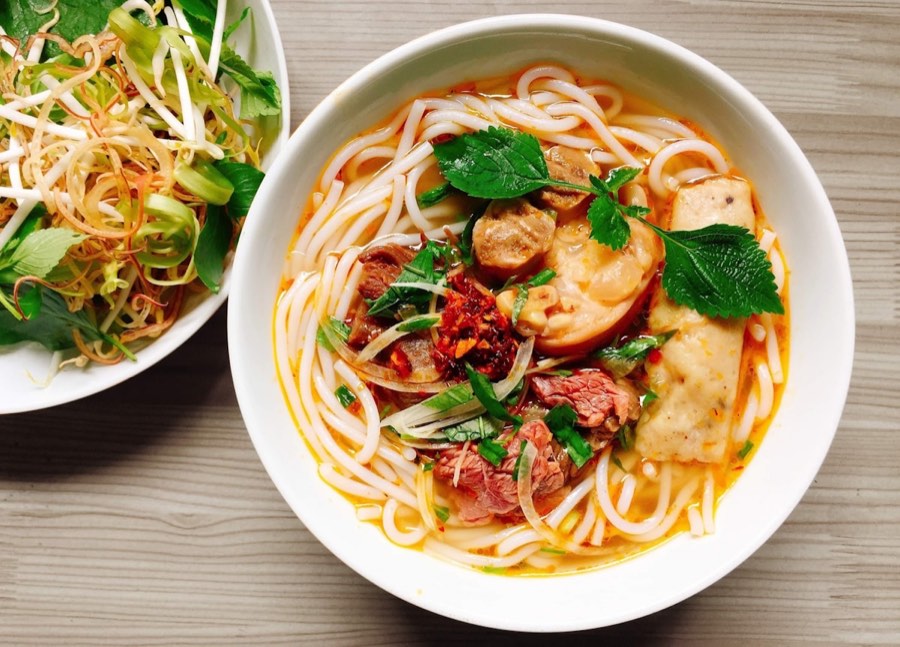
Hanoi’s food culture is older, more conservative, and more precise than Saigon’s. The northern kitchen uses less sugar, cleaner broths, and fewer accompaniments - flavour comes from technique and quality of ingredient rather than the sweetness and herb pile that characterises the south. A bowl of pho at a good Hanoi stall is restrained by design. Bun cha works because the charcoal grill does the heavy lifting. Cha ca survives on the quality of the fish and the dill.
Eating in Hanoi is also, by most standards, cheap. The dishes that define the city cost VND 45,000–90,000 ($1.80–$3.60) at the places locals actually go.
What Makes Northern Vietnamese Cuisine Different
Northern cooking contrasts with the south on several consistent dimensions:
- No sweetness: Hanoi broths and sauces use little or no sugar. Pho is clear and austere - there is no hoisin at the table, no sriracha. The flavour comes from long-simmered bones and charred aromatics.
- Fewer accompaniments: A southern pho arrives with a plate of bean sprouts, Thai basil, and lime. A northern pho arrives with lime and fresh chilli, nothing more. The dish is considered complete as served.
- Technique-first: Dishes like cha ca (turmeric catfish cooked at the table over charcoal) and bun cha (charcoal-grilled pork in a sweet-sour dipping broth) rely on cooking method rather than complexity of seasoning.
- Local specialisation: Individual dishes are often tied to specific streets or neighbourhoods. Cha ca has its own street (Cha Ca Street). Bun oc (snail noodle soup) is concentrated in the craft streets of the Old Quarter. This geographical specificity is a northern characteristic.
The Defining Dishes of Hanoi
Pho (northern style): The benchmark of northern cooking. The broth is made from beef bones simmered overnight with charred ginger and onion - the result is clear, deeply flavoured, and not sweet. Wider, flatter noodles than southern pho. The only condiments are lime, fresh chilli, and black pepper. Order pho bo (beef) rather than pho ga (chicken) for the most traditional Hanoi version. The best pho shops open at 6am and often sell out by noon.
Bun cha: Charcoal-grilled pork - both thin patties (cha) and slices of pork belly - served in a lightly sweet-sour dipping broth alongside cold rice vermicelli noodles and a large herb plate. The charcoal grill is not decorative: the smokiness from the fire is the flavour. You eat by dipping noodles and herbs into the broth, placing pork pieces on top. Approximately VND 50,000–85,000 as of 2026. Peak hours are 11am–1pm; the best stalls close mid-afternoon.
Cha ca: Turmeric-marinated catfish (or snakehead fish) griddled at the table over a small charcoal brazier with dill, spring onion, and shrimp paste. You assemble it yourself into rice noodles with peanuts and more fresh dill. The recipe at established Hanoi restaurants has not changed in generations. The combination of turmeric, dill, and shrimp paste is uniquely northern and unlike anything in southern cooking. Approximately VND 200,000–280,000 per person as of 2026.
Bun bo nam bo: A northern Vietnamese dry beef noodle dish found primarily in Hanoi. Vermicelli topped with stir-fried beef, peanuts, fried shallots, and herbs, served with a light dipping broth on the side rather than submerged in it. Rarely mentioned in tourist literature but genuinely interesting - the dry format concentrates the textures in a way wet noodle soups do not. Approximately VND 55,000–75,000 as of 2026.
Bun oc (snail noodle soup): A northern Vietnamese noodle soup using freshwater snails. The broth is tomato-based, tangy with vinegar, and topped with snails, fried tofu, and fresh vegetables. Beloved by Hanoians and rarely on tourist itineraries. The best versions appear at evening street stalls in the Old Quarter craft streets. Approximately VND 40,000–65,000 as of 2026.
Cha muc (squid cake): Fresh squid minced and formed into cakes, deep-fried until golden. A northern speciality found most authentically around West Lake (Tay Ho), where fishing communities historically supplied the ingredient. Usually eaten as an accompaniment to pho or bun, or as a standalone snack with beer. Approximately VND 60,000–100,000 per portion at lakeside restaurants. A mid-afternoon beer and cha muc at a West Lake café is a legitimate Hanoi activity.
Banh cuon (steamed rice rolls): Rice flour sheets steamed until translucent, filled with minced pork and wood ear mushroom, served with cha lua (Vietnamese sausage) and a clear dipping broth. A northern breakfast staple distinct from the fried or baked versions found further south. Usually served with crispy fried shallots on top.
Practical Notes
Hours: Hanoi street food is morning-centric. Pho shops open by 6–7am and often close by noon or 1pm. Bun cha runs 8am–3pm at most stalls. Plan breakfast and lunch around street food; evenings are better suited to restaurants.
Cash: Street stalls and most budget restaurants are cash only. VND 10,000–50,000 notes are most useful. Mid-range and upscale restaurants increasingly accept card.
Getting around: The Old Quarter is walkable. Tay Ho (West Lake) and Hai Ba Trung district are best reached by Grab motorbike (VND 20,000–45,000 from the Old Quarter) or taxi (VND 50,000–90,000). Traffic is heaviest 7–9am and 5–7pm.
Food tours: A guided street food walk through the Old Quarter is one of the more useful ways to get oriented. You can also book a Hanoi street food tour on GetYourGuide.
For specific restaurant recommendations with addresses, price tiers, and booking tips, see our best restaurants in Hanoi guide. For a breakdown of the dishes to try across the city, see our Hanoi food to try guide.
Ready to explore?
Browse hundreds of tours and activities. Book securely with free cancellation on most options.
Browse on GetYourGuide →Best price guaranteed: same price as booking direct. We earn a small commission at no extra cost to you.