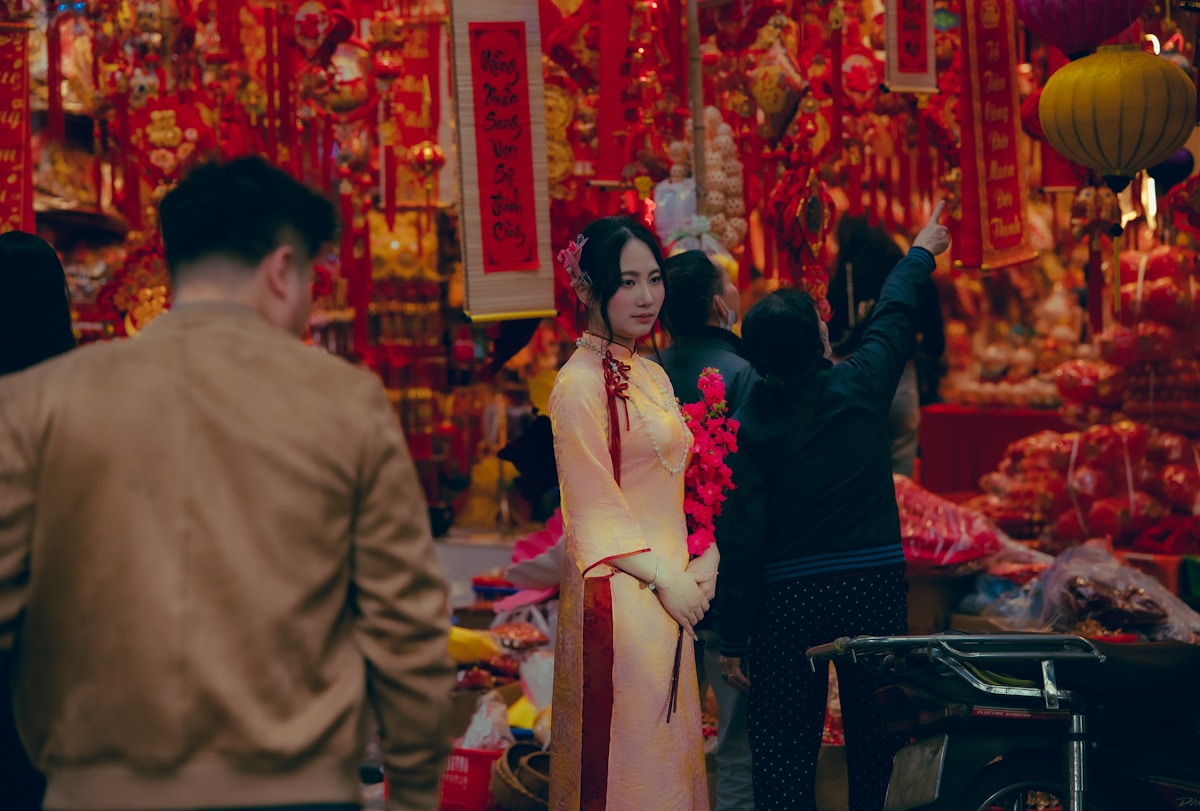
6–12 February 2027
Tet Nguyen Dan 2027: Vietnam's Lunar New Year — Dates, Highlights and Traveller Tips
Vietnam
Tet 2027 runs 6–12 February, Year of the Goat. Flower markets, fireworks, temple crowds: what stays open and how to plan your trip.
Event details
- Date
- 6–12 February 2027
- Location
- Vietnam
Tết Nguyên Đán - commonly shortened to Tết - is Vietnam’s most important annual celebration. It marks the arrival of the Lunar New Year and falls on the first day of the first month of the Vietnamese lunar calendar. In 2027, the first day of Tết falls on Saturday, 6 February, ushering in the Year of the Goat. The official public holiday runs from 6 to 12 February 2027, though the festivities start days earlier and linger for weeks after.
For visitors who time a trip around Tết, the rewards are significant: flower markets overflowing with kumquat trees and peach blossoms, temple courtyards packed with incense and lanterns, and a country moving at a different rhythm entirely. But planning carefully is essential - Vietnam shuts down in ways that can catch travellers off guard.
What Tết Actually Means
Tết is, above all else, a family holiday. In the weeks before the new year, millions of Vietnamese travel home to their hometowns for the biggest reunion of the year - a migration comparable in scale to Chinese New Year. Cities empty out as people return to ancestral homes, sweep away old luck, decorate with symbolic plants, and prepare elaborate offerings for ancestors whose spirits are believed to return during this period.
The name Tết Nguyên Đán translates loosely as “feast of the first morning of the first day.” Preparations begin weeks in advance with house cleaning (sweeping out bad luck before the new year arrives), buying new clothes, paying off debts, and visiting flower markets to select the season’s centrepiece plants.
Tết 2027 Dates
- Kitchen God Day (Táo Quân): 29 January 2027 - families release fish into rivers to carry the Kitchen God to heaven
- New Year’s Eve (Giao Thừa): 5 February 2027 - midnight fireworks, temple visits
- First day of Tết: 6 February 2027 - Year of the Goat begins
- Public holiday: 6–12 February 2027
- Lantern Festival (Nguyên Tiêu): 23 February 2027 - marks the end of Tết festivities with lantern releases
The first three days of Tết carry the most cultural weight. The first day is traditionally reserved for visiting the paternal family; the second day for maternal relatives; the third for teachers and friends.
Hanoi vs Ho Chi Minh City: Two Very Different Celebrations
Tết looks and feels different depending on which end of the country you’re in.
Hanoi leans into tradition. The Old Quarter transforms in the weeks before Tết: Hàng Mã Street becomes a corridor of red-and-gold decorations, paper offerings, and kumquat displays. Đồng Xuân Market overflows with dried foods and gift boxes. On New Year’s Eve, thousands gather around Hoàn Kiếm Lake to watch the midnight fireworks that reflect off the water - one of the most photogenic moments in the Vietnamese calendar. Ngọc Sơn Temple stays open late, packed with worshippers burning incense and making wishes for the year ahead. The streets fall near-silent on the first morning of Tết, an eerie and memorable stillness that locals describe as the city exhaling.
Ho Chi Minh City celebrates with more noise and colour. Nguyễn Huệ Flower Street - a boulevard-length pedestrian garden - opens in the days before Tết and draws enormous crowds day and night. The city’s Chinatown district, Chợ Lớn, celebrates with particular fervour: lion dances, firecracker strings (where permitted), and temple ceremonies that run from before dawn. The Bình Tây Market area fills with decorations and street performers. Because HCMC retains more of its population over Tết than Hanoi does, the city feels livelier during the holiday itself - restaurants and street stalls stay open longer, and the pace barely drops.
Temple fairs are a highlight in both cities and across every provincial town. Visitors can expect lion and dragon dances, traditional games, calligraphy masters writing lucky characters, and food stalls serving Tết specialities. In the north, the Đống Đa Festival (held on the fifth day of Tết, 10 February 2027) commemorates a historic battle with a dragon dance procession. In Hội An, the lantern festival tradition runs throughout the month, peaking on the full moon of Nguyên Tiêu on 23 February.
Food Traditions at Tết
No other time of year brings as much deliberate cooking. The Tết table is laden with dishes that carry symbolic meaning, many prepared days in advance.
Bánh chưng (north) and bánh tét (south) are the iconic Tết foods - glutinous rice cakes filled with mung bean paste and fatty pork, wrapped in banana leaves and boiled for hours. Bánh chưng is square, representing the earth; bánh tét is cylindrical. Families who make their own often cook them overnight, tending the fire in shifts - an experience that defines the holiday for many Vietnamese.
Thịt đông is a northern cold-set pork and wood ear mushroom dish, served chilled - it keeps well over the holiday when shops close. Nem rán (fried spring rolls) appear on virtually every northern Tết table. In the south, thịt kho trứng - pork belly and eggs braised slowly in coconut water - is the centrepiece dish, made in enormous pots designed to last through the holiday week.
Mứt Tết are candied fruits and seeds served to every guest who visits: lotus seeds, ginger, coconut, carrot, kumquat peel. The red-and-gold tray of mứt sitting on the coffee table is as universally Vietnamese as any other Tết image.
Visitors exploring during Tết will find street food options reduced but not absent. Bánh mì carts, phở stalls, and bún bò Huế shops often close for the first days, but reopen by the third or fourth day - and restaurants catering to tourists and expats in tourist districts typically remain open throughout.
Visiting During Tết: What to Expect
The quiet before the noise. The first morning of Tết (6 February 2027) is the quietest day in Vietnam all year. Streets that are usually choked with motorbikes sit empty. If you’re in Hanoi or Hội An, this is worth waking early for - the atmosphere is extraordinary.
Transport disruption. The days immediately before Tết (3–5 February 2027) see the heaviest domestic travel of the year. Trains, buses, and flights between major cities and provincial towns book out weeks in advance. If you’re moving around the country during this window, book transport at least 6–8 weeks ahead. The Reunification Express between Hanoi and Ho Chi Minh City is one of the busiest routes - see our train guide for details on booking.
Accommodation pricing. Hotels in tourist hotspots - particularly Hội An, Hà Nội Old Quarter, and HCMC’s District 1 - see rate increases of 30–60% during the Tết week. Book early and check cancellation policies carefully. Demand is highest for the nights of 5–8 February 2027.
Shops and services. Expect most local businesses, markets, and many restaurants to close from 5–8 February 2027. Stock up on cash before the holiday - ATMs in smaller towns sometimes run dry over the first days. Pharmacies and convenience stores typically reopen faster than local shops.
What stays open. Tourist attractions, national parks, and most sites in cities with significant visitor populations remain open. The Mỹ Sơn Sanctuary, Hội An Ancient Town, and Hạ Long Bay operations continue with reduced staff. Museums in Hanoi and HCMC open on reduced hours.
Tips for Visitors
- Dress modestly if visiting temples - shoulders and knees covered
- Bring small gifts if invited to a Vietnamese home (fruit, sweets, or wine are appropriate - avoid clocks, which are associated with funerals, and black-wrapped gifts)
- Lucky money in red envelopes (lì xì) is given to children - having some small notes ready is a respectful gesture if visiting a family
- The colour red dominates Tết - wearing red is considered auspicious; wearing white or black is best avoided during the first few days
- Temple visits are busiest on the first three mornings - arrive before 8am to beat the crowds
Tết 2027 falls on a Saturday, giving the holiday an unusually generous run into the working week. For visitors already in Vietnam in late January or early February, staying through to at least the third or fourth day of Tết (8–9 February) gives the fullest experience of the celebrations.
Book an experience
Book tours for Tet Nguyen Dan 2027: Vietnam's Lunar New Year — Dates, Highlights and Traveller Tips
Guided experiences with free cancellation on most bookings
Frequently Asked Questions
- When is Tết Nguyên Đán 2027?
- Tết 2027 falls on Saturday, 6 February 2027, ushering in the Year of the Goat. The official public holiday runs 6–12 February. New Year's Eve (Giao Thừa) is the night of 5 February, when midnight fireworks take place across the country.
- Is it worth visiting Vietnam during Tết?
- Yes, if you plan carefully. The cultural experience — flower markets, fireworks, temple visits, and the extraordinary stillness of the first morning — is unlike anything else in Vietnam. Book transport and accommodation at least 6–8 weeks ahead, as trains and flights sell out and hotel rates increase 30–60%.
- Which city is best for Tết — Hanoi or Ho Chi Minh City?
- Both offer compelling celebrations. Hanoi leans into tradition with Hoàn Kiếm Lake fireworks, Old Quarter flower markets, and a near-silent first morning. Ho Chi Minh City is livelier, with the Nguyễn Huệ Flower Street, Chợ Lớn lion dances, and a city that stays more active through the holiday because fewer residents leave.
- What should I avoid wearing or giving during Tết?
- Avoid wearing white or black during the first few days — red is considered auspicious. When visiting a Vietnamese home, avoid giving clocks (associated with funerals) or black-wrapped gifts. Fruit, sweets, or wine are appropriate.
- What closes during Tết, and what stays open?
- Most local businesses, markets, and many restaurants close from around 5–8 February 2027. Tourist attractions, national parks, and sites in major visitor areas remain open with reduced hours. Stock up on cash beforehand — ATMs in smaller towns can run dry over the first days.