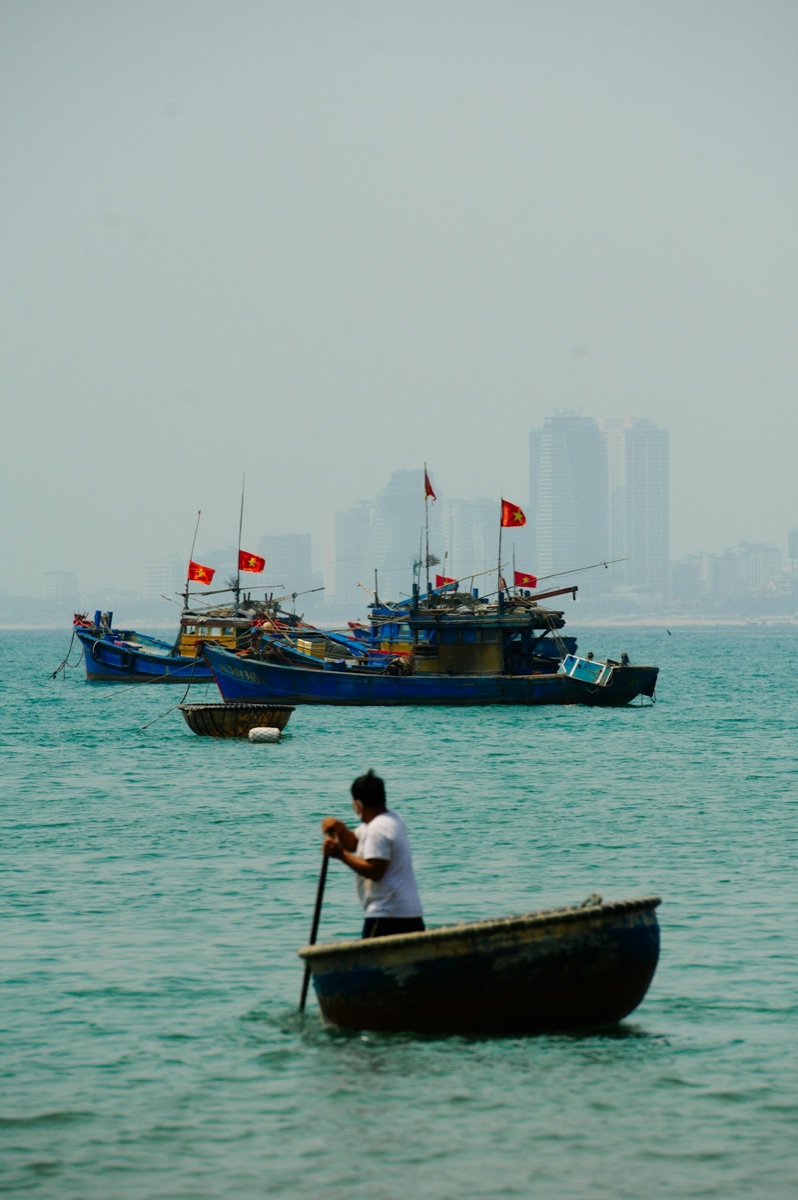
Haiphong’s cuisine reflects its identity as a port city - seafood-forward, practical, and specific. Several dishes here are genuinely different from what you find in Hanoi or further south.
Banh da cua (crab and red rice noodle soup)
The dish Haiphong is most proud of. The noodle - banh da - is made from red (unbleached) rice flour. It is thicker, browner, and has more texture than the white rice noodles used in pho. The broth is made from crab shells and is deeply savoury without being heavy. Fresh crab meat is piled on top with pork ribs, tofu puffs, and morning glory.
This is primarily a breakfast and lunch dish. By early afternoon many banh da cua stalls have sold out and closed. ₫30,000–60,000 ($1.20–2.40) per bowl.
Where to eat it: Bánh đa cua stalls near Haiphong market - the covered market area has the best concentration, with stalls operating from 06:00 to early afternoon. Look for stalls with a visible queue.
Banh mi dac biet (special Vietnamese sandwich)
The Haiphong version of the banh mi - already one of Vietnam’s great street foods - takes the same French baguette base and loads it more generously than the standard. Pate, Vietnamese sausage (cha lua), pickled carrot and daikon, cucumber, spring onion, chilli, egg, and a house sauce. The egg version is the local preference.
Available from street carts throughout the city from 06:00 through mid-morning. ₫25,000–45,000 ($1–1.80).
Where to eat it: Street carts throughout the city centre from 06:00; the Haiphong night market (near Tam Bac Lake) also has stalls in the evening.
Banh cuon Haiphong
Rice paper rolls thicker and chewier than the Hanoi version. Filled with minced pork and wood ear mushroom, served in a bowl with a lightly sweetened fish sauce broth. Topped with crispy fried shallots and fresh herbs. A standard morning dish eaten with a spoon rather than chopsticks. ₫25,000–40,000 ($1–1.60).
Where to eat it: Cơm cháy (crispy rice) restaurants on Lê Lợi street - the same strip has banh cuon morning stalls; also available at the Cho Hoa area from early morning.
Hai san (seafood)
Being Vietnam’s main northern port, fresh seafood is available daily at the city markets. The central market (Cho Sat) near the city centre has a seafood section with live crab, clams, squid, and fish.
Restaurant preparation: steamed crab with ginger and lime, clams in lemongrass and chilli, grilled squid with salt and lime. Simple preparations that let the fresh ingredients lead.
Where to eat it: Nhà Hàng Trung Thành (near Tam Bac Lake) - a well-established local seafood restaurant; also the waterfront near Ben Binh pier has several lunch-focused seafood restaurants with fresh daily catch.
Cha muc Haiphong (squid cakes)
Minced squid pressed into a cake and deep-fried or steamed. Similar in concept to fish cake but with a stronger, sweeter seafood flavour. Available at street markets and as a side dish at seafood restaurants. ₫15,000–30,000 ($0.60–1.20) per portion.
Where to eat it: Haiphong night market (near Tam Bac Lake, evening) - nem cua bể (crab spring rolls) and cha muc are both sold here; also available at the Cho Sat market area.
Banh tom (shrimp fritters)
Deep-fried shrimp and sweet potato in a crispy batter. A northern Vietnam snack food particularly associated with Hanoi and Haiphong. Light and crispy when fresh, heavy when they’ve been sitting. Buy from a vendor with visible turnover. ₫15,000–25,000 ($0.60–1).
Where to eat it: Market stalls at Cho Sat and the Haiphong night market near Tam Bac Lake - buy from vendors with visible turnover for the freshest versions.
Ca phe (coffee)
Haiphong has the same drip-coffee and iced-coffee culture as northern Vietnam generally. Ca phe sua da (iced coffee with condensed milk) is the standard order. Local cafes near the Opera House area serve the best quality. ₫20,000–40,000 ($0.80–1.60).
Where to eat
The central market area (Cho Sat) and the streets around it have the highest concentration of street food vendors and local restaurants. Cho Hoa (flower market) area is good for early morning breakfast stalls. The waterfront near Ben Binh pier has several seafood restaurants popular for lunch.
Useful links:
More in Haiphong
- Best Hostels in Haiphong 2026: Budget Stays and Transit Reality
- Best Hotels in Haiphong 2026: City Centre and Ferry Terminal
- Best Restaurants in Haiphong 2026: Banh Da Cua and Local Specialties
- Day Trips from Haiphong 2026: Cat Ba Island, Do Son and Ha Long Bay
- Things to Do in Haiphong 2026: Colonial Quarter, Temples and Day Trips
- Best Hotels in Haiphong 2026: Hotels Near the Ferry and City Centre